

Safety Checklist Before Going Out to Sea: Essential Steps for a Safe Boating Trip
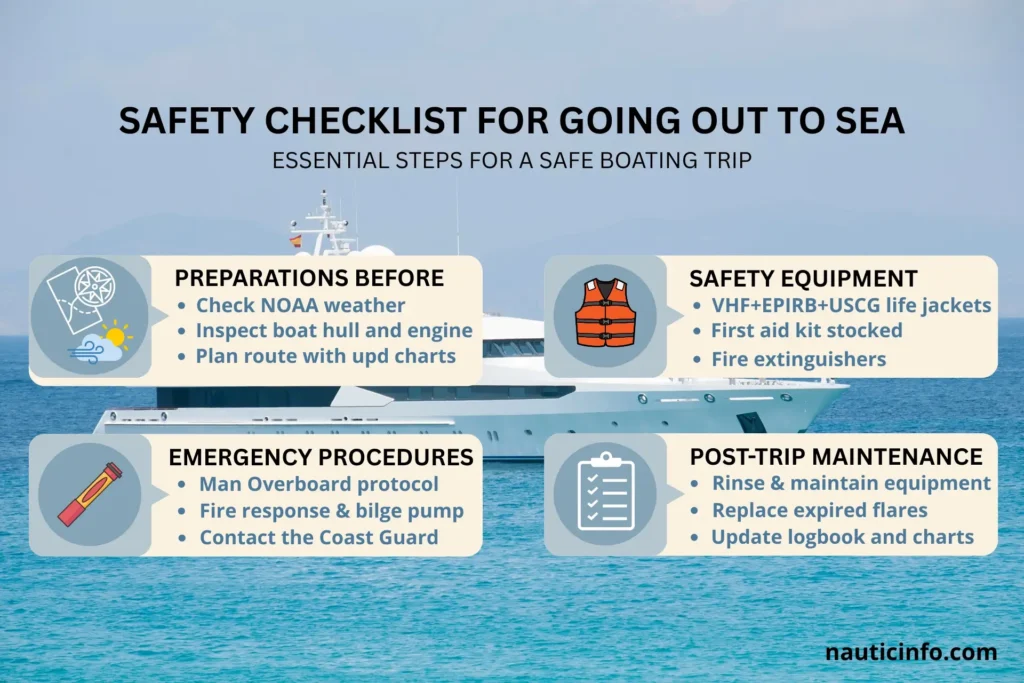
Before heading out on the water, thorough preparation is crucial to ensure the safety of everyone on board. Boating in the US requires compliance with Coast Guard regulations, proper equipment, and readiness for emergencies. This article outlines the key points of a Safety Checklist for Going Out to Sea, including mandatory gear, pre-departure inspections, and emergency procedures to help you navigate confidently and safely.
Safety Checklist for Going Out to Sea: Essential Preparations Before Departure
Check Weather Conditions and Plan Your Route
First and foremost, check the latest weather forecasts from reliable sources such as NOAA or local Coast Guard stations. Pay close attention to wind speed, wave height, and visibility. Next, plan your route carefully using updated nautical charts approved by NOAA. Always consider the experience level of your crew and the capabilities of your vessel.
Additionally, inform a responsible person onshore about your trip plan and estimated return time. This step is vital for quick response in case of an emergency.
Inspect Your Boat and Safety Systems
Before leaving the dock, conduct a thorough inspection of your boat. Check the hull for damage, ensure the bilge pumps are operational, and test all electrical systems including navigation lights and marine radios. Verify that the engine is running smoothly and fuel levels are adequate.
Make sure all safety equipment is on board and in good condition. Fire extinguishers should be charged and accessible, and life rafts must have current certification.
Safety Checklist for Going Out to Sea: Required Safety Equipment
Personal Flotation Devices and Protective Gear
According to US Coast Guard regulations, every person on board must have a properly fitting, USCG-approved life jacket. These PFDs should be easily accessible and suitable for the type of boating activity. For offshore trips, harnesses and tethers are recommended to prevent falls overboard.
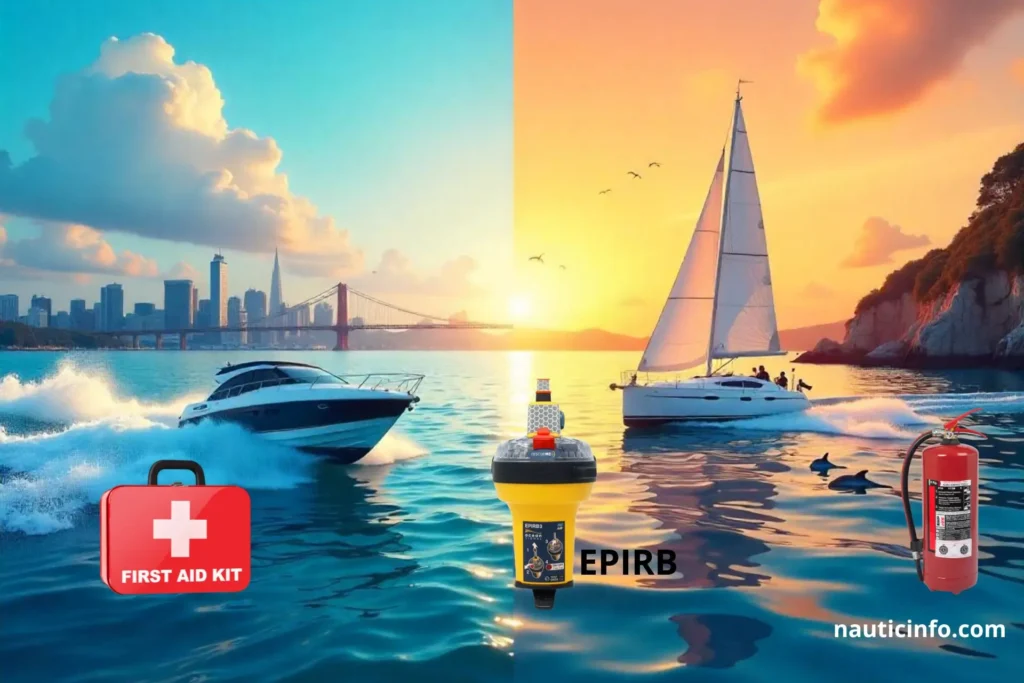
Also, carry a well-stocked first aid kit containing essentials such as bandages, antiseptics, and seasickness remedies. Store it in a dry, known location.
Collective Safety Equipment on Board
Your Safety Checklist for Going Out to Sea should include signaling devices such as flares, distress flags, and an Emergency Position Indicating Radio Beacon (EPIRB). A VHF marine radio is mandatory for communication with the Coast Guard and other vessels.
Navigation aids like a magnetic compass and GPS device are essential for maintaining your course, especially if electronic systems fail. Firefighting equipment, including the correct type of extinguishers for your engine, should be strategically placed around the boat.
Safety Checklist for Going Out to Sea: Emergency Procedures

Man Overboard (MOB) Protocol
If someone falls overboard, immediately press the MOB button on your GPS to mark the location. Throw a life ring equipped with a light or whistle to the person in the water. Perform a Williamson turn or other appropriate maneuver to return to the victim safely.
Assign a crew member to keep constant visual contact with the person and communicate via VHF radio if possible.
Handling Technical Failures and Fires
In case of flooding, activate bilge pumps and use emergency plugs or patches to control water ingress. Close watertight doors or compartments if available.
If a fire breaks out, cut off the electrical supply and use the appropriate fire extinguisher targeting the fire’s base. Regular drills with your crew will improve response times and confidence in emergencies.
Safety Checklist for Going Out to Sea: Post-Trip Checks
Equipment Maintenance and Documentation
After your trip, rinse all equipment with fresh water to prevent corrosion, especially radios and EPIRBs. Check expiration dates on flares and replace any outdated items. Recharge batteries for all electronic devices and store them in a dry place.
Trip Debrief and Record Keeping
Complete your logbook with details of the trip, noting any incidents and corrective actions taken. Update your nautical charts and manuals to ensure you are prepared for future outings.