
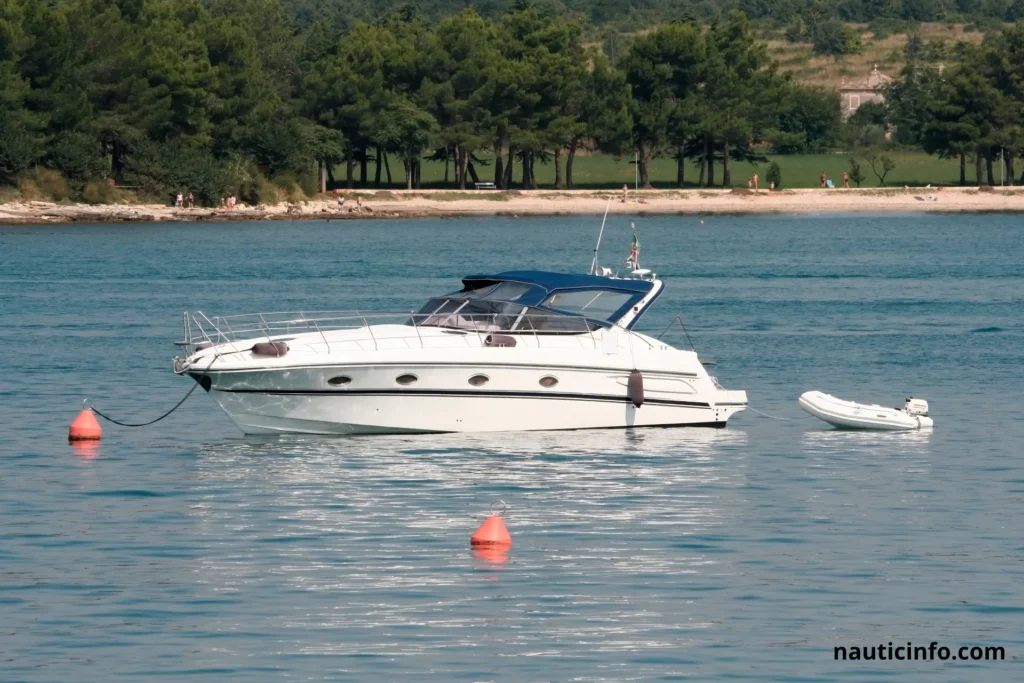
Choosing your first motorboat is a big decision, but it requires careful consideration. Here are some tips to help you choose the right boat for your activities, size, boating license and budget.
Obtaining a Beginner’s Boat Licence
Before taking command of your first motorboat, it is crucial to obtain a boat license if required in your country or region. In some places, a license is mandatory for boats over a certain horsepower.
This license allows you to navigate safely and legally. To obtain it, you will need to complete a theoretical and practical training course that covers navigation rules, safety procedures, and basic maneuvers. Once your training is complete, you will pass an exam to validate your skills. This license is not only a legal requirement but will also give you confidence in your ability to navigate safely.
Set Your Budget
Before starting your search, establish a realistic budget. The cost of the boat itself is just part of the equation; you must also consider maintenance costs, fuel, harbour place and insurance. It is crucial to factor in all these costs to avoid financial surprises later on.
- Example : If you purchase a boat for $20,000, you should budget an additional 5% to 10% ($1,000 to $2,000) annually for maintenance, depending on the type of boat and how you use it.
Intended Use for your first Motorboat
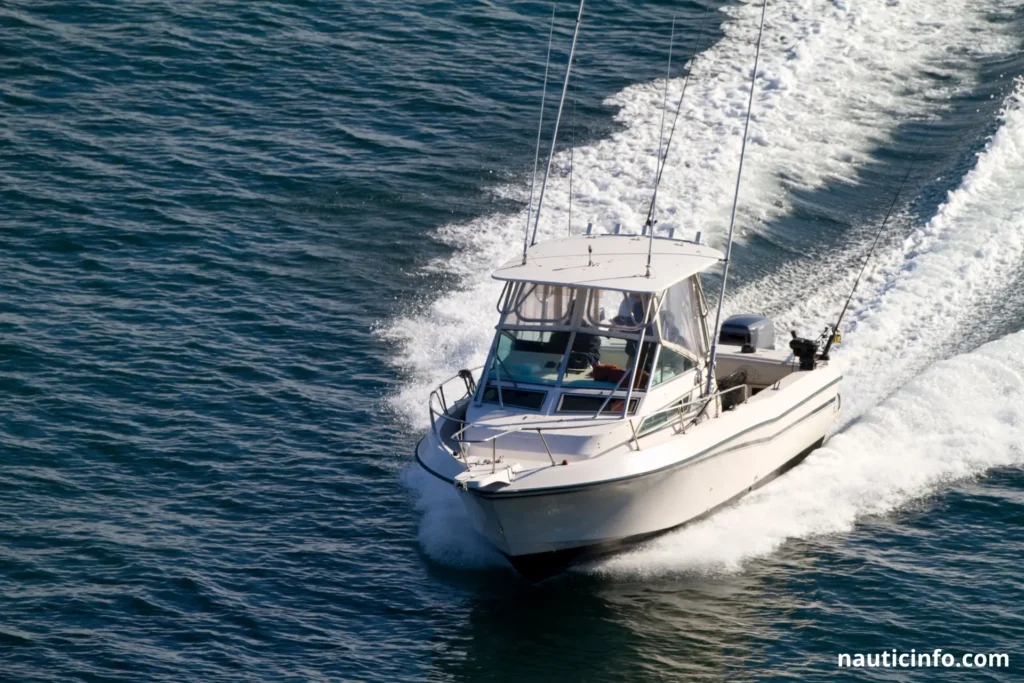
The intended use of your boat is a crucial factor to consider when purchasing. Here are some examples of uses and the boat characteristics that suit them:
- Fishing : If you plan to fish, a sturdy boat with storage space for your gear is essential. Fishing boats need to be stable and have enough room for your nets and lines. A flat bottom is often preferable for better stability in calm waters.
Tip : Opt for a boat with a wide aft platform to make it easier to handle fishing lines. - Pleasure Cruising : For family outings or trips with friends, a boat with a spacious cockpit is ideal. You can enjoy social moments while cruising. A canopy or Bimini can be useful for sun protection.
Tip : Choose a boat with comfortable seating and storage spaces for provisions and beach gear. - Water Sports : For water sports like water skiing or wakeboarding, a powerful boat with a good power-to-weight ratio is necessary. These boats must be able to generate enough speed to pull skiers. A V8 engine or a direct injection engine can be ideal for these activities.
Tip : Ensure the boat has a towing system suitable for water sports.
Maintenance and Upkeep
Choose a boat that is easy and cost-effective to maintain. Fiberglass boats are often more resistant to impacts than aluminum ones but require regular maintenance to prevent damage from seawater. Here are some tips to keep your boat in good condition:
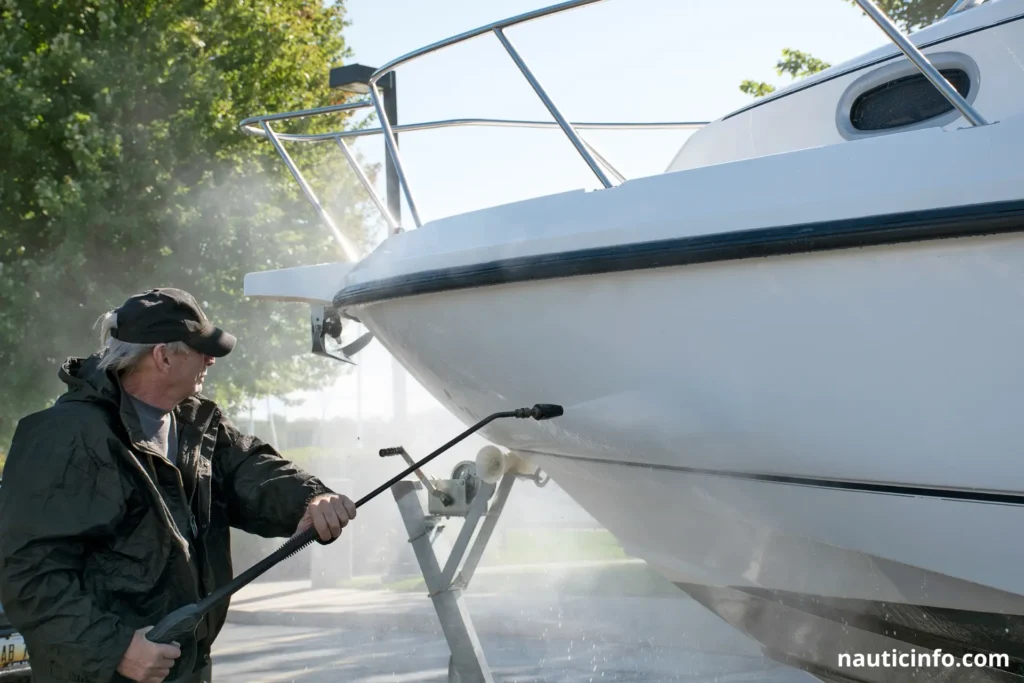
- Regular Cleaning : Regularly clean the hull to prevent marine growth that can slow down your boat. Use suitable products to avoid damaging the surface.
- Fluid Checks : Regularly check the levels of oil, coolant, and fuel. A well-maintained engine is essential for safe and efficient navigation.
- Engine Maintenance : Perform regular engine checks to avoid breakdowns at sea. This includes replacing oil filters and cleaning fuel injectors.
- Winter Storage : If you live in an area with cold winters, ensure you properly prepare your boat for winter. This includes draining water systems and applying antifreeze to plumbing.
Safety Equipment for your first Motorboat
Ensure your boat is equipped with essential safety items to guarantee safe navigation. Here are some basic safety equipment you should have on board:
- Life Jackets : These must be in good condition and sized correctly for each person on board. Ensure they are easily accessible in case of an emergency.
- Fire Extinguisher : A fire extinguisher is crucial in case of a fire on board. Regularly check that it is in good condition and not past its expiration date.
- Communication System : A VHF or a waterproof mobile phone with a charger are essential for calling for help in an emergency. Ensure your phone is waterproof and that you have a backup battery.
- Distress Signal : A distress signal or flare can help signal your position in case of trouble.
- First Aid Kit : A first aid kit should be on board to treat minor injuries. Ensure it is well-stocked and that products are not expired.
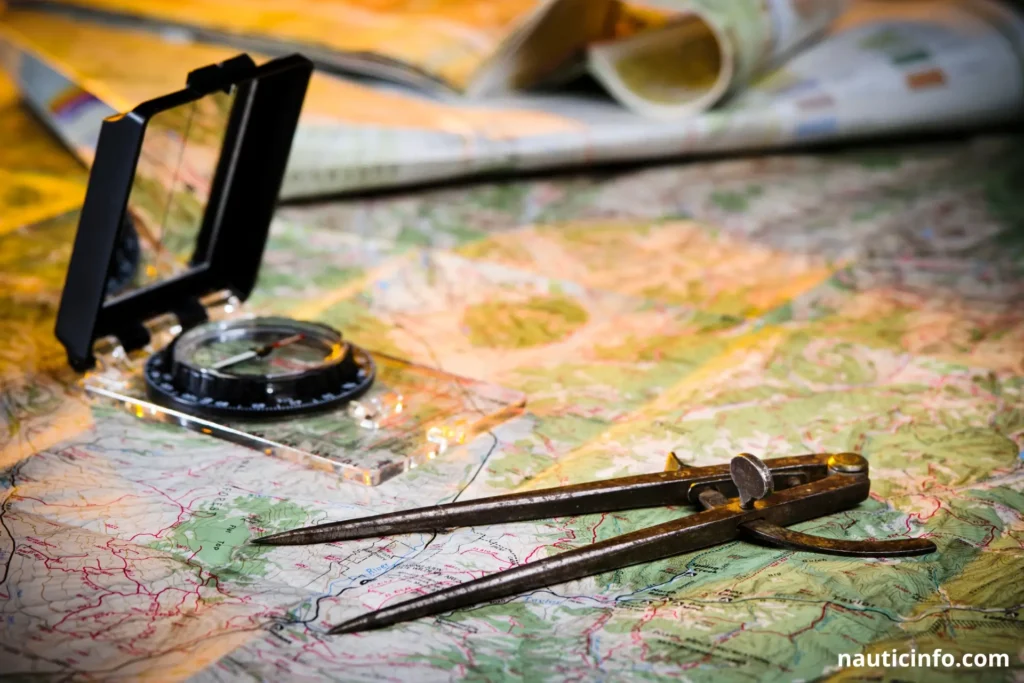
- Compass and Charts : Even with a GPS, a compass and charts can be useful in case of an electronic failure.
Sea Trial
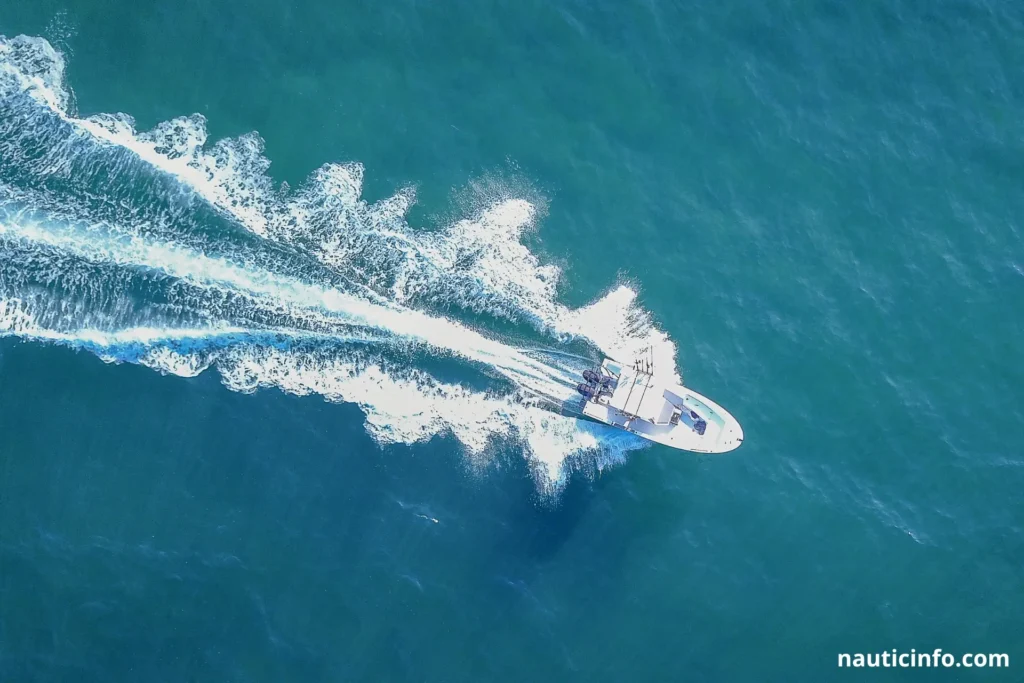
Do not buy a boat without taking it for a sea trial. This will give you an idea of its maneuverability and performance. Here are some tips for an effective sea trial:
- Weather Conditions : Try to test the boat in different weather conditions if possible. This will give you an idea of its stability and ability to navigate rough waters.
- Basic Maneuvers : Perform basic maneuvers like going forward and backward, making sharp turns, and stopping. This will allow you to judge the boat’s responsiveness.
- Speed and Acceleration : Test the boat’s top speed and observe how it accelerates. This is particularly important if you plan to engage in water sports.
- Fuel Consumption : Note the fuel consumption during the trial to get an idea of your future costs.
- Equipment and Accessories : Check that all equipment and accessories are working properly, such as winches, lighting, and sound systems.
- Communication with the Seller : Discuss with the seller or current owner to get information about the boat’s history, any repairs made, and maintenance tips.
Conclusion for your first Motorboat
In conclusion, buying your first powerboat is a significant decision that requires careful consideration. By taking into account your budget, intended use, maintenance, safety equipment, and conducting a sea trial, you will be well-prepared for this adventure. Don’t forget to research any necessary licenses and maintain your boat properly for years of safe and enjoyable navigation.