

The Ultimate Guide to Choosing Your Sailing Jacket
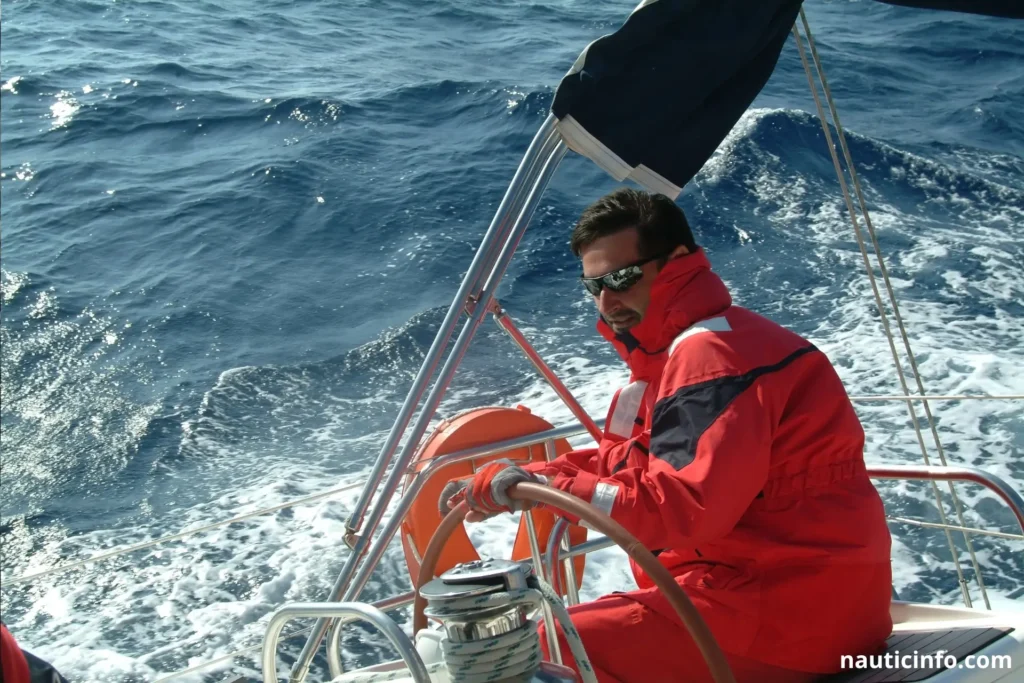
Whether you’re a freshwater sailor getting your first taste of the open sea or a seasoned sea dog, choose your sailing jacket is a critical decision. Indeed, this piece of equipment is far more than just clothing; it’s your armor against the elements, your second skin against sea spray, wind, and rain. A great sailing jacket will keep you dry, warm, and comfortable, thereby allowing you to focus entirely on sailing and the joy of being on the water. On the other hand, a poor choice can quickly turn a beautiful day out into an unpleasant, or even dangerous, experience.
Faced with a multitude of models, technologies, and price points, it’s often difficult to know where to start. Consequently, how do you make the right choice without emptying your wallet for gear that’s overkill for your actual needs? This comprehensive guide is designed to shed light on the subject. Together, we will break down the essential criteria to consider, from your type of sailing to the technical specifications of membranes. Furthermore, we will compare the different types of jackets and the leading technologies on the market. Ultimately, you will have all the information you need to choose your sailing jacket in an informed and wise manner.
Key Criteria: How to Choose a Sailing Jacket Wisely
Before diving into the aisles of marine supply stores, it’s crucial to define your needs precisely. In fact, the choice of your sailing jacket will essentially depend on four major criteria: your type of sailing, the membrane technology, its waterproof rating, and its breathability.
Define Your Sailing Program: The First Step in How to Choose a Sailing Jacket
The first question to ask yourself is undoubtedly the most important: where and how do you sail? Clearly, the needs for a day trip in pleasant Mediterranean conditions are not the same as for an Atlantic crossing. We generally distinguish between three main types of sailing programs:
- Coastal Sailing: This involves day trips or short excursions, usually close to the coast and in fair weather conditions.
- Offshore Sailing: This refers to multi-day cruises that may take you further from the coast. Conditions can be more variable and sometimes challenging.
- Ocean / Bluewater Sailing: This is long-distance, open-ocean sailing and major crossings, where you can be exposed to extreme conditions for extended periods.
Your sailing program will directly determine the level of protection, technicality, and therefore the budget to allocate for your jacket. For instance, there’s no need to invest in a jacket designed for the America’s Cup if you only go out for a few weekends a year on the Chesapeake Bay.
The Heart of the Jacket: Understanding Membranes for How to Choose a Sailing Jacket
The performance of a sailing jacket largely depends on its membrane. This is the layer that accomplishes the seemingly paradoxical dual mission of being both waterproof from the outside and permeable to water vapor (your sweat) from the inside. There are three main types of membrane construction:
- 2-Layer (2L) Membranes: The membrane is bonded only to the outer fabric. A separate, loose inner lining protects it. These jackets are generally more flexible and comfortable, ideal for coastal use.
- 2.5-Layer (2.5L) Membranes: Similar to the 2-layer construction, they feature a thin protective film printed onto the inside of the membrane, which eliminates the need for a full lining. This makes them lighter and more packable.
- 3-Layer (3L) Membranes: The membrane is sandwiched and bonded between the outer fabric and an inner lining. This construction offers maximum durability and abrasion resistance. It’s the technology of choice for offshore and ocean sailing.
Waterproof Rating (in mm): Your Shield Against the Elements
To objectively measure a fabric’s waterproofness, a unit of measurement based on a “water column” test is used. This test involves applying a 1-inch diameter column of water to the fabric and measuring how high (in millimeters) the water can get before it starts to seep through. Therefore, the higher the millimeter (mm) rating, the more waterproof the jacket is.
Explanatory Diagram of the Water Column Test
(Imagine a simple diagram showing a graduated column of water in millimeters placed on a piece of fabric. Arrows indicate the water pressure. A water droplet is shown passing through the fabric at a certain height, marking the limit of its waterproofness.)
Here are some benchmarks to help you choose your sailing jacket:
| Waterproof Rating (mm) | Resistance to Rain | Recommended Use |
| Up to 10,000 mm | Moderate showers | Coastal sailing in fair weather |
| 10,000 to 20,000 mm | Heavy downpours, sea spray | Regular coastal sailing, offshore |
| Above 20,000 mm | Extreme conditions, storms | Ocean sailing, racing |
It is important to note that a jacket’s waterproofness doesn’t solely depend on its fabric. In fact, the quality of the zippers, the presence of storm flaps, and especially the sealing of the seams (which must be fully taped) are just as crucial.
Breathability (MVTR/RET): Staying Dry from the Inside
Sailing is a physical activity. Consequently, even in cold weather, your body produces heat and sweat. If this moisture is not evacuated, it will condense inside your jacket, making you feel cold and clammy. This is where the membrane’s breathability comes into play. Two main indicators measure it:
- MVTR (Moisture Vapor Transmission Rate): This measures the amount of water vapor (in grams) that one square meter of fabric can pass through in 24 hours. The higher the number, the more breathable the fabric.
- RET (Resistance to Evaporative Transfer): This measures the fabric’s resistance to moisture vapor transfer. Unlike MVTR, the lower the RET score, the more breathable the garment.
Breathability Levels Comparison Chart
| MVTR Rating (g/m²/24h) | RET Score | Breathability Level | Recommended Activity |
| < 10,000 | > 20 | Not very breathable | Low effort, standing watch |
| 10,000 – 20,000 | 12 – 20 | Breathable | Moderate effort (maneuvers) |
| > 20,000 | < 12 | Very breathable | Intense effort (racing, tough conditions) |
Good breathability is therefore essential for your comfort, especially if you expect to perform physical maneuvers.
Which Jacket for Which Sailing Style? How to Choose a Sailing Jacket
Now that we’ve covered the technical basics, let’s see how they apply to the three main families of sailing jackets. To properly choose your sailing jacket, understanding the specifics of each category is key.
How to Choose a Sailing Jacket for Coastal Use
The coastal sailing jacket is designed for day trips, local regattas, or short summer cruises. The priority here is on light weight, flexibility, and comfort.
- Technical Specs:
- Waterproofness: Generally between 5,000 and 15,000 mm. Sufficient to protect you from a passing shower.
- Breathability: Often good (RET < 12) to wick away sweat during maneuvers.
- Construction: Most often a 2-layer membrane for greater flexibility.
- Details & Features:
- Mid-height collar, sometimes fleece-lined for comfort.
- Simple hood, often roll-away or stowable in the collar.
- Simple cuffs with Velcro adjustments.
- Fewer pockets, typically not fleece-lined.
- A more tailored fit for better freedom of movement.
- Our Advice: The coastal jacket is an excellent choice for 80% of recreational sailors. It offers a great protection-to-price ratio and is much more pleasant to wear for casual use than an ocean-grade jacket. Don’t over-equip yourself if your sailing program doesn’t justify it.
How to Choose a Sailing Jacket for Offshore Use
The offshore sailing jacket is the perfect compromise. It is intended for multi-day cruises and for sailors who don’t hesitate to head out when the weather is uncertain.
- Technical Specs:
- Waterproofness: Higher, between 15,000 and 25,000 mm, to withstand driving rain and waves over the deck.
- Breathability: Very good (RET < 9) as efforts can be longer and more sustained.
- Construction: You’ll find reinforced 2-layer or 3-layer membranes for added durability.
- Details & Features:
- High, protective collar, often fleece-lined.
- Enveloping, adjustable hood, often in a high-visibility color (fluorescent yellow or orange).
- Double cuffs: an inner seal (PU or neoprene) for waterproofness and an adjustable outer cuff.
- Fleece-lined hand-warmer pockets and cargo pockets.
- Presence of reflective patches (SOLAS-grade).
- Our Advice: If you sail regularly and aren’t one to stay in port at the first sign of a cloud, the offshore jacket is the most versatile investment. It will provide the safety and comfort needed for more ambitious cruises.
How to Choose a Sailing Jacket for Ocean Use
The ocean sailing jacket is the armor for the high seas. Designed to face the most extreme conditions for long periods, it makes no compromises on protection and safety.
- Technical Specs:
- Waterproofness: Maximum, often exceeding 25,000 mm.
- Breathability: Excellent (RET < 6) to manage moisture during long, grueling watches.
- Construction: Exclusively 3-layer membranes, with reinforcements in high-abrasion areas (elbows, seat).
- Details & Features:
- Very high collar that comes up to the nose, often with a protective face shield or spume visor.
- “Tunnel” style hood, fully adjustable and lined for maximum facial protection.
- Double cuffs with adjustable waterproof seals.
- Multiple pockets, including some that are fully waterproof.
- Oversized SOLAS-grade reflective patches for optimal visibility.
- A roomier cut to allow for multiple technical layers underneath.
- Our Advice: The ocean jacket is a top-tier piece of equipment reserved for oceanic crossings, offshore racing, or sailing in cold and hostile seas. Its cost is high, and its rigidity can make it less comfortable for coastal use. It is a rational choice for a serious, committed sailing program.
A Look at Membrane Technologies: Comparison Chart for How to Choose a Sailing Jacket
Marine gear manufacturers either develop their own membrane technologies or partner with renowned specialists. Here is a comparative chart of the most common technologies to help you see clearly when it’s time to choose your sailing jacket.
| Technology | Primary Brand(s) | Membrane Type | Key Strengths | Ideal For |
| Gore-Tex® Pro | Musto, North Sails, etc. | 3-Layer, ePTFE | Extreme durability, waterproofness, and breathability; the market benchmark. | Ocean, Offshore Racing |
| Helly Tech® Professional/Performance | Helly Hansen | 2 or 3-Layer, Polyurethane | Excellent performance-to-price ratio, very good breathability. | Offshore to Ocean (Pro), Coastal to Offshore (Perf.) |
| Dremtech+ | Guy Cotten | Multi-layer | Extremely tough, renowned durability, built for professionals. | Offshore, Ocean, Commercial Fishing |
| BR1 / BR2 / MPX / HPX | Musto | Hydrophilic Coating / Membrane | A complete, progressive range for every program (BR1=Coastal, BR2=Offshore, MPX/HPX=Ocean) | Coastal to Ocean |
| Proprietary Fabrics | Entry-level brands (e.g., West Marine, Decathlon) | Coating or Membrane | Affordability, good value for beginners. | Coastal |
Practical Tips for Care and Maintenance to Maximize Your Jacket’s Lifespan
Once you’ve managed to choose your sailing jacket, it’s essential to take care of it so that it retains its technical properties for as long as possible.
Tips for Use:
- The 3-Layer System: A sailing jacket is only the outer protective shell. For maximum effectiveness, wear a technical base layer (moisture-wicking underwear) and a mid-layer for insulation (fleece jacket) underneath.
- Rinse After Use: After every trip out on saltwater, systematically rinse your jacket with fresh water. Salt is highly corrosive and can clog the membrane’s pores, impairing its breathability.
- Drying: Hang your jacket on a hanger to air dry, away from direct sunlight and intense heat sources (like a radiator). Never store it while damp in a locker.
Care Instructions:
- Washing: Machine wash your jacket as infrequently as possible. When necessary, use a synthetic cycle at a low temperature (check the label, usually 30°C/86°F), close all zippers and Velcro tabs, and never use fabric softener, powder detergent, or bleach. Opt for a liquid detergent specifically designed for technical outerwear.
- Reactivating DWR: The DWR (Durable Water Repellent) finish is the external treatment that makes water bead up and roll off the fabric. Over time, it wears off. To reactivate it, you can tumble dry your jacket on a short, low-heat cycle (if the care label allows) or use a spray-on or wash-in DWR-restoring product.
Conclusion
As you can see, learning how to choose a sailing jacket is no small task, but it is a crucial investment in your safety and comfort at sea. The key is not to be swayed by the most extreme technical features, but to honestly analyze your own sailing habits. A light and flexible coastal jacket will provide far more enjoyment on summer outings than a rigid and cumbersome ocean-grade suit of armor. Conversely, skimping on quality for a serious sailing program would be a mistake.
In short, define your program, understand the indicators of waterproofness (mm rating) and breathability (MVTR/RET), and select the jacket whose features and finishes match your needs. Don’t hesitate to try on several models in a store to judge the fit and comfort. Finally, take good care of it. It will reward you by faithfully protecting you for many years of sailing to come. Fair winds!