

Short-Handed Sailing: The Complete Guide to Mastering Your Sailboat as a Duo or Solo
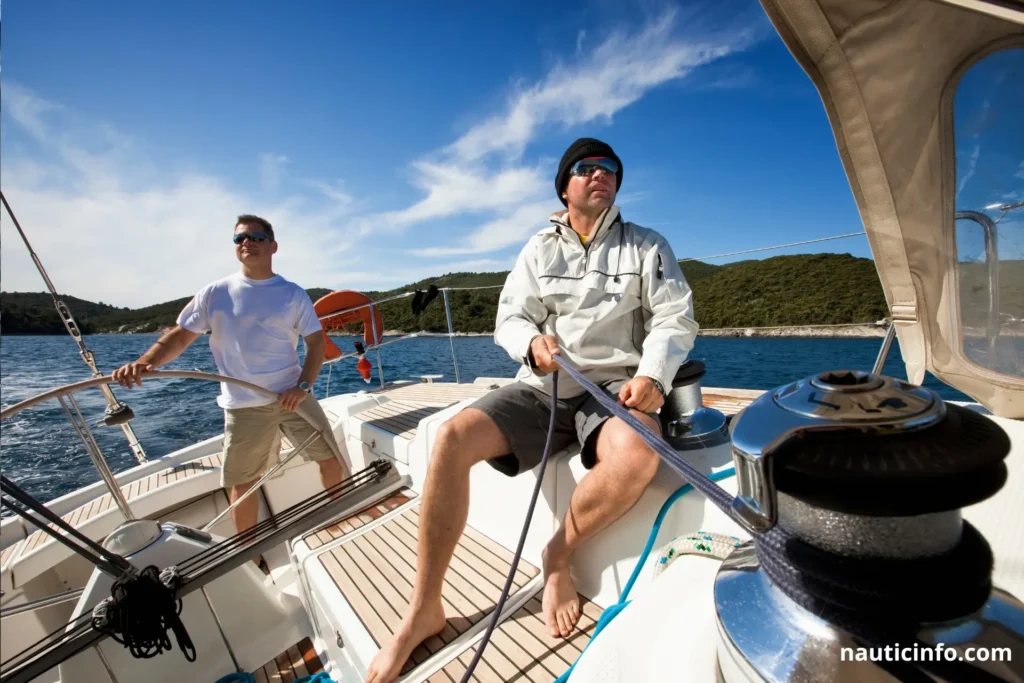
The dream of absolute freedom, endless horizons, and secret coves is often the driving force behind our passion for sailing. However, the reality of cruising can sometimes seem complex, especially when it comes to gathering a full crew. Fortunately, short-handed sailing, whether with a partner or even solo, is not only possible but also an extremely rewarding and formative practice. Indeed, this minimalist approach to cruising builds self-confidence, deepens your knowledge of your boat, and strengthens the bond with your sailing partner.
Nevertheless, the success of such an adventure does not rely on improvisation. On the contrary, it demands rigorous preparation, a thorough understanding of best practices, and flawless organization. For this reason, we have compiled this comprehensive guide. It will provide you with all the keys to transform every trip into a serene and memorable experience. From optimizing the boat to managing watches and critical maneuvers, we will detail how to organize yourselves effectively. This way, you can fully enjoy the pleasure of sailing without the stress of being short on hands.
Preparation: The Key to Success in Short-Handed Sailing
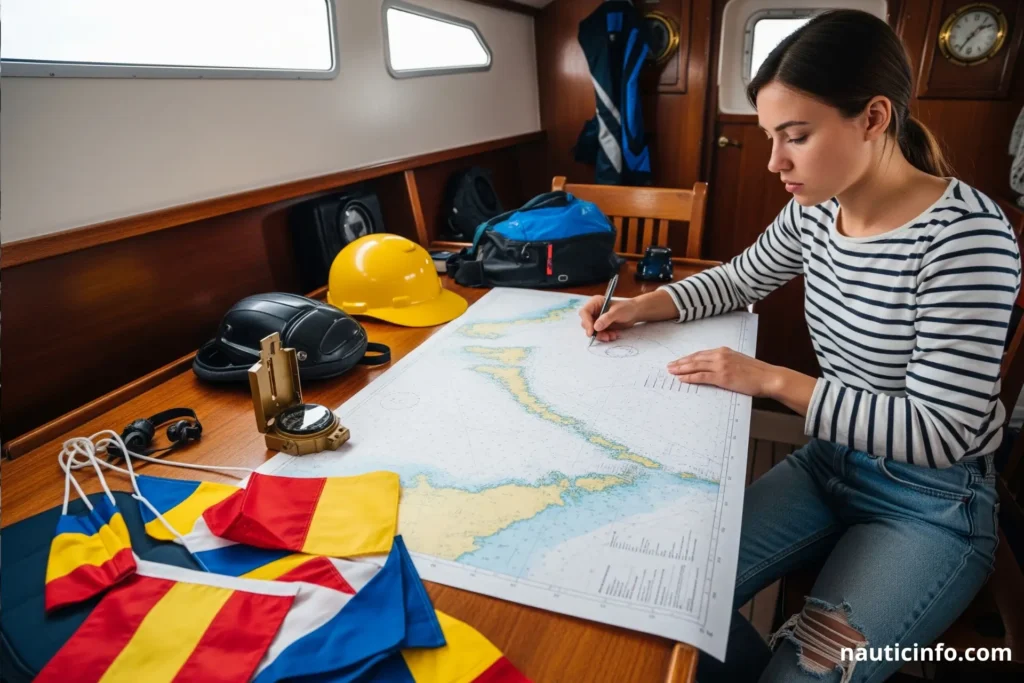
Before you even cast off the lines, the preparation phase is undoubtedly the most critical step. Indeed, thorough anticipation on shore significantly reduces the workload and stress once at sea. It’s all about thinking ahead so that maneuvers and life on board are as smooth as possible.
Optimizing Your Boat for Short-Handed Sailing
A well-prepared boat is the first crew member you can count on. The goal is simple: simplify, centralize, and automate.
- The Autopilot, Your Best Friend: This is the number one piece of equipment for short-handed sailing. A reliable and well-calibrated autopilot doesn’t just steer; it completely frees you up to manage sails, prepare a maneuver, or simply rest. Therefore, investing in a high-performance model capable of holding a course in rough seas is an absolute priority. Furthermore, make sure you master all its features (wind mode, heading mode, auto-tack).
- Centralizing Maneuvers in the Cockpit: Ideally, you should be able to do almost everything without leaving the safety of the cockpit. Thus, halyards, reefing lines, the outhaul, and the boom vang should all be led aft to rope clutches or jammers within easy reach of the helm. This setup, while sometimes requiring modifications, is a complete game-changer. In effect, it allows a single person to hoist, douse, or reef a sail without having to go to the mast, which is especially safe in heavy weather.
- Simplifying Sail Management: Roller-furling jibs are standard today, but also consider a furler for a staysail or solent for stronger conditions. For the mainsail, a single-line or dual-line reefing system is a major asset. Likewise, a lazy-bag (like a Stack Pack) combined with lazy jacks makes flaking the mainsail incredibly easy. A single person can then drop it neatly into its cover without a struggle.
Meticulous Passage and Stopover Planning
When you practice short-handed sailing, you can’t afford to improvise your route day by day. Fatigue sets in faster, and unexpected events are more complex to manage.
- Weather, Weather, Weather: Checking weather forecasts must become an obsession. Use multiple sources (GRIB files from services like PredictWind, NOAA marine forecasts, specialized apps) and analyze them in detail. Consequently, it is crucial to plan shorter, more realistic legs, avoiding committing to conditions you don’t perfectly master. It’s always better to spend an extra day in port than to get into trouble.
- Anticipate Arrivals: Always aim for a daytime arrival. Indeed, discovering an unfamiliar harbor or a crowded anchorage in the middle of the night is a source of considerable stress, especially for two. Additionally, study your charts in detail, identify potential hazards, currents, and tidal effects. Calculate your arrival times to take advantage of the best possible conditions (slack tide, high water, etc.).
The Crew Briefing: Ensuring Flawless Communication
Even with just two people, communication is fundamental. Before each departure and every maneuver, take the time for a briefing. Who does what? In what order? What are the agreed-upon signals? This discussion ensures everyone is on the same page. For example, for a jibe, decide who handles the helm, who manages the mainsheet, and who releases the jib sheet. This synchronization prevents hesitation and errors at the critical moment.
Harbor and Anchoring Maneuvers: The Art of Anticipation in Short-Handed Sailing

Harbor maneuvers are often perceived as the most delicate part of sailing. The proximity of other boats, wind, and current leave little room for error. However, with a methodical approach, short-handed sailing in a harbor becomes a simple formality.
Docking and Undocking with Ease
The secret lies in one word: anticipation. Everything must be ready long before entering the maneuvering area.
- Preparation: First, fenders and dock lines are set up on the correct side and at the right height. The lines are coiled neatly, ready to be thrown, with one end already secured to the boat’s cleat.
- Defined Roles: Next, the person at the helm focuses exclusively on driving the boat, using the engine and prop walk at low RPMs. The crew member is ready to handle the lines. Communication must be clear: “I’m aiming for that spot,” “Get the forward spring line ready,” “You can toss the bow line.”
- Slowness and Control: “Slow is pro.” Approach slowly, using the boat’s momentum. It’s often easier to come to a complete stop and then proceed slowly than to try to brake at the last moment. Moreover, don’t hesitate to use a spring line to pivot the boat and bring it gently against the dock.
For undocking, the logic is the same. Analyze the situation (wind, current), decide on the best strategy, and prepare for the reverse maneuvers.
Picking Up a Mooring and Anchoring Simplified
Anchoring is a maneuver of freedom, but it requires discipline, especially when short-handed sailing.
- Approach into the Wind: Always approach the anchoring spot heading into the wind (or current, if it’s stronger). This allows you to stop the boat exactly where you want.
- Communication with Hand Signals: The noise of the wind and engine can make verbal communication difficult. Establish simple hand signals: “lower the anchor,” “stop,” “enough chain,” “raise.” The crew member at the bow guides the helmsperson and manages the windlass.
- Verification: Once the anchor is down and the desired length of rode is out (generally a scope of 5:1 to 7:1, meaning 5 to 7 feet of rode for every foot of depth), let the boat drift back gently so the anchor can dig in. Then, take visual bearings on shore or use the GPS anchor alarm to ensure the boat is not dragging.
Managing Sails and Maneuvers at Sea for Short-Handed Sailing
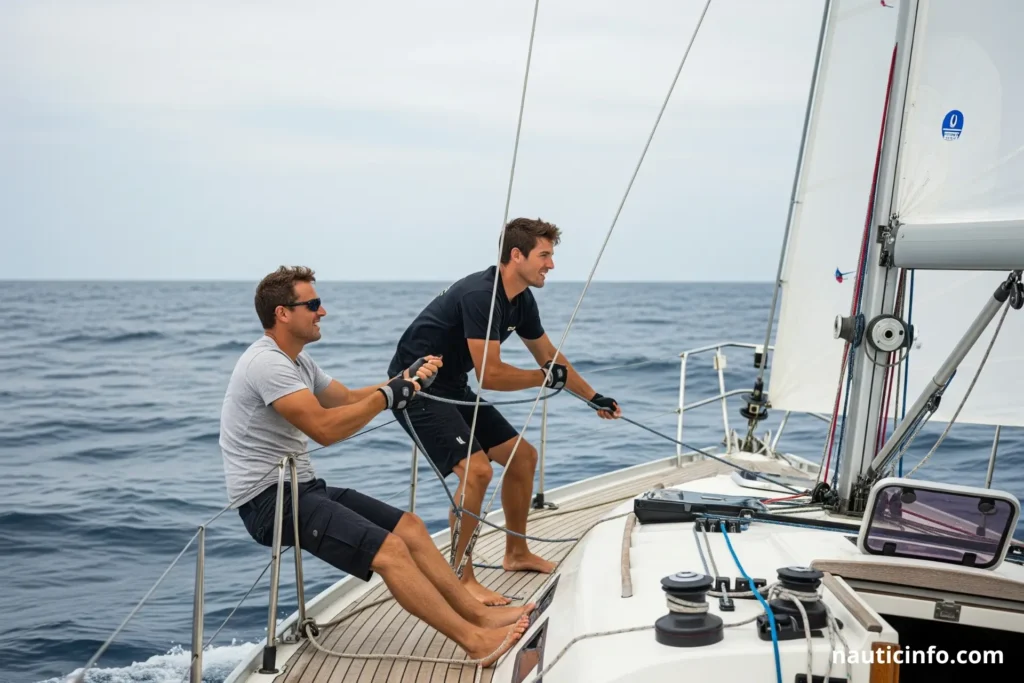
At sea, sail management is constant. You must adapt to the strength and direction of the wind to maintain a comfortable and safe trim. The key, once again, is to anticipate so you are never over-canvassed.
Controlled Tacking and Jibing
These two basic maneuvers must be perfectly mastered.
- Tacking: With an autopilot, tacking is child’s play. The crew member prepares the new jib sheet on its winch. The helmsperson announces, “Ready to tack?” Upon a positive response, they engage the auto-tack feature or push the helm over. As the boat turns through the wind, the crew member releases the old sheet and quickly trims the new one. The helmsperson can then assist if necessary.
- Jibing (or Gybing): This is the most feared maneuver, but it can be done safely. The safest method is to use a boom brake or a preventer. Before jibing, trim the mainsail in tight to the centerline. Then, bring the jib across to the new side. Finally, bring the mainsail across smoothly, either by controlling it with the sheet or by using the engine to help pivot the boat quickly. Perfect communication is essential here to prevent the boom from sweeping violently across the cockpit.
Reefing: A Maneuver to Embrace, Not Fear
The golden rule for short-handed sailing is: “If you’re thinking about reefing, it’s already time.” Reef too early rather than a second too late.
With modern reefing systems led to the cockpit, the maneuver is simple:
- Head up slightly to depower the mainsail.
- Ease the boom vang.
- Ease the main halyard until the new reefing cringle reaches the gooseneck.
- Haul in the corresponding reefing line until the new clew is tight and the sail is flat.
- Re-tension the halyard, then the boom vang. The entire process can be done by one person in minutes without leaving the cockpit.
Using “Light Air” Sails: Asymmetrical Spinnakers & Gennakers
Just because you’re short-handed doesn’t mean you have to give up the joys of downwind sailing in light air. On the contrary, modern light-air sails are increasingly easy to handle. Using a dousing sock (or “snuffer”) is almost mandatory. It allows you to hoist and douse the spinnaker safely. The maneuver breaks down as follows: hoist the closed sock, position it, open the sock to deploy the sail, and to douse, simply reverse the operation. It’s a simple method that makes these sails very accessible.
Organizing Watches and Life Onboard

On passages longer than a few hours, fatigue management becomes the number one safety factor. It is therefore imperative to establish a rigorous watch-keeping system.
Watch-Keeping Systems for a Two-Person Crew
There is no perfect system; you have to find the one that works for you.
- The 3-on/3-off System: This is a classic. 3 hours on watch, 3 hours of rest. It’s a fairly short rhythm that prevents accumulating too much fatigue at once. However, 3 hours of rest really means less than 2.5 hours of actual sleep, which can be draining over time.
- The 4-on/4-off at Night, 6-on/6-off by Day: This system offers longer, more restorative rest periods, especially at night.
- The Flexible System: For coastal cruising or in fair weather, a more flexible system can be adopted. One person rests while the other feels alert, ensuring that each person gets sufficient sleep. The important thing is to discuss it and make sure no one is pushing themselves too hard.
Navigation and Lookout: Staying Vigilant for Short-Handed Sailing
During their watch, the watch-keeper is solely responsible for the safety of the boat.
- Electronic Aids: AIS is an extraordinary tool for short-handed sailing. It allows you to see other equipped vessels, know their course and speed, and set alarms for CPA (Closest Point of Approach). Radar, combined with a guard zone alarm, is also a valuable ally, especially at night and in poor visibility, for detecting obstacles without AIS (small fishing boats, pots, etc.).
- Visual and Auditory Lookout: Despite electronics, nothing replaces a regular 360-degree scan of the horizon (every 15-20 minutes). You must scan the horizon, check the condition of the sails, and listen for any unusual noises from the boat.
Managing Fatigue and Nutrition
A tired sailor is a sailor who makes bad decisions.
- Prepare Meals in Advance: Before leaving for a passage, cook simple meals that you only need to reheat. Eating a hot meal at least once a day is excellent for morale and energy.
- Hydration and Snacking: Always have water and snacks (dried fruit, granola bars) within easy reach in the cockpit. Dehydration and low blood sugar accelerate fatigue.
- Comfortable Rest: The downwind (leeward) bunk is usually the most comfortable when heeled. Make sure you have lee cloths to stay securely in your bunk and get effective rest.
Safety First: An Imperative for Short-Handed Sailing
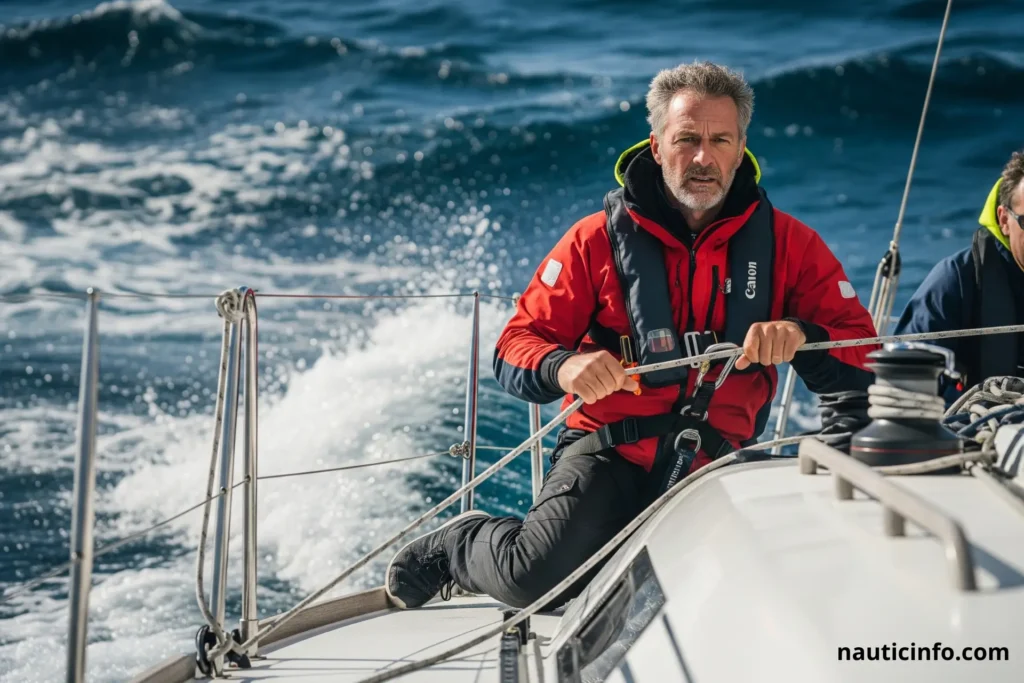
Safety is always the priority at sea, but it takes on an even more critical dimension in short-handed sailing. Indeed, if a problem arises, there is no one to count on but yourself and your partner.
Personal and Vessel Safety Equipment
- PFDs and Tethers: As soon as you leave the harbor, and especially at night or in rough weather, wearing a PFD (Personal Flotation Device—an inflatable one with an integrated harness and light is best) should be standard practice. A tether is its essential companion. The rule is simple: “one hand for yourself, one hand for the boat,” and as soon as you move around the deck, clip into a jackline. Falling overboard is the worst-case scenario because recovering a person is extremely difficult.
- Communication and Alerting Devices: A fixed-mount VHF radio with DSC (Digital Selective Calling) linked to a GPS is the minimum. A waterproof handheld VHF, a Personal Locator Beacon (PLB), or a vessel EPIRB are essential safety investments.
What to Do in a Man Overboard (MOB) Situation
The Man Overboard (MOB) scenario is the greatest danger when short-handed sailing. The procedure must be known by heart.
- Immediate Alert: Yell “Man Overboard!” to mark the event, even if you are alone.
- MOB Button: Immediately press the “MOB” button on your GPS. This records the exact position of the fall.
- Throw Flotation: Throw a life ring, a danforth buoy, or any other flotation device toward the person in the water.
- Recovery Maneuver: Several methods exist. One of the simplest under sail is the Quick Stop maneuver, which involves tacking without touching the jib sheets to quickly return to your previous position. Under power, dousing the sails as quickly as possible and returning with the engine is often more effective.
- Recovery: The hardest part remains: getting the person back on board. Systems like recovery slings (e.g., Lifesling), rescue ladders, or simply a block and tackle on the boom or an arch are indispensable. Practicing these maneuvers in calm weather is the only way to be ready if the day comes.
Conclusion: Freedom Within Reach
Ultimately, short-handed sailing is much more than just a constraint; it’s a sailing philosophy. It is the art of simplification, anticipation, and mastery. By meticulously preparing your boat and your passages, adopting rigorous routines for maneuvers and life aboard, and always placing safety at the top of your priorities, sailing as a duo or solo becomes a source of immense pleasure and pride.
It’s a school of humility in the face of the elements, but also a tremendous school of confidence in yourself and your equipment. So, don’t wait for the ideal race crew. With the right preparation and the right mindset, the horizon is yours. Every successful maneuver, every night watch under the stars, and every arrival in a new anchorage will confirm that the greatest sailing adventure is the one you are living right now, with beautiful simplicity.