

Sailing Cuba: The Caribbean’s Last Frontier
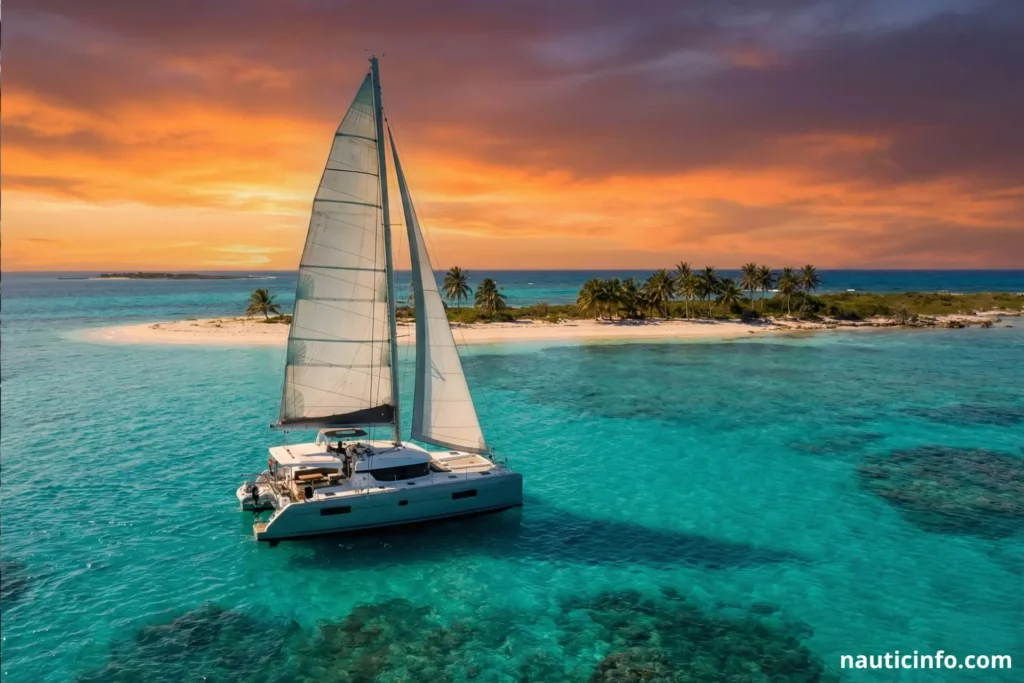
While much of the Caribbean—think the BVI or the Bahamas—is synonymous with crowded beaches, packed anchorages, and easy access to beach bars, there remains a notable exception. An island where time seems to have stopped. Choosing a Sailing Cuba adventure means accepting the challenge of leaving the beaten path to navigate what many call the “last frontier.”
Unlike more developed sailing destinations, Cuba offers a raw, sometimes demanding, but incredibly rewarding experience. Specifically, the southern coast, departing from majestic Cienfuegos toward the wild Canarreos Archipelago, promises total immersion in unspoiled nature. This article is designed to guide you step-by-step through this extraordinary nautical journey.
(A Note for US Citizens: Traveling to Cuba for pure tourism is technically restricted by US law. However, sailing charters are generally permitted under the “Support for the Cuban People” category of general licenses, provided you maintain a full schedule of activities that support independent Cubans. Always verify current OFAC regulations before booking.)
Why Choose a Sailing Cuba Adventure Now?
Deciding on a Sailing Cuba vacation doesn’t happen by chance. You choose it because the cruising grounds are immense and remarkably preserved. Furthermore, the pressure from other tourists on the water is almost nonexistent compared to typical US cruising grounds.
Moreover, Cuban culture, with its ubiquitous music, complex history, and incredibly welcoming people, adds a human dimension found nowhere else. However, you must be aware that this is a destination that must be earned. Infrastructure is significantly less developed than in places like the US Virgin Islands, making the experience all the more authentic. This is where the true spirit of “nautical adventure” comes into its own.
Important Note: Sailing Cuba requires greater autonomy than other Caribbean islands. Provisioning can be a significant challenge, and connection to the outside world (internet/cell service) is often limited or non-existent once you leave port. This is the price of absolute tranquility.
Cienfuegos: The Ideal Starting Point for Sailing Cuba
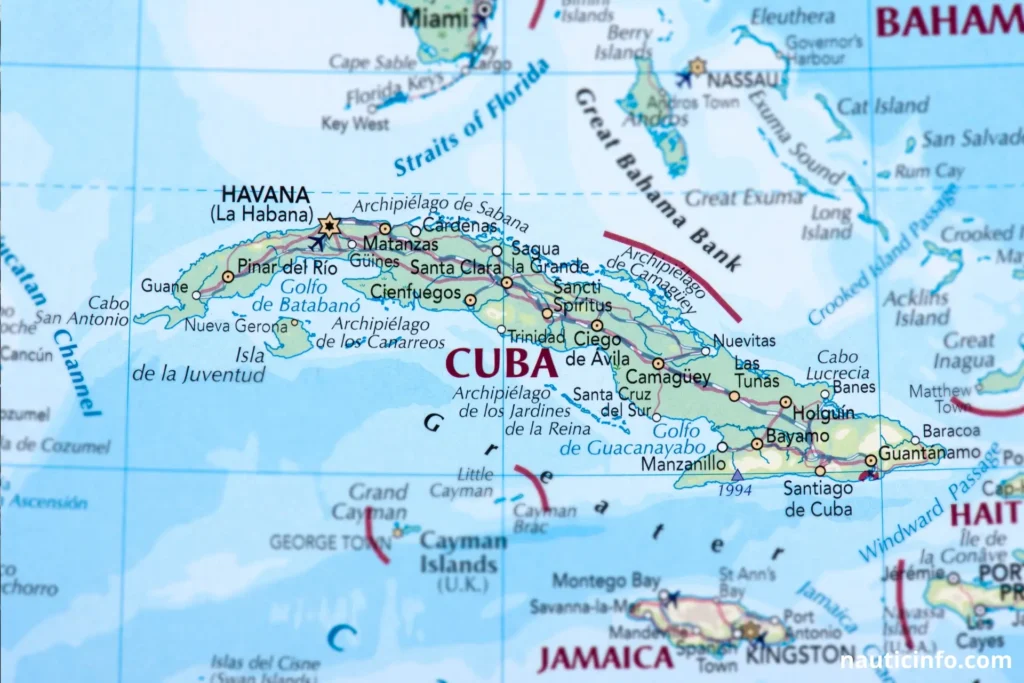
The majority of nautical charters based on the south coast depart from Cienfuegos. Nicknamed the “Pearl of the South,” this French-influenced colonial city is a UNESCO World Heritage site. Consequently, beginning your Sailing Cuba journey here is both a strategic and aesthetic choice.
The Cienfuegos marina offers essential services for preparing your boat. Additionally, the bay itself is vast and well-protected, allowing for a smooth shakedown cruise before heading out into the open Caribbean Sea.
Preparing to Depart Cienfuegos for a Successful Sailing Cuba Trip
To ensure your Sailing Cuba experience is a success from day one, meticulous preparation at the marina is indispensable. Indeed, once you have left Cienfuegos behind, provisioning opportunities will become extremely rare, or even nonexistent, until you reach Cayo Largo.
Here are key steps to validate before casting off the lines:
- Provisioning: Do not count on supermarkets as you know them in the US. It is often preferable to use your charter company’s provisioning service for staples. Subsequently, supplement this at the local morning market for fresh fruits and vegetables.
- Water and Fuel: Depart with tanks absolutely full. Fresh water management is crucial in the Canarreos.
- Clearance Formalities: Cuban authorities (Guarda Fronteras) are strict. You must obtain your “Despacho” (cruising permit) physically before leaving the dock.
The Canarreos Archipelago: The Heart of Your Sailing Cuba Cruise
Once the Bay of Cienfuegos is in your wake, head west. This is where the Sailing Cuba adventure truly begins. The Canarreos Archipelago is a string of islands and cayos (coral keys) stretching for nearly 80 nautical miles.
It is a cruising zone protected by a massive barrier reef, offering calm, turquoise, but shallow waters. Therefore, visual (“eyeball”) navigation is often necessary to avoid shallow coral heads.
Cayo Largo and Cayo Rosario: Jewels of a Sailing Cuba Voyage
Within this archipelago, two distinct destinations stand out and alone justify the voyage when Sailing Cuba.
On one hand, there is Cayo Largo. This is the only point of “civilization” in the archipelago, featuring a small marina, an airport, and a few resort hotels. It is the ideal place to top up water tanks or enjoy a restaurant meal. Its main beach, Playa Sirena, is regularly cited among the most beautiful in the world thanks to sand as fine as flour.
On the other hand, there is Cayo Rosario. Located further west, this is an uninhabited nature reserve. Here, wildlife is king. It is a sanctuary for iguanas on land and, underwater, boasts an impressive density of fish. The anchorage is wild, protected by the reef. This is the very essence of the Sailing Cuba experience: you, your boat, and nature.
Practical Tips for Organizing Your Sailing Cuba Journey
Navigating Cuba cannot be improvised like a cruise in the Florida Keys. Indeed, local specifics impose a certain logistical rigor. Here is a comparison to help you choose the right vessel for exploring Sailing Cuba.
Comparative Table: Which Boat to Choose?
| Feature | Catamaran | Monohull | Verdict for Cuba |
| Draft | Shallow (3ft – 4.5ft) | Deep (> 6ft) | Catamaran: Essential for getting close to beaches and navigating the shallow waters of the Canarreos safely. |
| Ventilation | Excellent (open saloon) | Average | Catamaran: The heat can be intense; good natural cross-ventilation is key. |
| Anchor Comfort | Very stable | Rolls a bit | Catamaran: The anchorages are calm, but the stability of a cat is an appreciable luxury for life aboard. |
| Price | Higher (+30 to 50%) | More affordable | Monohull: A viable option if the budget is tight, but you must be extremely vigilant about depth. |
Formalities and Provisioning: The Challenges of Sailing Cuba
Beyond choosing the boat, a successful Sailing Cuba trip requires understanding two major aspects: money and food.
Firstly, the monetary situation in Cuba is complex. US credit cards will almost certainly not work. Expert advice: Bring plenty of cash in small denominations (USD is widely accepted in private transactions, Euros are good too) for tips, taxis, and paladares (private restaurants).
Secondly, the issue of food is central during a Sailing Cuba voyage.
- Dry Goods: Bring what luxuries you can from home (favorite coffee, chocolates, specific spices, granola bars).
- Fresh Products: Lobster is abundant and cheap (bartered directly from fishermen at sea). Fish is also easy to catch (definitely bring a trolling line!). Conversely, beef is rare and expensive.
The Barter System: Fishermen often prefer trade over cash. Bringing extra bottles of rum, T-shirts, baseball caps, or bars of soap can get you fresh lobster easier than money.
Technical Navigation: Specifics of the Sailing Cuba Zone
For the skipper, Sailing Cuba offers generally mild conditions, but vigilance is required.
The dominant winds are the Trade Winds from the East/South-East, generally blowing between 10 and 20 knots. This allows for pleasant sailing, often downwind or on a beam reach heading west. However, this means you will likely be tacking upwind for the return trip toward Cienfuegos (the famous “Caribbean beat”).
Furthermore, while electronic charting is generally reliable, it does not replace visual observation. Reading the water (colors shifting from deep blue to turquoise, then to white/brown) is your best ally for avoiding sandbanks and coral heads.
What Budget Should You Plan for Sailing Cuba?
Finally, let’s talk budget. A Sailing Cuba cruise represents an investment, often comparable to other Caribbean destinations, but with a different cost structure.
It should be noted that Cuban navigation taxes (per person, per day) are often added to the charter price upon arrival. Similarly, visa fees (Tourist Card) are mandatory.
- Sailboat Charter (40ft Catamaran, 1 week): Between $3,800 USD and $6,500 USD depending on the season.
- Boarding Kitty (Fuel, Water, Taxes, Marine Parks): Count on approximately $350 to $450 USD per person.
- Flights (USA – Havana or Varadero + Transfer): Prices vary wildly, but budget for transfers to Cienfuegos (approx 3 hours from Havana).
In conclusion, although the initial cost may seem high, daily life on the spot costs very little since you will spend most of your time at anchor, eating the fruits of your fishing or inexpensive local products.
Conclusion
Choosing a Sailing Cuba vacation is much more than a simple cruise; it is a sensory and temporal exploration. It is accepting the need to totally disconnect to reconnect with the essentials: the wind, the sea, and marine landscapes of rare purity.
From the colonial architecture of Cienfuegos to the deserted beaches of Cayo Rosario, this itinerary in the Canarreos remains one of the sailing world’s best-kept secrets. If you are ready to trade absolute modern comfort for an authentic adventure, then the “last frontier” is waiting for you.