
Bimini Tops and Boat Sun Shades: The Ultimate Guide to Choosing the Ideal UV Protection
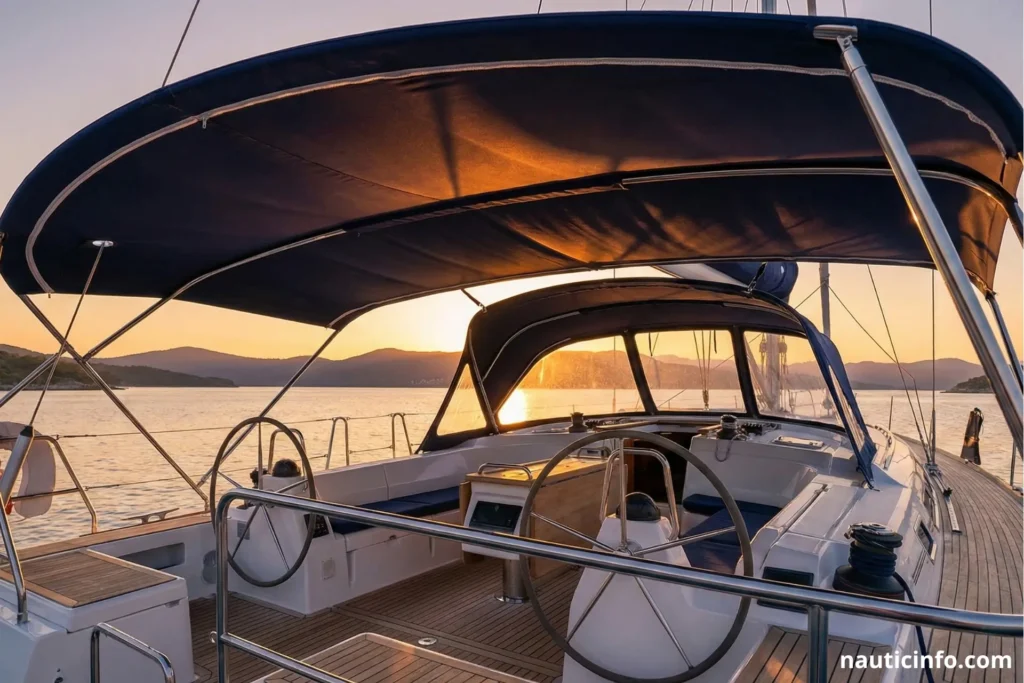
Summer boating in the US offers unbeatable freedom, but the midday sun can be brutal. Whether you are cruising the Florida Keys or fishing in the Great Lakes, prolonged exposure to UV rays is a serious concern. Therefore, equipping your vessel with the right shade solution isn’t just a luxury; it is a safety necessity. In this deep-dive guide, we will explore everything you need to know about Bimini Tops and Boat Sun Shades. We will cover frame materials, fabric choices, and measurement tips to ensure you stay cool and protected on the water.
![Image Prompt: Photorealistic, 16:9, high-angle shot of a sleek white center console boat cutting through blue water on a sunny day. The boat features a navy blue Bimini top fully deployed, casting a distinct shadow over the helm seating. The background shows the Florida coastline. High-end boating magazine style.]
What are Bimini Tops and Boat Sun Shades?
Before diving into the technical specs, let’s clarify what we are talking about. A Bimini Top is an open-front canvas top for the cockpit of a boat, usually supported by a metal frame. It can be collapsed when not in use. On the other hand, a general Boat Sun Shade might refer to extendable canvas attached to T-tops or poles to cover the bow or stern.
Why You Need Premium UV Protection
- Health Safety: Blocks up to 98% of harmful UV rays.
- Comfort: Reduces cockpit temperature significantly.
- Interior Protection: Prevents vinyl upholstery from cracking and fading.
- Resale Value: A well-maintained shade system adds value to your boat.
Choosing the Right Frame for Bimini Tops and Boat Sun Shades
The skeleton of your shade system is the frame. Consequently, choosing the right material determines how long your top will last, especially in harsh saltwater environments.
1. Stainless Steel (The Gold Standard)
If you operate in saltwater or run at high speeds (over 35 MPH), stainless steel is the only viable option. Specifically, you want 316-grade stainless steel tubing. It is heavy, durable, and resistant to corrosion.
- Tubing Size: Look for 7/8 inch or 1 inch diameter tubing.
- Speed Rating: Capable of withstanding highway towing speeds (when booted) and high-speed cruising.
2. Aluminum (The Freshwater Choice)
For pontoon boats or freshwater runabouts, aluminum is a popular, lightweight choice. However, it is less rigid than steel and can oxidize if exposed to salt spray without proper coating.
- Tubing Size: Usually square (1 inch) for pontoons or round (7/8 inch) for small runabouts.
- Speed Rating: best for cruising speeds under 30 MPH.
Comparison Table: Frame Materials
| Feature | 316 Stainless Steel | Aluminum |
| Durability | Extreme (High Tensile Strength) | Moderate |
| Corrosion Resistance | Excellent (Saltwater Ready) | Good (Freshwater Preferred) |
| Weight | Heavy | Lightweight |
| Cost | $$$ | $ -$$ |
| Best For | Center Consoles, Offshore, Speedboats | Pontoons, Bass Boats, Lakes |
Fabric Selection for Bimini Tops and Boat Sun Shades
The fabric is the shield that stands between you and the sun. Furthermore, not all canvases are created equal. The US market is dominated by a few key players, and understanding the difference is vital.
Acrylic vs. Polyester
Acrylic (Solution-Dyed) is the industry leader (brands like Sunbrella®). The color is part of the fiber’s core, meaning it resists fading for years. In contrast, Polyester is surface-dyed. It is cheaper but will fade significantly faster and lose its water repellency sooner.
Editor’s Note: For maximum longevity, always choose Solution-Dyed Acrylic. It allows the fabric to “breathe,” preventing mold buildup underneath, while still shedding water.

Comparison Table: Marine Fabrics
| Fabric Type | UV Resistance | Breathability | Lifespan | Price Point |
| Solution-Dyed Acrylic | High (98% Blockage) | Excellent | 7-10 Years | High |
| Vinyl-Coated Polyester | Moderate | Poor (Traps Heat) | 3-5 Years | Medium |
| Generic Polyester | Low to Moderate | Moderate | 1-3 Years | Low |
How to Measure for Bimini Tops and Boat Sun Shades
Getting the fit right is the most intimidating part for DIYers. However, if you follow these steps using a standard tape measure, you cannot go wrong. You need three key dimensions: Length, Width, and Height.
Step-by-Step Measurement Guide
- Determine the Mounting Points:Decide where you want the deck hinges (the mounts) to sit on your gunwales. This is your center point.
- Measure the Width (Beam):Measure the distance between the two mounting points (port to starboard).
- Tip: Bimini frames have some flex. If your measurement is 82 inches, you can typically order a frame sized for 79-84 inches.
- Determine the Height:Stand inside the boat. Measure from the mounting point on the gunwale up to your desired clearance.
- Standard: 54 inches (great for sitting) or 6 feet (72 inches) (essential for standing at a helm).
- Warning: Do not go too high, or you lose shade coverage as the sun moves.
- Select the Length:This determines how much area is shaded (Front to Back).
- 3 Bows: Usually covers 6 feet in length.
- 4 Bows: Usually covers 8 feet in length (common for Pontoons).
Installation and Maintenance of Bimini Tops and Boat Sun Shades
Once you have purchased your top, installation is generally a straightforward afternoon project. Moreover, maintaining it correctly ensures it lasts a decade rather than a season.
Installation Tips
- Through-Bolting: Wherever possible, use through-bolts with backing plates rather than simple wood screws. This distributes the stress on the fiberglass.
- Tension Straps vs. Struts: Nylon straps are standard, but upgrading to rear support struts (rigid poles) allows the bimini to stay upright even when the canvas is folded back (the “radar arch” position).
Maintenance Checklist
- Freshwater Rinse: After every saltwater trip, rinse the frame and zippers.
- Lubricate Zippers: Use a PTFE spray or beeswax on zippers and snaps every month.
- Boot It: Never trailer your boat at highway speeds with the Bimini deployed. Always fold it and use the storage boot to prevent wind damage.
- Waterproofing: Re-apply a fabric guard (like 303 Marine Fabric Guard) every two seasons to maintain water repellency.
Pros and Cons of Bimini Tops and Boat Sun Shades
To summarize our findings, here is a quick breakdown to help you make your final decision.
Pros
- Superior UV Protection: Keeps the crew safe and comfortable.
- Versatility: Can be folded down when you want sun or need bridge clearance.
- Cost-Effective: Much cheaper than a fiberglass hardtop.
- Airflow: Open sides allow for maximum breeze compared to enclosed cabins.
Cons
- Speed Limits: Generally not designed for speeds over 45 MPH while deployed.
- Casting Interference: Can get in the way of fishing rods if not managed properly.
- Maintenance: Canvas requires cleaning and eventual replacement.
Conclusion
Investing in high-quality Bimini Tops and Boat Sun Shades is one of the smartest upgrades you can make for your vessel. It extends your days on the water, protects your investment, and keeps your family safe from the harsh US sun.
In conclusion, prioritize stainless steel frames for durability and solution-dyed acrylic fabrics for longevity. Measure twice, cut (or order) once, and you will enjoy cool, shaded cruising for seasons to come.