
Ultimate Guide to Marine Engine Spring Commissioning: The 5 Vital Checkpoints
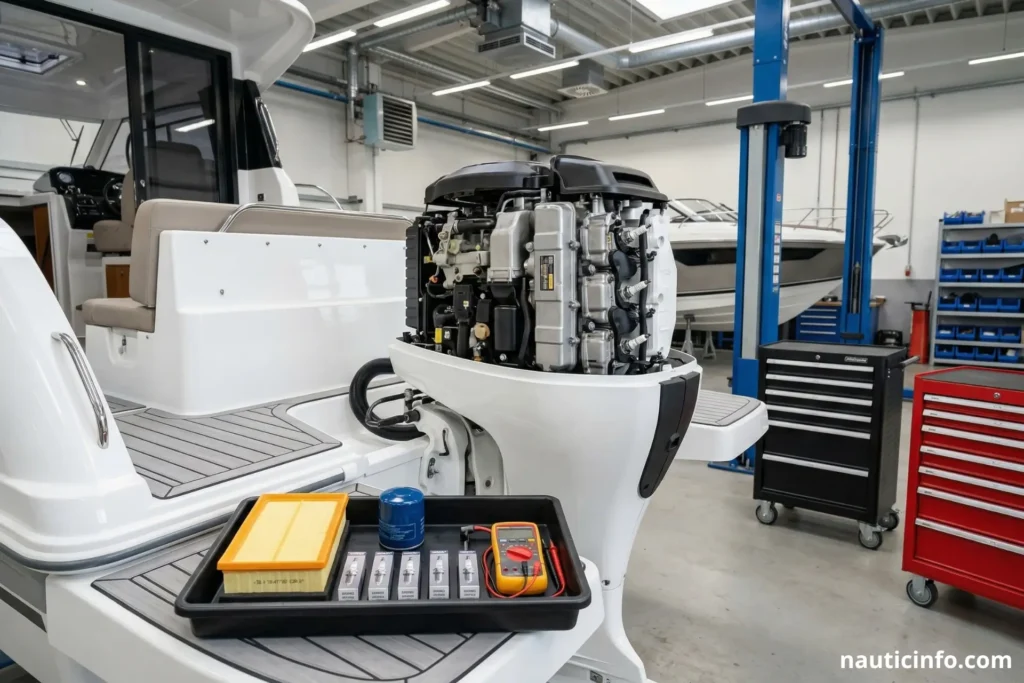
The transition from winter storage to active seasonal operation requires rigorous mechanical evaluation to ensure vessel reliability and safety on the water. Specifically, executing a thorough marine engine spring commissioning protocol prevents catastrophic failures and costly on-water emergencies. Therefore, addressing the five vital control points—oil systems, fuel integrity, spark plug diagnostics, cooling efficiency, and battery health—is absolutely non-negotiable for responsible boaters.
The Philosophy Behind Marine Engine Spring Commissioning
Marine environments are inherently hostile to delicate mechanical and electrical components. Furthermore, the combination of high humidity, corrosive saltwater, and prolonged periods of operational inactivity accelerates degradation across all engine systems. Specifically, seasonal changes in ambient temperature cause freezing water or heavy condensation to build up inside the engine block and fuel tank. Consequently, failing to comprehensively inspect a vessel prior to the first launch often results in accelerated wear, diminished performance, and severe internal damage. However, a systematic approach to maintenance mitigates these risks entirely.
Therefore, industry experts strongly advocate for a structured evaluation that prioritizes the most vulnerable systems. Moreover, understanding the underlying mechanical principles allows operators to identify early warning signs before they evolve into catastrophic mechanical failures. Specifically, the “spring fitting out” process is not merely a cursory glance; it is a deep diagnostic dive into the fluid dynamics, thermodynamic management, and electrochemical stability of the powerplant. Consequently, preparing marine equipment for prolonged periods of use requires an uncompromising commitment to routine checks, utilizing manufacturer-specified intervals to prevent rust, corrosion, and catastrophic engine seizure. Furthermore, relying on an exhaustive marine engine spring commissioning checklist empowers vessel owners to navigate the waters with absolute confidence.
Checkpoint 1 : Oil and Lubrication Systems in Marine Engine Spring Commissioning
The lifeblood of any four-stroke internal combustion engine is its lubrication system. However, marine engines operate under vastly different loads and environmental conditions compared to standard automotive engines. Specifically, marine powerplants frequently run at wide-open throttle for extended periods, generating immense heat and immense shear stress on the engine oil. Consequently, verifying oil condition, confirming exact capacity, and upgrading filtration mechanisms constitute the first critical step in the commissioning process. Furthermore, ignoring the manufacturer’s scheduled intervals remains the quickest way to destroy a well-engineered block.
Analyzing Inboard vs. Outboard Oil Dynamics
Different engine architectures demand distinct maintenance schedules and highly specific fluid capacities. Specifically, the break-in period and subsequent maintenance intervals dictate the long-term longevity of the powerplant. Furthermore, inboard and outboard engines exhibit different thermal characteristics that influence oil degradation rates.
- Inboard Engines: Inboard boats typically require an oil change every 50 hours of operation or annually, depending heavily on climate and usage intensity. Furthermore, the initial 50 hours are absolutely critical for the break-in period, particularly for high-performance blocks like Ilmor engines. Consequently, operators must resist the urge to push a new marine engine to its limits immediately.
- Outboard Engines: Outboard maintenance intervals generally follow a 100-hour or annual schedule. Specifically, brands like Mercury structure their modern four-stroke lineup around 100-hour (1 year), 300-hour (3 years), and 500-hour (5 years) milestones. Moreover, a highly critical but often overlooked 20-hour break-in service is necessary for new outboards to flush manufacturing debris from the crankcase. Consequently, skipping this service means running contaminated oil through the tight-tolerance break-in period, which aggressively accelerates wear on cam lobes and cylinder walls.
However, if the engine sat idle over the winter without proper winterization, changing the oil before the first start of the spring is paramount. Specifically, sitting idle is just as hard on internal seals and lubricants as running the engine hard. Consequently, performing an immediate oil change removes the corrosive condensation and acidic combustion byproducts that accumulated in the crankcase during the off-season, even if the engine only ran for 20 hours the previous year.
The Role of Viscosity and Weight in Marine Engine Spring Commissioning
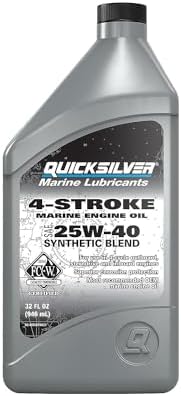
Selecting the correct oil weight is crucial for maintaining shear stability and ensuring adequate corrosion protection. Furthermore, the FC-W (Four-Cycle Water-cooled) certification ensures the lubricant contains the necessary rust inhibitors required for a marine environment. Specifically, lighter weights like 10W-30 are generally suitable for lower horsepower engines (2.5 to 30 HP), while heavier synthetic blends like 25W-40 provide ultimate wear, shear, and corrosion protection for high-output outboards, sterndrives, and inboards operating at maximum output.
| Engine Type / Output Category | Recommended Viscosity Grade | Performance Rating | Target Application Context |
| Low HP (2.5 – 30 HP) | 10W-30 Mineral Oil | Good | Small portable outboards, light recreational use. |
| Mid HP (40 – 115 HP) | 25W-40 Synthetic Blend | Best | Mid-range outboards, heavy continuous use. |
| High HP (150+ HP) & V8 | 25W-40 Synthetic Blend | Best | Mercury Verado, high-output heavy inboards. |
| Volvo Penta V8 (7.4L/8.1L) | Synthetic SAE 30 / 10W-40 | OEM Specification | Heavy cruisers, large displacement sterndrives. |
Furthermore, the physical act of changing the oil requires specific tooling and methodology. Specifically, on smaller models, the oil filter is usually hand-accessible. However, on larger Mercury V6 and V8 blocks, a specific 3-1/8 inch cup wrench is absolutely required to remove the spin-on filter without crushing the housing. Consequently, operators must check the drain plug located on the lower port side (on Yamaha models, for instance) and verify the capacity, which can range from a mere 1.8 Quarts for an F25 up to a massive 7.4 Quarts for a V6 F300.
Pro Tip: Always replace the oil filter every single time you change the oil during your marine engine spring commissioning. Furthermore, lightly lubricate the rubber gasket on the new filter with fresh engine oil before threading it on. Consequently, this prevents the gasket from binding and ensures a leak-free seal under high-pressure operation.


Checkpoint 2 : Mastering Fuel Systems During Marine Engine Spring Commissioning
Stale or water-logged fuel strands significantly more vessels than any other mechanical culprit on the water. Specifically, gasoline deteriorates rapidly when exposed to atmospheric venting and seasonal temperature fluctuations. Consequently, the fuel delivery system requires a meticulous, multi-point inspection from the tank vent all the way down to the high-pressure injectors. Furthermore, ensuring fuel integrity is perhaps the most critical preventative measure an operator can take.
The Chemistry of Phase Separation
Modern marine fuels at local pumps often contain up to 10% ethanol (E10). However, ethanol possesses a highly hygroscopic chemical nature, meaning it actively and continuously absorbs moisture directly from the ambient air. Furthermore, when the water concentration within the fuel tank exceeds a critical threshold, a destructive chemical phenomenon known as cooling-induced phase separation occurs. Specifically, the chemical bond holding the gasoline and the ethanol together violently breaks.
Consequently, a distinct layer of highly corrosive water and ethanol drops to the absolute bottom of the fuel tank, leaving the lighter, now lower-octane gasoline floating uselessly on top. Therefore, because marine engines draw fuel from the bottom of the tank, the engine immediately ingests a purely incombustible mixture of water and ethanol. Subsequently, this leads to severe pre-ignition detonation, extreme lean-running thermal conditions, and potentially catastrophic piston damage, such as knocking a literal hole through the top of the piston.
Moreover, once phase separation occurs, it is completely irreversible; absolutely no chemical additive or stabilizer can magically recombine the separated mixture. Thus, the only legitimate remedy involves entirely draining the fuel tank, safely disposing of the hazardous waste, and physically cleaning the system.
However, operators can proactively prevent this disaster. Specifically, boaters must utilize specialized fuel stabilizers and water-dispersing additives at every single fill-up. Furthermore, these advanced additives function by either using demulsifiers to force minute water droplets out of chemical suspension for the filter to catch, or by aggressively dispersing the water into microscopic micro-particles that safely pass through the combustion chamber without causing hesitation. Consequently, utilizing an enzyme chemistry additive like Star Tron or a polyether amine additive like Techron helps mitigate these immense risks.
Filtration Upgrades and Micron Ratings in Marine Engine Spring Commissioning
While factory-installed filters provide an adequate baseline of protection, upgrading the filtration system is a highly recommended practice for serious offshore boaters. Furthermore, installing a dedicated 10-micron fuel filter/water separator directly upstream of the engine’s stock filter creates a robust, multi-stage defense mechanism against microscopic debris and suspended water. Specifically, this secondary filtration significantly reduces the contaminants that might otherwise load up and clog the stock engine filter, which often filters in the much finer two-micron range.
| Fuel System Component | Prescribed Maintenance Action | Recommended Interval | Technical Significance |
| Fuel Lines & Hoses | Inspect for softness, extreme brittleness, or cracking. | Pre-season & continuously | Prevents air leaks and fuel hemorrhaging. Must use specifically ethanol-resistant hoses. |
| 10-Micron Water Separator | Replace the spin-on canister. | Every 100 hours or annually. | Features advanced Super Absorbent Polymers (SAPs) designed to trap suspended moisture. |
| Engine Fuel Filter | Inspect and replace. | Every 100 hours or annually | Final vital defense before high-pressure EFI injectors. |
| Vents and Fill Caps | Inspect rubber O-rings and clear any atmospheric debris. | Pre-season commissioning | Prevents vacuum lock and bulk water intrusion from heavy rain or spray. |
Furthermore, the hoses themselves demand scrutiny. Specifically, operators must replace the primary hose running from the fuel tank to the water separating filter, and the secondary line from the filter out to the engine block. Consequently, ensuring these are strictly ethanol-resistant marine hoses prevents internal delamination, which otherwise sends chunks of rubber directly into the injectors.
Pro Tip: Always dose your fuel tanks with a high-quality marine fuel stabilizer prior to winter storage, and run the engine to ensure the treated fuel circulates completely through the rails and injectors. However, if you inherit a used boat with an unknown fuel history, pumping the old fuel out and starting fresh is the only guaranteed way to avoid catastrophic detonation.
Checkpoint 3 : Spark Plugs and Ignition Diagnostics
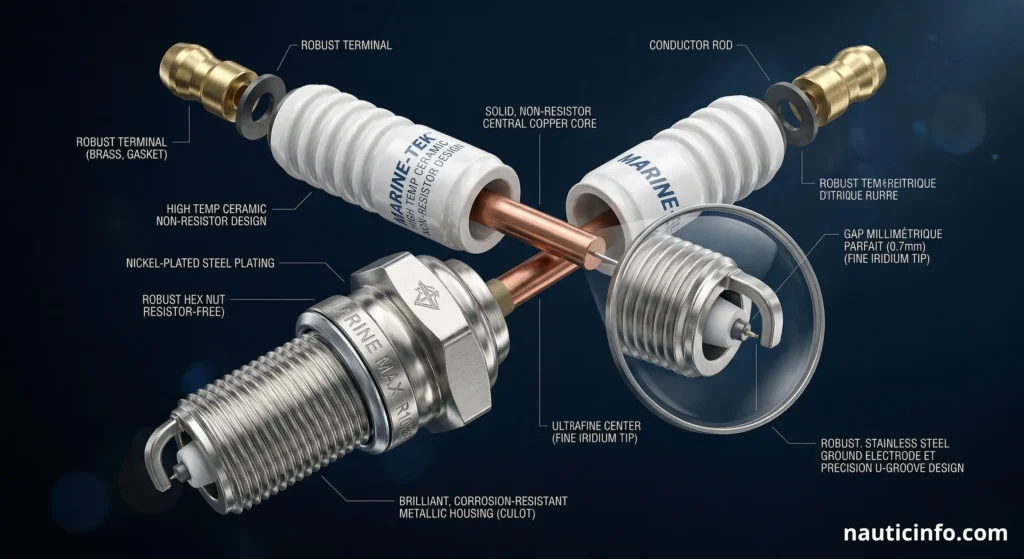
The ignition system provides the literal spark of life for any gasoline-powered marine engine. However, spark plugs represent far more than just a mere ignition source; they act as highly accurate diagnostic ciphers that reveal the hidden internal health of the combustion chamber. Consequently, meticulously inspecting the spark plugs is a mandatory, high-value phase of marine engine spring commissioning.
Reading Spark Plug Conditions During Marine Engine Spring Commissioning
Removing and thoroughly analyzing each spark plug provides invaluable insight into the engine’s air-to-fuel mixture, the accuracy of the ignition timing, and the integrity of the internal oil sealing. Specifically, expert technicians evaluate the color, texture, and physical condition of both the electrodes and the surrounding ceramic insulator. Furthermore, the visible spark jumping between the electrodes must be evaluated for sheer electrical strength; a strong blue spark indicates highly sufficient voltage (between 10kV and 20kV), while a weak yellow or orange spark signals severely low voltage, directly indicating a failing ignition coil, a compromised plug wire, or excessive electrode gap.
| Visual Plug Condition | Electrode and Insulator Appearance | Diagnostic Meaning | Required Mechanical Action |
| Normal Operation | Tan, light grayish-brown coloring; minimal electrode erosion. | Optimal combustion efficiency and correct engine heat range. | Clean with a wire brush, check the gap, and confidently reinstall. |
| Carbon Fouled | Dry, fluffy, deep black soot covering the tip. | Excessively rich air-fuel mixture, dirty air filter, or incredibly weak ignition. | Replace plugs; immediately investigate fuel delivery mixture and air intake. Consider switching to a “hotter” plug. |
| Wet / Oil Fouled | Shiny, black, thick, oily coating. | Raw oil bypassing worn piston rings or leaking valve guides. | Major internal engine repair is required. Replace plugs temporarily to start. |
| Blistered / Burned | Speckled white insulator; physically melted or distorted electrodes. | Extreme thermal overheating, dangerously lean fuel mixture, or severe pre-ignition. | Do not run the engine under load. Diagnose the cooling system and fuel delivery immediately. |
Therefore, if any spark plugs exhibit clear signs of fouling, heavy ash deposits, or abnormal asymmetrical wear during the spring inspection. They must be replaced immediately to prevent engine misfires, poor acceleration, and excessive fuel consumption during the season. Furthermore, checking the gap specification is critical. Especially if the engine has been recently converted to an electronic ignition system, as a wider gap may be supported by the hotter spark.
Timing Systems and Ignition Components
Beyond the spark plugs themselves, the belts and chains that drive the ignition timing require deep scrutiny. Specifically, different manufacturers utilize vastly different timing architectures. For example, many newer Mercury models, such as the 3.4L V6. Utilize sophisticated maintenance-free timing chains that are designed to last the entire functional life of the engine. However, popular Yamaha models, such as the F150 and F200, rely on traditional rubber timing belts that require strict replacement. Often at the 500-hour mark to prevent valve-to-piston contact in the event of a belt snap.
Consequently, visually inspecting the timing and alternator belts for fraying, dry rot, or missing teeth is an essential step. Furthermore, replacing these belts if they show any signs of fatigue is far less expensive than rebuilding a cylinder head following a catastrophic timing failure.
Pro Tip: When threading new spark plugs into an aluminum cylinder head, always start them carefully by hand to avoid cross-threading. Furthermore, utilize a properly calibrated torque wrench to secure them. Specifically, over-tightening can strip the soft aluminum threads, while under-tightening can cause the plug to blow out under extreme cylinder pressures. For instance, a typical Yamaha outboard spark plug requires exactly 13 ft-lbs (18 Nm) of torque.
Checkpoint 4 : The Cooling System and Impeller Dynamics in Marine Engine Spring Commissioning
Marine engines rely almost exclusively on an endless supply of ambient raw water to manage intense thermal loads. Specifically, outboards and sterndrives utilize a flexible rubber impeller housed deep within the lower unit to forcefully draw water through the intake grates. Push it up through the engine block or heat exchanger, and ultimately expel it through the exhaust. Consequently, any minor disruption in this critical flow results in rapid, destructive overheating.
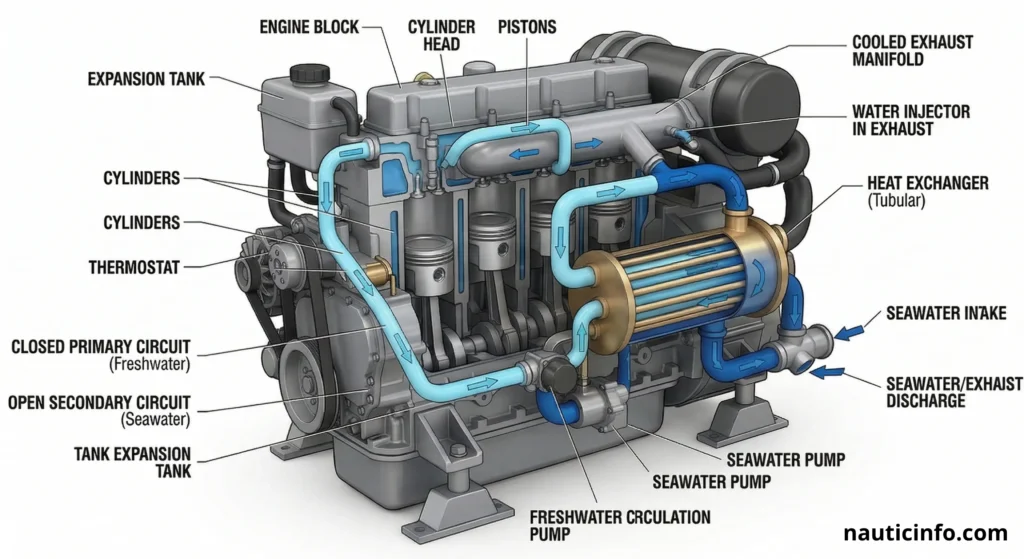
Distinguishing Impeller Failure from Thermostat Malfunction
When an engine begins to exhibit overheating symptoms, diagnosing the exact point of failure within the cooling chain is critical. Furthermore, accurately distinguishing between a compromised water pump impeller and a faulty thermostat dictates the appropriate repair strategy.
Impeller Symptoms
A deteriorating rubber impeller inevitably loses its inherent flexibility and cannot generate adequate fluid suction. Specifically, this degradation manifests distinctly as frequent overheating at idle or very low RPMs. As the operator increases the engine speed, the faster rotation of the pump shaft temporarily compensates for the weak rubber vanes, sometimes lowering the temperature temporarily. Furthermore, clear physical symptoms include a drastically reduced water stream from the diagnostic “tell-tale,” thick steam billowing from the exhaust outlet, and a highly distinct. Acrid smell of burning rubber wafting from the engine area. Notably, industry professionals dictate that impellers should be replaced as preventative maintenance every 200 hours or two years, whichever occurs first.
Thermostat Symptoms
The thermostat serves to regulate the internal engine block temperature by physically restricting water flow until optimal operating temperatures are reached. However, if a thermostat sticks in the fully closed position due to hard salt accumulation or mechanical spring failure. The engine will overheat uniformly under all load conditions and RPM ranges. Specifically, the only definitive, foolproof way to test a marine thermostat is to physically remove it from the housing. Place it in a pan of water on a stove, and heat the water to approximately 170 degrees Fahrenheit. If the thermostat fails to open at the manufacturer’s specified temperature, it is permanently defective and must be discarded immediately.
Moreover, the entire cooling loop requires inspection. Specifically, for inboard and sterndrive engines utilizing closed cooling systems (similar to automotive antifreeze systems). Operators must bleed any trapped air from the keel-cooling loops every three months and renew the specialized coolant annually. Consequently, air pockets or degraded old coolant will allow the engine block to overheat long before the dashboard gauge ever hits the red zone.
Sacrificial Anodes and Galvanic Corrosion in Marine Engine Spring Commissioning
Galvanic corrosion represents a silent, relentless, and highly destructive threat to vital underwater metals. Specifically, when two dissimilar metals (such as a stainless steel propeller shaft and an aluminum outdrive casing) are electrically connected and submerged in a conductive electrolyte (such as seawater), a functional galvanic cell is instantly formed. Consequently, a continuous low-voltage electrical current flows between the components. Causing the less noble (more active) metal to literally shed its electrons and corrode away rapidly.
Therefore, to proactively protect incredibly expensive components like aluminum lower units, steel shafts, and vital brass through-hull fittings. Marine manufacturers employ sacrificial anodes. These anodes are essentially blocks cast from highly electro-active metals intentionally designed to corrode and disintegrate in place of the vital engine parts. Furthermore, physically inspecting and replacing these anodes is a paramount step in spring preparation. Specifically, if an anode is found to be more than 50% depleted or eaten away, it must be replaced immediately.
| Water Type (Electrolyte) | Optimal Anode Material | Galvanic Reasoning and Application |
| Saltwater | Zinc | Provides excellent conductivity and protection in low-resistivity saltwater environments without aggressively overprotecting the hull. |
| Brackish Water | Aluminum | Perfectly balances galvanic activity for estuarine environments with fluctuating salinity levels. Notably lighter than traditional zinc. |
| Freshwater | Magnesium | Possesses the absolute most negative electropotential. Essential for high-resistivity freshwater lakes; however, it will dissolve far too rapidly if used in saltwater. |
Moreover, boaters must absolutely never paint over a sacrificial anode. Consequently, hull paint acts as a highly effective electrical insulator. Completely neutralizing the anode’s vital electrical contact with the water and rendering the entire galvanic protection system useless. Furthermore, if you use zinc anodes and they have been subjected to freshwater (like rain or melting snow) over the winter storage period, a white crusty buildup will form. Specifically, this oxidation layer needs to be aggressively removed with a wire brush for them to function properly when the boat goes back into the water.
Pro Tip: Following every single saltwater or brackish water excursion, flushing the engine with fresh water for at least five full minutes at idle is highly recommended. Consequently, this critical action dissolves heavy salt crystals that would otherwise bind the thermostat, seize the water pump housing, and accelerate internal block corrosion.
Checkpoint 5 : Battery Maintenance and Electrical Systems
Modern recreational and commercial vessels rely heavily on uninterrupted electrical power not just for engine cranking. But for running complex navigational radar suites, continuous livewell pumps, and highly sophisticated electronic fuel injection (EFI) systems. However, badly neglected batteries expertly mimic major engine failures, leaving boaters helplessly stranded at sea. Therefore, meticulously assessing battery health, securing heavy-gauge connections, and understanding complex charging profiles are absolutely critical tasks for the spring season.
Understanding CCA Requirements for Marine Engine Spring Commissioning
Marine batteries are strictly categorized by physical dimensions established by the Battery Council International (BCI). Specifically, these standardized alphanumeric sizes—such as Group 24, Group 27, and the massive Group 31—ensure that replacement batteries fit securely into standard marine battery trays without requiring expensive structural modifications to the vessel’s hull.
Furthermore, engine starting requirements heavily dictate the necessary Cold Cranking Amps (CCA) or Marine Cranking Amps (MCA). Specifically, larger four-stroke engines demand massive momentary current to successfully turn over their high-compression cylinders. For example, a heavy V8 block or a supercharged Mercury Verado 4-stroke (225HP to 300HP) strictly requires a staggering minimum of 800 CCA (or 1216 MCA) safely supplied by a heavy-duty Group 31 battery. Conversely, smaller lightweight outboards under 60 HP generally only require a modest 350 CCA, easily and safely managed by a much smaller Group 24 battery footprint.
Multi-Stage Charging and Voltage Optimization
A marine battery that sits uncharged and ignored over the long winter will rapidly undergo irreversible sulfation. Where hard lead sulfate crystals permanently bond to the internal lead plates, drastically reducing the battery’s total capacity. Therefore, bringing the battery back to optimal health in the spring requires highly sophisticated charging techniques. Most standard automotive alternators and cheap hardware-store trickle chargers simply cannot properly sequence a deep-cycle marine battery. Consequently, utilizing a smart multi-stage marine charger is strictly mandated.
Bulk Charge Phase
The smart charger delivers maximum safe current while the measured voltage steadily rises. Specifically, this aggressive phase rapidly restores approximately 80% of the battery’s completely depleted capacity. For standard liquid electrolyte batteries, the voltage is pushed to roughly 14.4 VDC (14.2 VDC for AGM, and 14.1 VDC for delicate Gel cells).
Absorption Phase
The charger intelligently maintains the high target voltage but drastically reduces the current flow. Furthermore, this phase safely pushes the final 20% of the charge deep into the lead plates without generating excessive, potentially damaging internal heat.
Float Phase
Once the battery is fully charged to 100%, the system drops down to a gentle maintenance voltage. Specifically, a 12-volt liquid electrolyte battery at rest requires a constant float voltage between 13.2 and 13.4 VDC. Consequently, this delicate balance prevents the highly acidic electrolyte from “boiling off” or excessively gassing while keeping the battery fully topped off and ready for action.
Equalization Phase (Flooded Lead-Acid Only)
This highly controlled, intentional overcharge phase (pushing 15 volts or higher) acts to aggressively break down the hardened sulfate crystals, vastly improving the total lifespan of the battery bank. However, this rigorous cleaning phase must only be executed periodically, such as once explicitly during the comprehensive spring commissioning process.
Moreover, inspecting the physical integrity of the electrical connections is equally vital. Specifically, technicians must heavily scrub the battery terminal posts with a stiff wire brush and a thick paste solution of baking soda and water to completely neutralize any acidic blue or white corrosion. Subsequently, securely tightening all cable connections with a proper wrench ensures flawless voltage delivery. A slightly loose wingnut can cause severe voltage drops, resulting in intermittent engine stalling, dimming electronics, and highly confusing false engine alarms.
Pro Tip: If your vessel utilizes traditional flooded lead-acid batteries, absolutely ensure you check the water levels before attaching a charger. Furthermore, top off any low cells exclusively with pure distilled water—never tap water. Consequently, tap water contains highly destructive minerals that will immediately poison the internal chemistry of the battery cells.
OEM vs. Aftermarket Parts in Marine Engine Spring Commissioning
During the extensive commissioning process, replacing heavily worn components—such as rubber impellers, microscopic fuel filters, spark plugs, and sacrificial anodes, raises the inevitable, highly debated question between utilizing Original Equipment Manufacturer (OEM) parts versus cheaper aftermarket alternatives.
Furthermore, aftermarket marine parts are specifically mass-produced by third parties to universally fit a wide array of different makes and models. Consequently, while they undeniably present a much lower upfront cost at the register. They carry a remarkably high risk of poor fitment, material incompatibility, and premature mechanical failure. For example, an aftermarket water pump impeller may feature slightly stiffer, inferior rubber compounds, leading directly to reduced suction capability at low RPMs and subsequent overheating.
Conversely, OEM parts are meticulously engineered by the specific engine builder itself (e.g., Yamaha, Mercury, Volvo Penta) using proprietary, highly guarded material specifications and exact, microscopic tolerances. Specifically, utilizing OEM parts strictly preserves the factory warranty and absolutely guarantees seamless integration with the rest of the powerplant. Therefore, to ensure total long-term peace of mind and significantly minimize the risk of dangerous mechanical breakdowns far offshore, investing the extra capital in OEM-certified replacements is the standard operating procedure for all professional marine technicians.
Essential Torque Specifications for Marine Engine Spring Commissioning
A frequently overlooked yet utterly crucial aspect of preparing an engine for the season is the verification of fastener tightness. Specifically, marine engines vibrate intensely, and the continuous thermal cycling from cold seawater to operating temperature causes bolts to loosen over time. Consequently, utilizing a calibrated torque wrench to ensure all critical fasteners meet the exact manufacturer specifications is vital for structural integrity.
Furthermore, failing to properly torque components can lead to catastrophic damage. For example, an under-torqued propeller nut can result in the loss of the prop, while an over-torqued spark plug can strip the threads in a costly aluminum cylinder head.
| Critical Component | Specific Thread Size | Required Tightening Torque | Technical Importance |
| Propeller Nut | M10 | 40.6 ft-lbs (55 Nm) | Prevents catastrophic loss of propulsion while underway. |
| Spark Plug | M12 | 13.0 ft-lbs (18 Nm) | Ensures proper combustion sealing without stripping delicate aluminum cylinder head threads. |
| Flywheel Nut | M16 | 80.0 ft-lbs (110 Nm) | Maintains critical ignition timing alignment on the crankshaft. |
| Lower Case Mounting Bolt | M10 | 34.7 ft-lbs (47 Nm) | Secures the heavy lower unit and precise driveshaft alignment to the main engine block. |
Specifically, operators must strictly avoid “guessing” the tightness of these fasteners. Furthermore, investing in a high-quality, calibrated torque wrench and consulting the exact service manual for your specific outboard or inboard model is highly recommended.
Expanding the Scope : Auxiliary Systems in Marine Engine Spring Commissioning
While the engine block itself demands the vast majority of technical attention, the holistic commissioning of a vessel requires extending that scrutiny to auxiliary systems that directly impact the engine’s operating environment. Specifically, the boat’s trailer, bilge management, and safety gear are inextricably linked to a successful launch.
Trailer Readiness and Transport Safety
Before the engine can even touch the water, the trailer must deliver the vessel safely to the ramp. Consequently, neglecting the trailer during spring prep is a critical error. Specifically, operators must rigorously inspect tire treads and sidewalls for deep dry-rot cracks; if the tread is worn or the rubber is brittle from winter freezing, immediate replacement is necessary. Furthermore, checking the tire pressure on all tires—including the often-forgotten spare—is mandatory.
Moreover, the wheel bearings require intense focus. Specifically, boat trailers submerge their hot hubs directly into cold water, creating a powerful vacuum that sucks highly corrosive water directly into the bearing housing. Therefore, inspecting the bearings and aggressively repacking them with high-quality marine-grade grease is essential to prevent a catastrophic hub seizure at highway speeds. Additionally, operators must functionally test all tail and back-up lights, replace chafed wiring, and ensure the main ground wire is securely bolted to bare metal on the trailer’s frame.
Bilge and Environmental Management
The engine relies on a dry, safe environment to operate optimally. Specifically, a flooded bilge will submerge the starter motor, short out the batteries, and ultimately sink the vessel. Consequently, testing the bilge pump and high-water alarm switches manually is a vital pre-launch procedure. Furthermore, operators must inspect the flexible bilge ventilation intake and blower ducting for any tears or leaks; for inboard engines, running the heavy-duty blower is required by law to evacuate explosive gasoline fumes from the engine compartment prior to ignition.
Navigational and Safety Administration
Finally, a truly comprehensive spring commissioning addresses the administrative and safety aspects of vessel operation. Specifically, ensuring that your boat registration and trailer tags are completely up to date prevents highly costly citations on opening weekend. Furthermore, verifying that your VHF radio operates correctly and that the MMSI number is correctly programmed ensures you have a vital lifeline in the event of an offshore engine failure. Additionally, replenishing the expired items in the first-aid kit and securing a free vessel safety check from the U.S. Coast Guard Auxiliary guarantees that your meticulously prepared engine is powering a vessel that meets all federal safety standards.
NauticInfo Verdict
The rigorous execution of a highly detailed marine engine spring commissioning checklist is the absolute foundation of a successful, safe, and stress-free boating season. Specifically, evaluating the oil and lubrication systems prevents catastrophic block wear and internal friction, while forcefully purging and upgrading the fuel filtration network completely neutralizes the severe, engine-destroying threat of ethanol phase separation. Furthermore, accurately reading the spark plugs provides an invaluable diagnostic window into internal combustion health and timing accuracy.
Consequently, addressing the raw water cooling system—including diligent rubber impeller replacement and sacrificial anode evaluation—safeguards the vessel against terminal thermal overheating and aggressive galvanic corrosion. Ultimately, load testing and executing multi-stage charging on the deep-cycle marine battery ensures the highly reliable operation of the heavy ignition coils and critical auxiliary electronics. Therefore, by adhering strictly to these five vital control points, along with uncompromising torque specifications and a commitment to utilizing superior OEM components, vessel operators mathematically guarantee peak performance, vastly maximize engine longevity, and secure a safe, uninterrupted season on the open water.