

The Ultimate Guide to Marine Cabin Humidity Control and Odor Removal
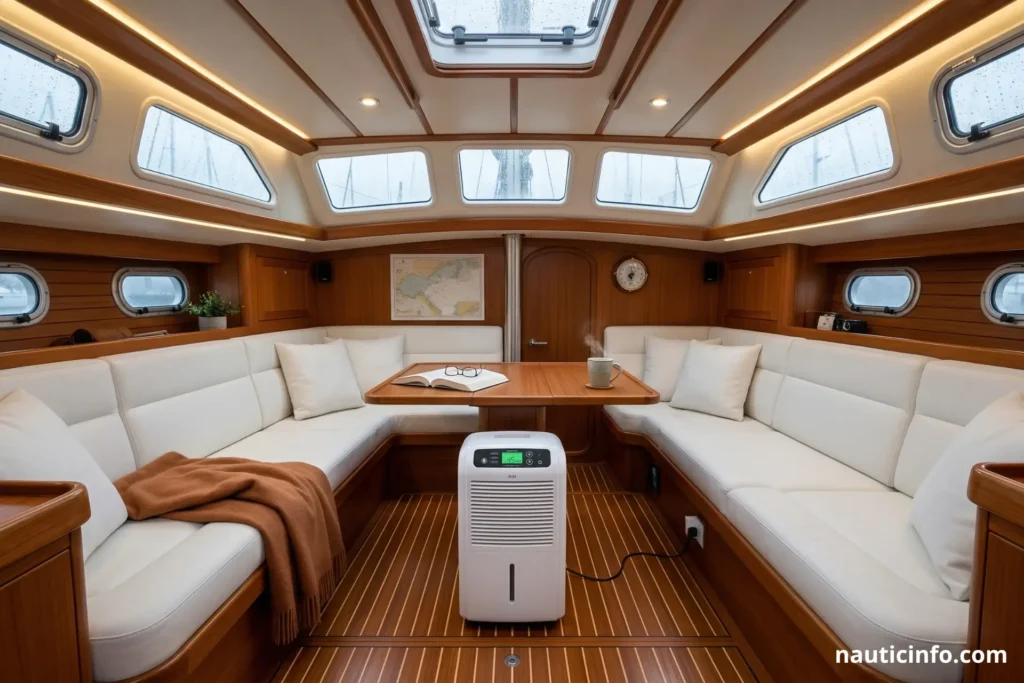
Fighting moisture, mold, and bad smells on a boat requires a smart, step-by-step plan. Furthermore, you must understand exactly why water forms in the air. Specifically, you also need to know what makes mold grow. However, learning about your boat’s plumbing will help you stop bad odors forever. Consequently, using the right dehumidifiers and smart airflow systems will protect your boat and keep your air clean.
Understanding the Basics of Marine Cabin Humidity Control
Stopping water from building up is the first step in protecting your boat. Furthermore, the ocean is a very wet place. Specifically, your boat constantly fights against water in the air. Consequently, the water inside your boat is not just from rain or leaks. However, it comes from a mix of temperature changes and normal daily life. Furthermore, hot air holds more water than cold air. Specifically, this simple fact is the main reason boats get wet inside.
How Condensation Affects Marine Cabin Humidity Control
Water drops form quickly on your boat walls. Specifically, this happens when warm, wet indoor air hits a cold outer hull. Furthermore, groups like the EPA state that indoor humidity should stay between 25 and 60 percent. However, keeping this exact level on a boat is very hard. Consequently, boat owners must work hard to control the air.
For example, imagine a boat floating in 40-degree Fahrenheit water in the Pacific Northwest. Furthermore, the inside of the cabin is heated to 62 degrees Fahrenheit. Specifically, this large temperature change makes the water in the air turn into liquid. Consequently, the water drops onto the cold fiberglass hull and metal windows. However, everyday tasks make this problem much worse. Specifically, cooking food, taking hot showers, and breathing all add water to the air. Furthermore, wet rain gear adds even more moisture.
Consequently, this water hides in dark places. Specifically, it sinks under beds and into the lowest parts of the bilge. However, if you leave water in the bilge, the humidity stays near 100 percent. Furthermore, this feeds a endless cycle of wetness. Consequently, you must dry the bilge completely.
The Mold Square and Marine Cabin Humidity Control
When a boat stays wet, mold grows very fast. Furthermore, these tiny plants need four things to live. Specifically, experts call this the “Mildew Square”. However, the four things are spores, food, warmth, and moisture. Consequently, you cannot remove spores from the air. Furthermore, you want to keep your boat warm for comfort. Specifically, you must attack the water and the food to stop the mold.
Finding the hidden mold food on a boat is very important. Furthermore, mold loves to eat wood and paper. However, boaters also bring invisible food inside. Specifically, mold eats old sunscreen, human sweat, and dead skin cells. Consequently, these oils build up on your vinyl seats. Furthermore, marine vinyl has special chemicals inside it to fight mold. However, the sun and harsh cleaners ruin these chemicals fast. Specifically, sunscreen chemicals break down and pollute the boat surfaces. Consequently, you must clean your boat seats often to starve the mold.
Using Airflow for Marine Cabin Humidity Control
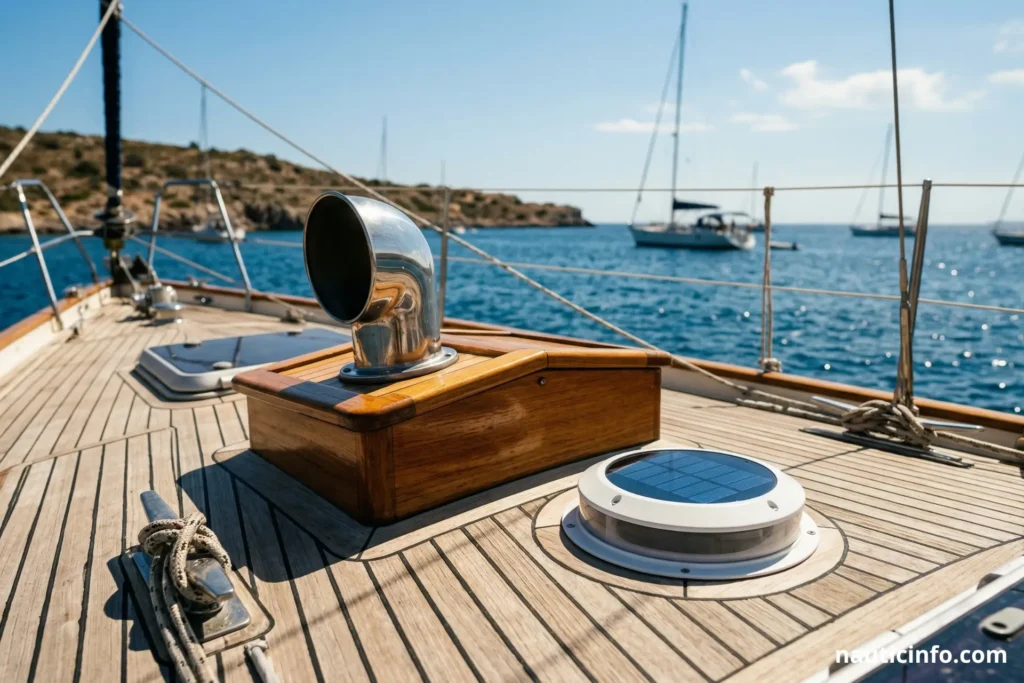
Moving air is the best tool against damp cabins. Furthermore, fresh air dries wet surfaces before mold can grow. However, you need the right vents to move enough air. Specifically, a normal boat measuring 25 to 40 feet needs a lot of air movement. Consequently, you must move between 700 and 1,800 cubic feet per hour (CFH) of air to stay safe. Furthermore, this requires smart planning.
Wind Power
Passive vents use the natural wind to pull air through the boat. Furthermore, knowing how wind works helps you keep the boat dry. Specifically, wind hitting the front of the boat creates high pressure. However, the open back door creates low pressure. Consequently, putting air intakes in the front and exhaust vents in the back creates a vacuum. Furthermore, this vacuum constantly sucks wet air outside.
However, passive vents have weak points. Specifically, they rely completely on the weather.
- Cowl Vents: These look like funnels and catch the wind well. However, if the wind shifts just 30 degrees, the airflow stops working. Consequently, they are weak when the boat swings on an anchor.
- Dorade Boxes: These are great for ocean sailing. Furthermore, they let air in but keep heavy saltwater out.
- Wind Scoops: These are fabric bags that catch the wind. Specifically, a brand called Breeze Booster works better than standard funnels. Consequently, they force air down into the cabin.
Electric Fans
Wind vents fail when there is no wind. Furthermore, marinas rarely have winds over 5 knots. Consequently, you must use electric fans for proper safety. Specifically, small 12-volt computer fans are perfect for boats. However, these tiny fans can move 64 cubic feet per minute (CFM). Furthermore, this equals 3,840 CFH of air movement.
Specifically, experts say you should link several fans together. Consequently, place them behind cabinets and under beds. Furthermore, brands like Hella and Caframo are very strong. However, cheap rechargeable fans also work well.
Pro Tip for Marine Berths: Never put a fabric bed directly on a cold fiberglass hull. Furthermore, the bed will soak up water like a sponge. Consequently, it will grow black mold. Specifically, always put a rubber grid or drilled wood under the bed. However, this leaves a one-inch gap for air to flow.
Solar Vents and Marine Cabin Humidity Control
Solar vents are another popular option. Furthermore, they use the sun and need no battery power. Specifically, they are great for winter storage. However, salt water often breaks their cheap motors. Consequently, stainless steel models break in just 12 to 24 months.
Furthermore, some old solar vents can spark. Specifically, you should never put a sparking vent over a gas tank. However, properly sized solar vents are good for general cabin air. Consequently, multiply your room square footage by 0.7 to find the needed CFM power.
| Solar Vent Type | Power (CFM) | Best Use Case | Main Problem |
| Small Vents | 10 – 25 CFM | Tiny bathrooms. | Very low air flow; breaks easily. |
| Medium Vents | 400 – 800 CFM | Main boat cabins. | Needs a large, flat space on the roof. |
| Large Vents | 1,000+ CFM | Big engine rooms. | Extremely large; no battery for night use. |
Dehumidifiers for Marine Cabin Humidity Control

Sometimes, fans are not enough. Furthermore, during heavy rain or winter, you need a real machine. Specifically, you need a dehumidifier. However, never buy a cheap house dehumidifier for a boat. Consequently, house models can catch fire on a moving boat. Furthermore, marine insurance companies will not pay for the fire damage. Specifically, you must buy a real marine dehumidifier.
Types of Dehumidifiers in Marine Cabin Humidity Control
You must choose between a compressor machine and a desiccant machine. Furthermore, the best choice depends on your weather. Specifically, compressor machines use cold copper pipes to catch water. However, if the room is colder than 70 degrees Fahrenheit, the pipes freeze solid. Consequently, compressor machines fail in the cold.
Furthermore, desiccant machines work differently. Specifically, they use a spinning wheel of dry chemicals. However, a heater bakes the water out of the wheel. Consequently, desiccant machines work perfectly in cold weather. Furthermore, they even heat the air by 18 degrees Fahrenheit. Specifically, desiccant machines are the best choice for temperatures below 60 degrees Fahrenheit.
Choosing the Best Marine Cabin Humidity Control Machine
American boaters need 120-volt power. Furthermore, many famous machines only run on European 230-volt power. Consequently, you must buy a machine built for the US grid. Specifically, the ElectroSea DryGenie is built for the 120-volt US market. However, it is very small and pulls 0.79 gallons of water a day.
| Dehumidifier Name | Machine Type | Power Grid | Gallons Per Day | Best Use Case |
| ElectroSea DryGenie | Desiccant | 120V US | 0.79 Gallons | Best for US boats in the cold. |
| Ivation 19 | Desiccant | 120V US | 0.50 Gallons | Good for living on a boat in the winter. |
| Mermaid Dry-Pal | Compressor | 120V US | 3.60 Gallons | Good for custom engine rooms. |
| Davis Air-Dryr 1000 | Air Heater | 120V US | N/A | Heats air to stop water drops in small closets. |
| MOISWELL Explorer | Compressor | 120V US | 21.1 Gallons | Huge machine for giant, hot engine rooms. |
Furthermore, you must plan how the water drains. Specifically, run a plastic hose from the machine to your sink. However, make sure the hose points down. Consequently, gravity will pull the water away. Furthermore, you will never have to empty a heavy water tank again.
Cleaning Products for Marine Cabin Humidity Control
If your machine fails, mold will grow. Furthermore, the mold can make you very sick. Specifically, breathing mold spores can cause asthma, coughing, and chest pain. Consequently, you must clean it up quickly. However, you cannot use normal bathroom cleaners on a boat. Specifically, bleach ruins expensive boat parts.
Why Bleach Fails in Marine Cabin Humidity Control
Many people use bleach to clean mold. Furthermore, bleach makes the dark stains disappear fast. However, bleach is terrible for boat seats. Specifically, bleach eats the oils inside marine vinyl. Consequently, the vinyl turns yellow, dries out, and cracks open.
Furthermore, bleach destroys the sewing threads. Specifically, the seat seams will rip apart when you sit on them. However, bleach also leaves the mold roots alive. Consequently, the mold grows back in just a few weeks. Furthermore, products with high bleach are very dangerous for boat fabrics.
Specifically, professionals use hydrogen peroxide instead. Furthermore, hydrogen peroxide attacks the mold cells directly. However, it does not hurt the vinyl or the threads. Consequently, your expensive seats stay safe and soft.
| Cleaning Product | Does it Kill Roots? | Safe for Vinyl? | Safe for Threads? | Main Problem |
| Hydrogen Peroxide | Yes | Yes | Yes | The best choice. Safely kills mold and protects threads. |
| Chlorine Bleach | No | No | No | Destroys threads and cracks seats. |
| Ammonia Cleaners | Maybe | No | No | Makes shiny parts dull and smells toxic. |
| Magic Erasers | No | No | No | Scratches the clear coat on the boat. |
Furthermore, cleaning requires a strict process. Specifically, you must wash off the dirt and old sunscreen first. However, use a gentle soap for this. Next, spray the hydrogen peroxide to kill the mold. Consequently, let it sit for a few minutes. Finally, put a new protective spray on the clean vinyl. Furthermore, this replaces the barrier that the mold ate away.
Pro Tip for Boat Covers: Mold loves to grow on the dark underside of your canvas cover. Furthermore, if you clean your seats but ignore the cover, the mold will return. Specifically, the spores will drop from the cover right back onto the seats. Consequently, you must clean the bottom of the cover too.
Thermal Insulation for Marine Cabin Humidity Control
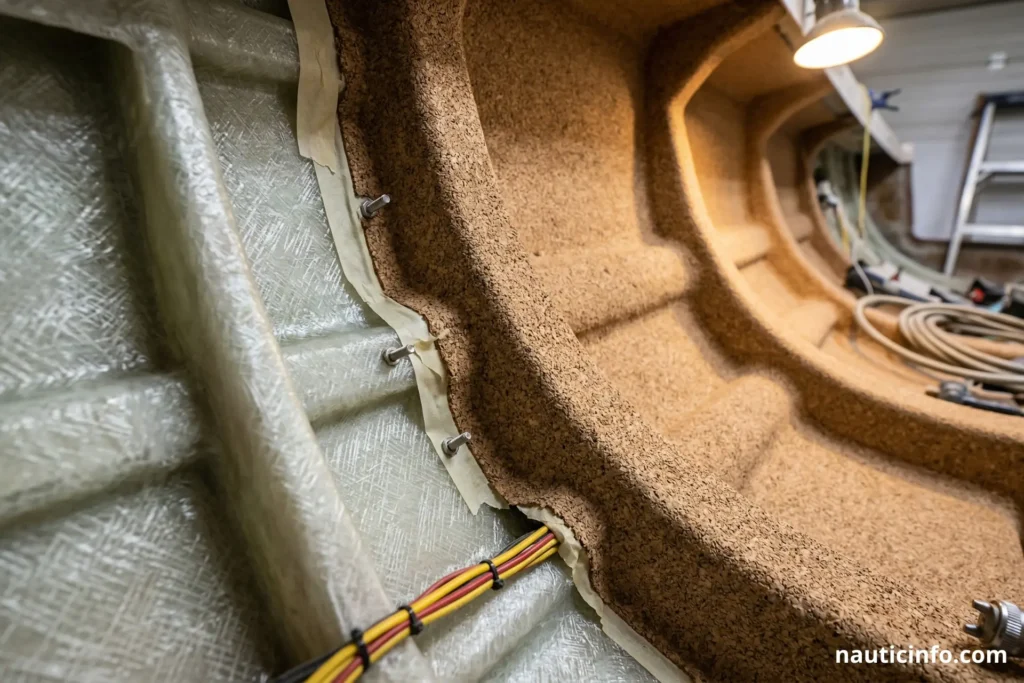
Controlling the air is only half the battle. Furthermore, you must stop the warm interior air from touching the cold outer hull. Specifically, adding thermal insulation to your boat is a permanent fix for heavy condensation. Consequently, proper insulation keeps your cabin warm in the winter and cool in the summer. However, you cannot use cheap house insulation on a wet boat.
Choosing Thermal Insulation for Marine Cabin Humidity Control
Marine insulation must be completely waterproof. Furthermore, closed-cell spray foam is an excellent choice for metal and fiberglass hulls. Specifically, it bonds tightly to the walls and leaves no air gaps for water to hide. Consequently, it adds structural strength and stops all hull sweating. However, spray foam can be very messy to install inside a finished cabin.
Another great option is closed-cell rubber foam sheets, such as Armaflex. Furthermore, these flexible sheets often have a sticky backing. Specifically, this makes them very easy to bend and stick around curved boat walls. Consequently, you should stack these sheets to reach about 1.2 inches of total thickness for the best results. However, never use open-cell foam or standard house fiberglass, because they will act exactly like a sponge, trap water against the hull, and breed black mold.
Fixing Bad Smells and Marine Cabin Humidity Control
Sometimes your boat smells bad even when it is dry. Furthermore, a musty smell means mold is present. However, a terrible rotten egg smell means your plumbing is broken. Specifically, this is a dangerous chemical smell. Consequently, you must check your holding tank and hoses.
First, clean your bilge completely. Furthermore, dirty bilge water is a toxic soup of oil, old water, and dead bugs. Specifically, scrub it with heavy soap and pump it dry. However, if the smell remains, the problem is your toilet hoses.
The Hot Rag Test
The worst smell on a boat comes from the blackwater hoses. Furthermore, people think hoses only smell when they drip water. However, this is false. Specifically, old rubber hoses break down on a chemical level. Consequently, toxic toilet gases leak right through the solid rubber wall. Furthermore, this gas smells awful.
Specifically, you can test for this using the “hot rag test.” Furthermore, get a clean towel and wet it with boiling water. However, wring it out so it is not dripping. Next, wrap the hot towel tightly around the toilet hose. Specifically, leave it there for three minutes. Consequently, the heat will open the pores in the rubber. Furthermore, take the towel off and smell it. If the towel smells like a toilet, the hose is ruined. However, no amount of soap will fix it. Consequently, you must buy brand new hoses.
Installing New Hoses
When you replace the hoses, you must buy special sanitary hoses. Furthermore, cheap water hoses will melt from the toilet chemicals. Specifically, premium hoses like the SeaLand OdorSafe block smells the best. However, these thick hoses are very hard to bend. Consequently, if the weather is below 50 degrees Fahrenheit, they turn solid and cannot bend. Furthermore, you might need a heat gun to install them.
Specifically, you must install the hoses correctly. Furthermore, never push a hose over threaded plastic pipes. However, the screw threads create a tiny path for gas to escape. Consequently, only use smooth pipe adapters. Finally, clamp every hose twice. Specifically, use heavy stainless steel clamps. Furthermore, put the clamp screws on opposite sides to make a perfect seal.
NauticInfo Verdict
Keeping your boat free of mold and bad smells requires hard work and smart planning. Furthermore, you must control the humidity every single day. Specifically, use a mix of passive wind vents and active electric fans to move air constantly. However, when the weather turns cold, invest in a 120-volt desiccant dehumidifier. Consequently, this will pull gallons of water out of the air safely. Furthermore, stop using household bleach to clean your boat. Specifically, bleach ruins your vinyl and breaks your sewing threads. Instead, use safe hydrogen peroxide cleaners. Finally, always check your toilet hoses for gas leaks using the hot rag test. Consequently, your boat will smell fresh, stay dry, and last for decades.