
Do I Need a Boating License in Florida or California? The Ultimate Guide
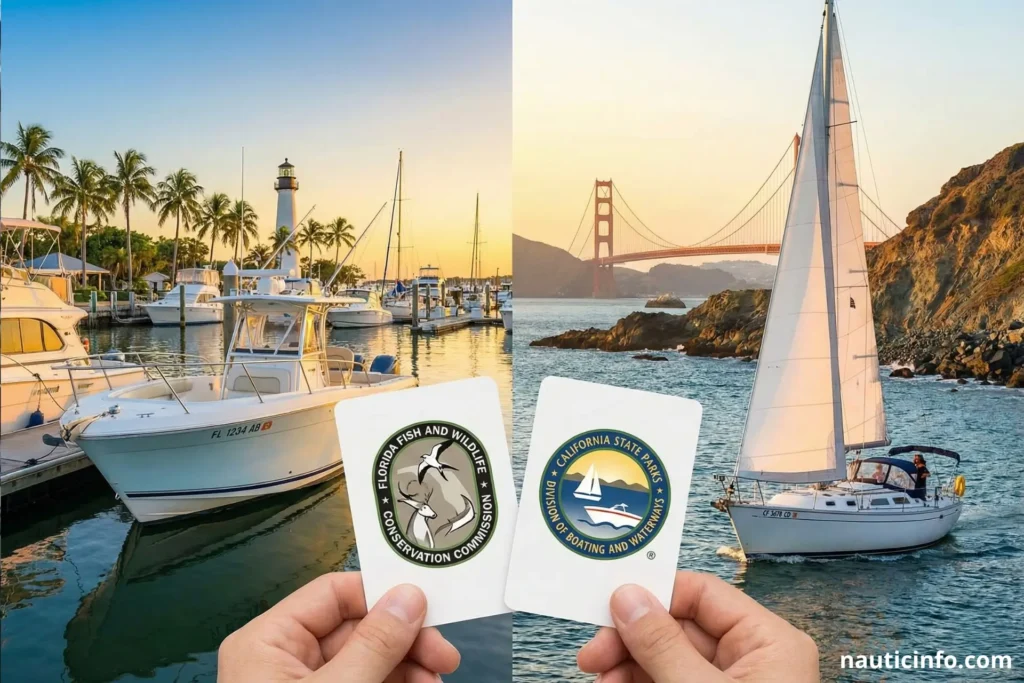
So, you’re planning to hit the water. Maybe you’re eyeing a center console for a fishing trip in the Florida Keys, or perhaps you’re gearing up to cruise the Pacific coast near Newport Beach. You’ve got the sunscreen, the polarized shades, and the cooler packed. But there is one burning question stopping you in your tracks: Do I need a boating license ?
The short answer? It’s complicated, and it depends heavily on where you are and when you were born.
In the United States, we technically don’t have “boating licenses” for recreational boaters in the same way we have driver’s licenses. Instead, states issue Boater Education Cards. However, the laws in Florida and California—the two boating capitals of America—are drastically different.
In this deep-dive guide, we will break down exactly what you need to stay legal, avoid hefty fines, and keep your crew safe.
Do I need a boating license : The Myth of the “Boating License”
First, let’s clear up a common misconception. In both Florida and California, you are generally not applying for a “license” that you have to renew every few years like a car driver’s license.
Instead, you are obtaining a lifetime certification (often called a “Boater Card”).
- Once you have it, it’s yours forever.
- It is valid in other states (usually) thanks to NASBLA reciprocity (we’ll cover this later).
- It proves you know the rules of the road.
However, carrying this card is mandatory if you meet the specific age or vessel criteria.
Florida Regulations: The “Born After 1988” Rule
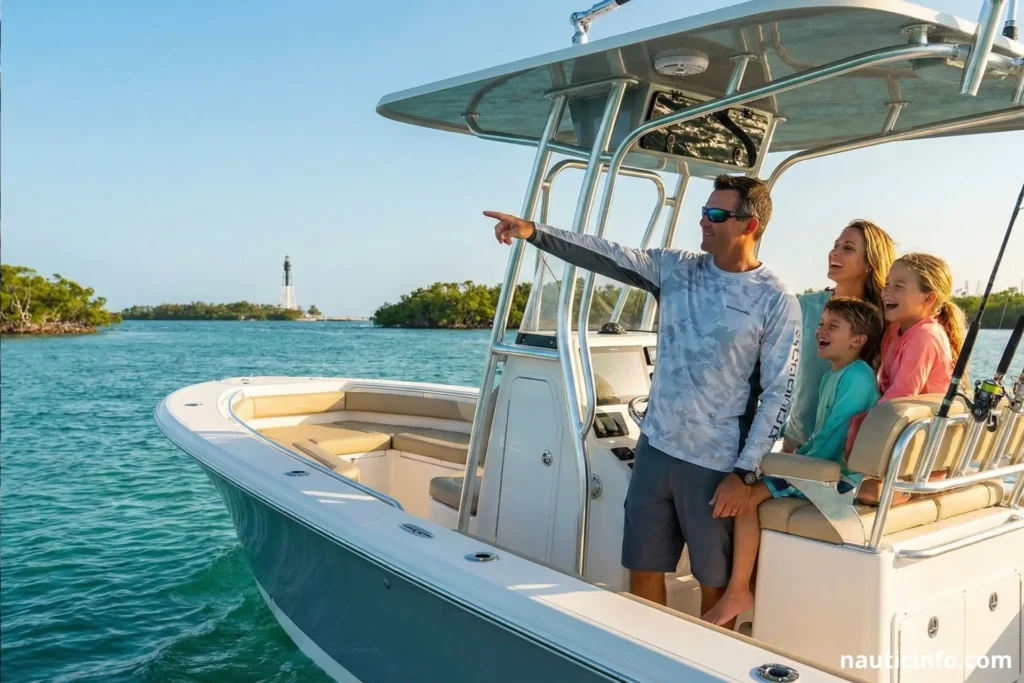
Florida is the boating capital of the world. Consequently, their laws are strict but specific. If you are operating a vessel in the Sunshine State, here is the golden rule you must memorize.
The Golden Rule: January 1, 1988
In Florida, anyone born on or after January 1, 1988, who operates a vessel powered by a motor of 10 horsepower (HP) or more, must have a Florida Boating Safety Education Identification Card in their possession.
Who is Exempt?
You do not need this card if:
- You were born before January 1, 1988.
- You are operating a vessel with less than 10 HP (e.g., a dinghy with a small kicker).
- You hold a US Coast Guard Captain’s License (Master).
- You are operating on a private lake or pond.
Renting a Boat in Florida? (Critical Info)
This is where Florida is unique. If you are a tourist looking to rent a pontoon or a jet ski (PWC) for the day, and you were born after 1988, you cannot just hop on.
- The Solution: Rental liveries in Florida are authorized to issue a 90-Day Temporary Boating Certificate.
- The Test: You will take a short, inexpensive exam (usually $3-$10) right at the rental dock or online beforehand. It is valid only for 90 days and only in Florida.
Pro Tip: If you visit Florida regularly, just take the full lifetime course. It saves you from taking the temporary test every single time you rent!
California Regulations: The 2025 “All Ages” Mandate
California has been phasing in their requirements for years. However, as of January 1, 2025, the phase-in period is essentially complete.
The New Standard: Everyone Needs One
Starting January 1, 2025, ALL operators of motorized vessels on California waterways—regardless of age—are required to carry the California Boater Card (CBC).
- Vessel Type: This applies to any motorized vessel, including sailboats with engines and Personal Watercraft (PWCs/Jet Skis).
- Age Limit: You must be at least 16 years old to operate a vessel with more than 15 HP unsupervised. Children aged 12-15 can operate if supervised by an adult (18+) who holds a Boater Card.
Renting a Boat in California? (Surprise!)
Unlike Florida, California exempts renters from the Boater Card requirement.
- If you are renting a boat, the rental facility will give you a safety briefing. You do not need to hold a California Boater Card to legally rent a boat in CA.
- Warning: While legal, it is arguably risky to operate without knowledge. We highly recommend taking a course anyway.
Do I need a boating license Florida vs. California: Quick Comparison Table
To make this crystal clear, let’s look at the specs side-by-side.
| Feature | Florida (FL) | California (CA) |
| Document Name | Boating Safety Education ID Card | California Boater Card (CBC) |
| Who Needs It? | Born on/after Jan 1, 1988 | EVERYONE (As of Jan 1, 2025) |
| Vessel Threshold | 10 HP or more | Any motorized vessel |
| Cost (Lifetime) | ~$30 – $50 (Course fees vary) | $10 for the card + Course fee |
| Rental Rules | Mandatory (Must get Temp Cert) | Exempt (Briefing only) |
| Visitor Grace Period | 90 days (with home state card) | 60-90 days (approx. rules vary) |
| Fines (1st Offense) | ~$50 – $100 | ~$100 – $500 |
Do I need a boating license : Reciprocity: “I have a license from another state!”
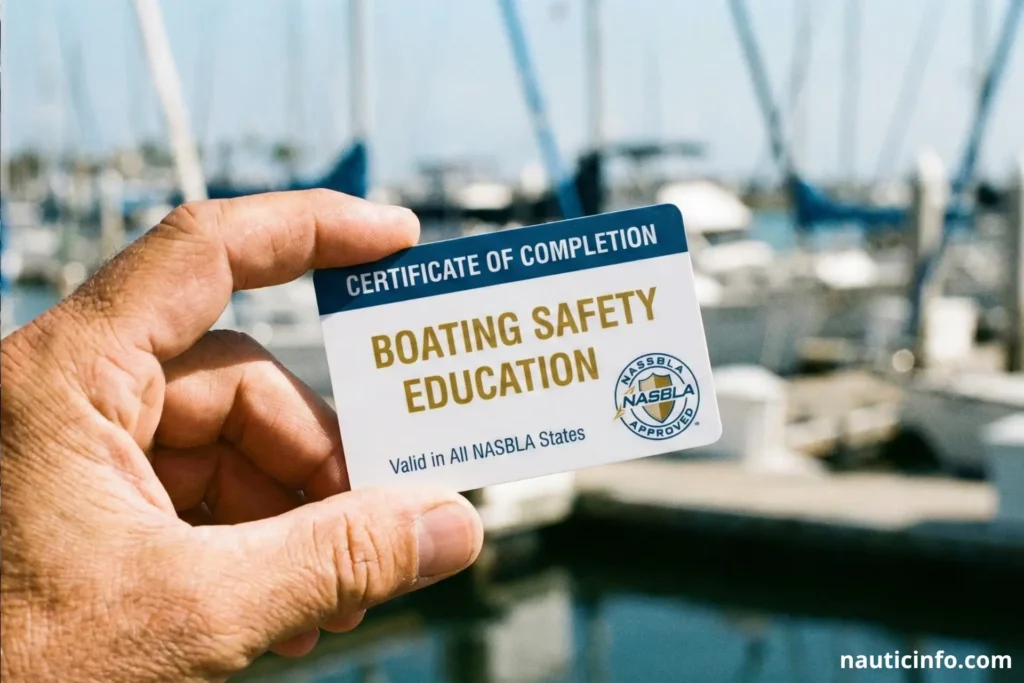
This is the best news for US boaters. The National Association of State Boating Law Administrators (NASBLA) has standardized boating education across the USA.
The “NASBLA” Stamp of Approval:
If you take a boating safety course in New York, Texas, or Ohio, look for the NASBLA logo on your card.
- Florida: Accepts any valid NASBLA-approved card from another state if you are visiting.
- California: Accepts valid NASBLA-approved cards from other states, usually for up to 60-90 days per year.
Therefore, if you live in New York but vacation in Florida, your NY Boating Safety Certificate is valid in Florida, provided you have it physically with you.
Do I need a boating license : How to Get Certified (Step-by-Step)
Getting your card is easier than ever. You don’t need to sit in a dusty classroom for 8 hours on a Saturday anymore.
Step 1: Choose an Online Course
There are several private companies approved by both states (e.g., BoatUS, Boat-Ed, Ace Boater).
- Interactive Learning: Modern courses feel like video games. They use animations to explain “Right of Way,” “Buoy Markers,” and “Navigation Lights.”
Step 2: Study the Material
You will cover essential topics:
- Navigation Rules: Who crosses in front of whom? (The “Red, Right, Returning” rule).
- Safety Gear: Life jackets (PFDs), flares, and fire extinguishers.
- Environmental Laws: Manatee zones (FL) and invasive species (CA).
Step 3: Pass the Exam
- Format: Multiple choice.
- Difficulty: Moderate. If you pay attention, you will pass.
- Passing Score: Usually 80%.
Step 4: Get Your Card
- Florida: You will receive a digital ID and a physical plastic card by mail.
- California: You apply through the state website after passing the course to get your official CBC.
Essential Gear Checklist (Imperial Units)
Even with a license, you are not legal without the right gear. Here is what the US Coast Guard requires you to carry.
- Life Jackets (PFDs): One wearable PFD for every person on board. It must be USCG-approved and the correct size.
- Note: Kids under 6 (FL) or under 13 (CA) must wear them at all times while the boat is moving.
- Fire Extinguisher: B-1 type for boats under 26 feet.
- Visual Distress Signals: Flares or an electric SOS light (required on coastal waters).
- Sound Producing Device: A whistle or air horn audible for at least 0.5 miles.
- Ventilation: If you have an enclosed fuel tank, proper blowers are mandatory.
Do I need a boating license, conclusion: Don’t Risk It!
Boating without a card isn’t just illegal; it’s a hassle you don’t need. Imagine being pulled over by the Sheriff or the Coast Guard on a beautiful Sunday afternoon. Instead of enjoying the sunset, you are being written a ticket and potentially towed back to the dock.
In summary:
- Florida: If you were born after 1988, get the card.
- California: If it’s 2025 or later, everyone needs the card.
- Visitors: Bring your home state’s NASBLA card.
Boating is about freedom, but freedom comes with responsibility. Take the course, learn the rules, and enjoy the water safely!