
Marine GPS in 2025: How to Choose the Best Chartplotter for Your Boat?
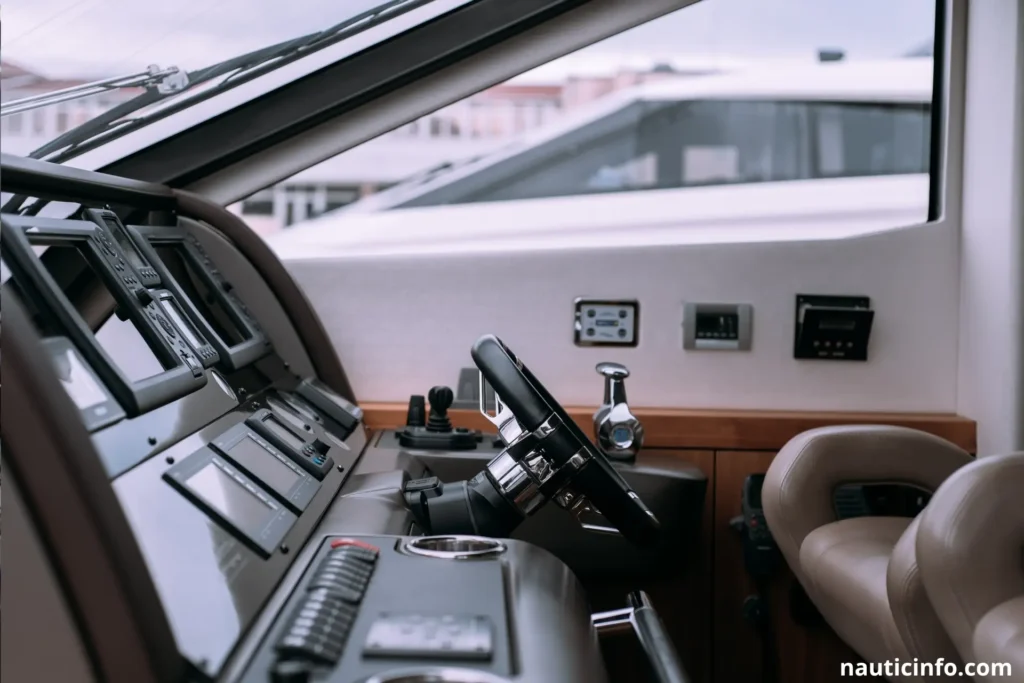
Maritime navigation has undergone a radical transformation in recent decades. Indeed, the simple paper chart and compass have given way to extraordinarily sophisticated electronic navigation systems. At the heart of this technological revolution, the marine GPS. Now embodied by the Multifunction Display (MFD), has established itself as essential equipment aboard any vessel. Whether it’s a cruising sailboat, a fishing boat, or a motor yacht. Consequently, in 2025, choosing the right device is no longer just a matter of convenience. But a critical factor for safety, efficiency, and enjoyment on the water.
Why is a State-of-the-Art Marine GPS Essential in 2025?
In the past, a GPS was a simple positioning tool. Today, MFDs are true electronic command centers that centralize a multitude of information and controls. As a result, their utility extends far beyond simply showing the way forward.
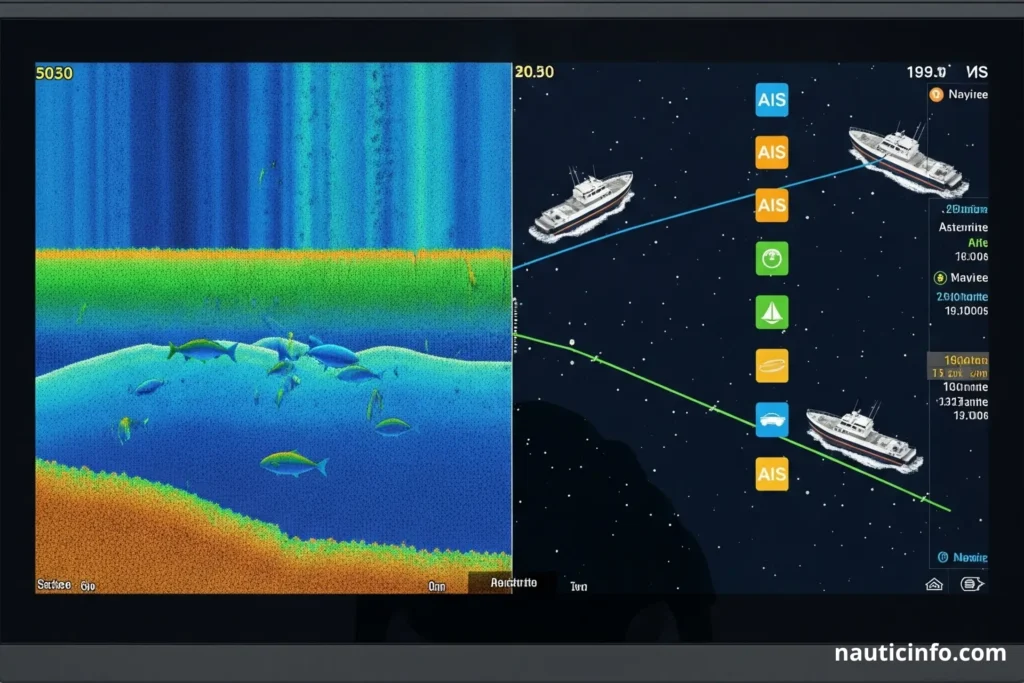
First and foremost, on-board safety is significantly enhanced. Thanks to the overlay of AIS (Automatic Identification System) data. You can view surrounding marine traffic in real-time, thereby anticipating collision risks. Furthermore, when paired with a modern radar, an MFD provides a clear view of your environment. Even in the most challenging visibility conditions like fog or pitch-black night. Moreover, alarms for anchoring, depth, or proximity to hazards act as electronic sentinels, constantly watching over your peace of mind.
For fishing enthusiasts, a next-generation MFD is an invaluable asset. Advanced sonar technologies such as CHIRP, DownVision, SideVision, and even 3D. And real-time views allow you to see the seabed with unprecedented clarity and precision. Consequently, it becomes much easier to spot underwater structures, wrecks, and, of course, fish. Detailed bathymetric charts, which display depth contours with high accuracy. Are also a formidable tool for identifying the most promising fishing spots.
Finally, integration is the key word in modern marine electronics. Your MFD can display your engine data, control your autopilot, manage your sound system. And even interact with apps on your smartphone or tablet. This centralization of information and controls simplifies boat management and makes navigation more intuitive and enjoyable.
Marine GPS in 2025: How to Choose the Best Chartplotter for Your Boat? The Key Criteria.
Faced with a diverse market, it’s crucial to define your needs to make an informed choice. Here are the fundamental criteria to consider when selecting the equipment that will perfectly match your boating style and vessel.
Screen Size and Resolution: The Shift to 4K is a Key Factor in Choosing Your Marine GPS in 2025
Display quality is arguably one of the most important aspects of an MFD. Indeed, good readability under all conditions is essential for quick and safe decision-making.
The screen size, usually expressed in inches, should be appropriate for the size of your helm station and the distance from which you’ll be viewing it. While a 7 to 9-inch screen may suffice for a small boat, larger units—12, 16, or even 24 inches. Offer unparalleled reading comfort, especially for displaying multiple pieces of information simultaneously (chart, radar, sonar, etc.).
However, size isn’t everything. The screen’s resolution, meaning the number of pixels it displays, is just as critical. In 2025, 4K resolution (3840 x 2160 pixels) is becoming more common on high-end models. The advantage is undeniable: nautical charts, satellite imagery, and sonar data are incredibly sharp. Every detail is perfectly visible, which greatly facilitates the interpretation of information. Therefore, if your budget allows, opting for a 4K screen is a wise investment for the future. In addition, IPS (In-Plane Switching) technology ensures wide viewing angles and excellent color accuracy, even with polarized sunglasses.
Connectivity: NMEA 2000 and Wi-Fi at the Heart of Your System for Choosing the Best Chartplotter in 2025
A modern MFD is above all a communication hub. Its ability to interface with other on-board equipment is therefore a decisive selection criterion.
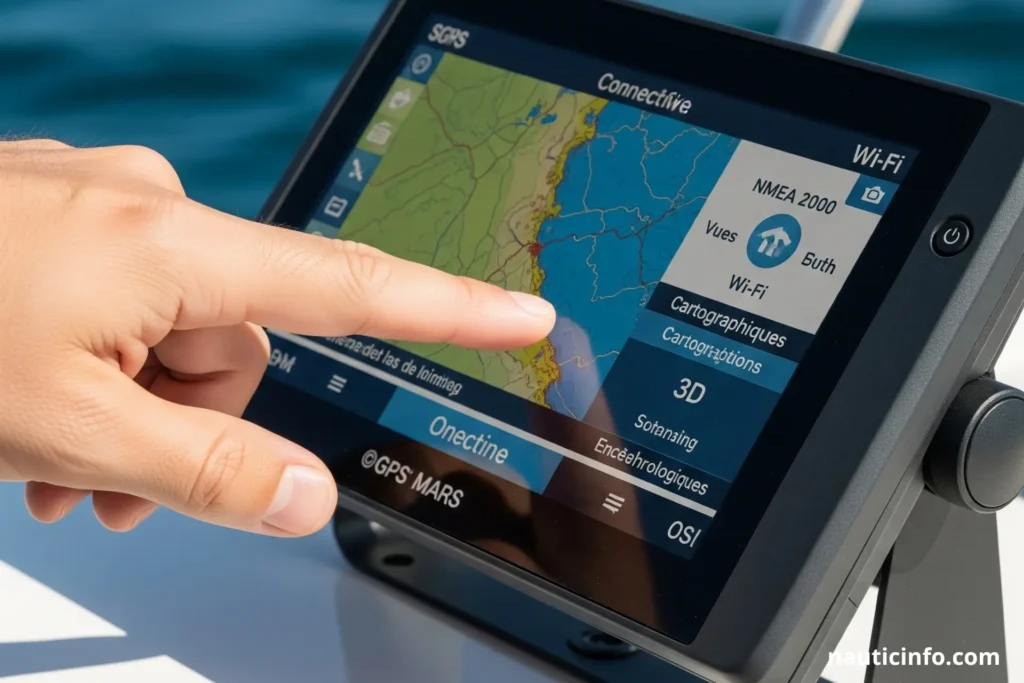
The NMEA 2000 network has become the undisputed standard for interconnecting marine electronics. It acts as a central nervous system that allows all compatible equipment (sonar, radar, autopilot, wind vane, compass, AIS, engine data, etc.) to communicate with each other smoothly and reliably. For this reason, when choosing your MFD. It is imperative to check its compatibility and the number of available NMEA 2000 ports.
In addition to NMEA 2000, wireless connectivity is now ubiquitous. Built-in Wi-Fi allows you to update your MFD’s software. Download new charts, or sync routes and waypoints with a mobile app on your smartphone or tablet. Furthermore, many brands offer apps that let you mirror and control your MFD from a mobile device. Which can be very practical for planning your trip from your living room or for having a repeater screen anywhere on the boat. Bluetooth is also useful for connecting remote controls and other wireless accessories.
Advanced Charting Features: A Decisive Element for Choosing Your Marine GPS in 2025
The chartplotter is the primary function of an MFD. The quality and richness of the cartography are therefore essential. The two main providers of electronic charts are Navionics (owned by Garmin), and C-MAP (owned by Navico, which includes Simrad, Lowrance, and B&G). Both offer excellent worldwide coverage and highly detailed charts.
Beyond basic display, modern MFDs offer highly advanced charting features. Autorouting, for example, automatically calculates the safest and shortest route based on your boat’s draft and air draft. 3D views, satellite photo overlays. And specialized fishing charts (with information on bottom composition, vegetation, etc.) are all tools that enrich the navigation experience. Moreover, some platforms allow users to contribute to chart improvement by sharing their own sonar logs (community sonar). Thus ensuring ever more accurate data.
Processor Power and Responsiveness
With the proliferation of data to process (high-resolution cartography, radar, multi-beam sonar, video, etc.). The processing power of your MFD is a factor not to be overlooked. A fast processor ensures a smooth user interface, reduced chart loading times, and a seamless display. Even when multiple applications are running simultaneously. Consequently, when handling a model in a store, don’t hesitate to test its responsiveness by quickly zooming in and out on the chart or switching between different displays. Good responsiveness is a guarantee of comfort and safety during navigation.
A Comparison of the Market Leaders in Marine GPS for 2025
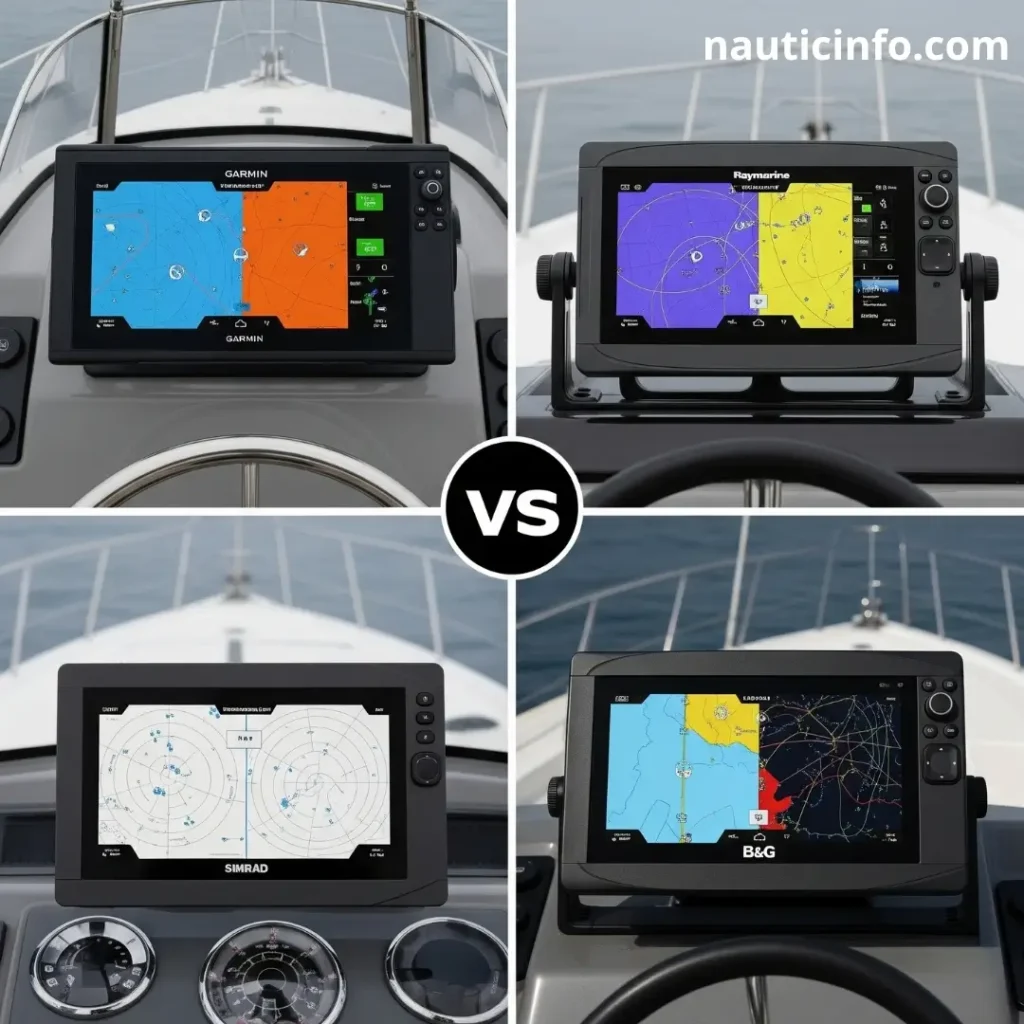
Four brands dominate the MFD market. Each has its own strengths and its own ecosystem.
Garmin: Innovation for Integration, a Top Choice for a Marine GPS in 2025
Garmin is arguably the most well-known brand to the general public, and its marine division lives up to its reputation. The GPSMAP series is the brand’s technological showcase, featuring ultra-bright touchscreens, powerful processors, and a very intuitive user interface.
Garmin’s strength lies in its extremely comprehensive and easy-to-integrate ecosystem. Everything is designed to work together seamlessly. MFDs, Fantom radars, Panoptix LiveScope sonars (which offer a real-time view of what’s happening under the boat). Autopilots, VHF radios, and even Quatix smartwatches, which allow you to control many boat functions from your wrist. Garmin also offers its own cartography, Navionics, renowned for its richness and innovative features like Auto Guidance+. Choosing Garmin means opting for an all-in-one solution that is both high-performing and user-friendly,
Raymarine: Performance and Durability, a Solid Answer for Choosing a Marine GPS in 2025
Raymarine, a FLIR group brand, is known for the robustness and reliability of its equipment. Often favored by long-distance sailors and professionals. The Axiom series is the brand’s flagship, available in several versions (Axiom+, Axiom Pro, Axiom XL) to suit all needs and budgets.
Raymarine MFDs run on the LightHouse OS, known for its power and flexibility. Raymarine particularly stands out for its sonar technologies, including RealVision MAX and 3D sonar, which provide stunningly clear images. Compatibility with FLIR thermal cameras is another major asset for nighttime safety. In terms of cartography, Axioms are compatible with both Navionics and C-MAP charts, offering great freedom of choice. Raymarine is therefore a preferred choice for those seeking raw performance and rock-solid reliability.
Simrad: The Choice of Professionals and Demanding Boaters, Excellence for a Marine GPS in 2025
Simrad, a Navico group brand, targets experienced navigators and sportfishing enthusiasts who demand the best from their equipment. The NSS and NSO evo series offer a very high level of performance and customization.
Simrad MFDs are true modular platforms that can be configured to meet the most specific needs. They are particularly praised for their deep integration with Halo radars. Which combine the benefits of pulse compression and broadband technologies, as well as with StructureScan 3D sonar technologies. The interface, although very comprehensive, requires some getting used to, but in return, it offers total control over all parameters. Simrad is compatible with C-MAP charts, which offer advanced features for fishing and cruising. For the boater who wants to make no compromises on performance. Simrad provides a clear answer to Choose the Best Chartplotter for Your Boat.
B&G: The Standard for Sailing, the Specialized Solution for a Marine GPS in 2025
Also a member of the Navico group, B&G is the brand entirely dedicated to sailing enthusiasts. Whether they are racers or long-distance cruisers. The Zeus and Vulcan series are specifically designed to meet the needs of sailboats.
What sets B&G apart are its exclusive sailing features. The SailSteer function, for example, displays all crucial data for a sailboat on a single screen. True and apparent wind, heading, drift, laylines, etc. Other tools, like RacePanel and StartLine, are dedicated to racing and help you get the best starts and optimize your race strategy. Of course, B&G MFDs integrate perfectly with the brand’s instruments and autopilots. Creating a complete and coherent navigation system for sailing. For a skipper wondering Marine GPS in 2025: How to Choose the Best Chartplotter for Your Boat? who is also a sailor, B&G is unquestionably the reference brand.
Installing and Commissioning Your New Chartplotter
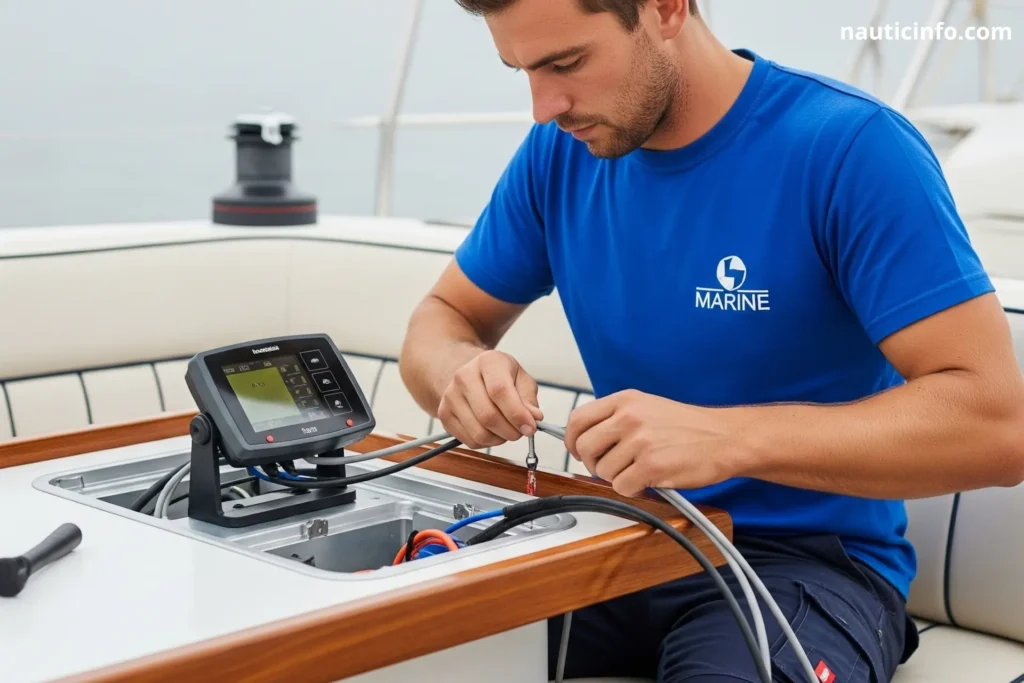
Once you’ve made your choice, installation is a crucial step. The positioning of the screen on the helm console must be carefully considered. To ensure optimal visibility and easy access to controls, whether you are sitting or standing. Care must also be taken to protect it from spray and direct sunlight.
The wiring, especially setting up the NMEA 2000 network, requires precision. If you are not comfortable with on-board electricity and electronics, it is highly recommended to hire a professional installer. They will ensure a proper installation, which is a guarantee of reliability and safety for your entire system.
The Future of Marine GPS: Beyond 2025
Innovation never stops. In the coming years, we can expect to see even smarter and more connected MFDs. Artificial intelligence will play an increasing role. For example, by suggesting optimized routes based on real-time weather conditions or by analyzing sonar images to identify fish species. Augmented reality, which overlays navigation information directly onto a video image of the environment. Is also expected to become more widespread, making navigation even more intuitive.
Conclusion

Ultimately, answering the question Marine GPS in 2025: How to Choose the Best Chartplotter for Your Boat? requires a thorough analysis of your own needs and your boating practices. Whether you are a weekend fisherman, a fierce racer, or a family cruiser, there is an MFD made for you. Take the time to compare screens, assess the importance of connectivity and power. And familiarize yourself with the ecosystems of each major brand. This investment in a quality marine GPS is above all an investment in your safety. And in the pleasure you will take in being on the water in 2025 and for many years to come.