
Navigating US Coastal Waters: Comprehensive Report on Speed Limits, No Wake Zones, and Operational Safety
The transition from open waters to coastal and nearshore environments represents one of the most dynamic and complex phases of maritime navigation. As vessels approach the shoreline, the operational environment’s complexity increases exponentially. Navigators must account for shallow drafts, heightened vessel traffic density. The presence of swimmers and non-motorized craft, and the fragility of coastal ecosystems. In these restricted environments, a vessel’s speed and the wake it produces become critical factors for both public safety and environmental preservation. US coastal boating speed limits
Unlike automobile traffic, where speed limits are uniformly posted and federally standardized, maritime speed regulations in the United States operate under a complex, multi-tiered legal framework. The rules governing how fast a boat can travel near the shore rely on a combination of overarching federal mandates, state-specific distance laws, and highly localized municipal ordinances. A nuanced understanding of this regulatory patchwork is essential for recreational boaters, commercial operators, and marine law enforcement alike.
This comprehensive research report examines the regulatory framework governing coastal and nearshore speed limits for boaters navigating US waters. The analysis will contrast the decentralized US model with standardized international approaches, explicitly define the mechanical and legal parameters of “No Wake” zones. Dive deep into state-by-state variations, and provide a detailed review of the United States Coast Guard (USCG) mandates regarding “Safe Speed” alongside the severe penalties associated with negligent operation.
US coastal boating speed limits : The Absence of a Uniform Federal Distance Rule
When operating a vessel in the US, boaters frequently look for a single, universal rule dictating exactly how far from shore they must reduce their speed. However, the United States does not have a single federal rule establishing a universal distance for coastal speed limits. Instead, the federal government delegates the establishment of specific numerical speed limits and nearshore buffer zones to individual states, counties, and municipalities. While the USCG retains authority over the broader concept of “Safe Speed.”
To understand the decentralized nature of the American system. It is highly instructive to contrast it with the highly centralized maritime regulations of European countries, specifically France.
The European Contrast: France’s “300-Meter Band”
In France, coastal maritime speeds are governed by strict, uniform nationwide regulations designed to protect bathers, small craft, and delicate marine ecosystems. Under French regulation (Division 240), which applies to all pleasure craft under 24 meters in length. The national government has established a universally recognized “300-meter band”.
Within this 300-meter zone from the shoreline, the speed of all motorized vessels is strictly capped at 5 knots (a little under 6 mph). This reduced speed limit is enforced to allow various water activities such as swimming, paddleboarding, and sailing. To safely coexist with motorized traffic, additionally, certain high-speed craft, such as personal watercraft (PWCs or jetskis), are completely banned from free navigation within this 300-meter band. They must use designated marked channels to exit the nearshore area while strictly adhering to the 5-knot limit until they reach open waters.
The environmental and safety justifications for the French model are well documented. France’s Sea Turtle Observatory actively advocates for compliance with the 5-knot limit within 300 meters of beaches and coral reefs. Noting that scientific studies show this speed reduction decreases the risk of marine wildlife collisions by 80%. Furthermore, beyond the 300-meter mark, some marine protected areas enforce a maximum speed of 10 knots within one nautical mile, or 20 knots up to approximately 1,000 meters from the shore. The maritime industry is gradually adopting “slow steaming” concepts. Recognizing that reducing a 150-horsepower outboard motor’s speed from 32 to 22 knots halves fuel consumption, with the optimal distance-to-fuel ratio achieved at 5 knots.
The American Model: Decentralization and Delegation
In stark contrast, the United States relies on a federalist approach to maritime speed limits. The USCG enforces the International Regulations for Preventing Collisions at Sea (COLREGs) and Inland Navigation Rules. Which mandate that a vessel must always proceed at a “Safe Speed”. However, these federal rules deliberately omit specific numerical speed limits or fixed distance parameters from the shore for open waters.
The responsibility for crafting specific spatial limits (e.g., “100 feet from shore”) falls to state legislatures, state Departments of Natural Resources (DNR), and local harbormasters. Consequently, a boater navigating the Intracoastal Waterway along the East Coast will pass through hundreds of different legal jurisdictions. Each with its own speed limits, wake restrictions, and enforcement mechanisms.
| Regulatory Aspect | France (European Model) | United States Model |
| National Nearshore Speed Limit | 5 knots universally. | No uniform federal speed limit. |
| Standard Distance from Shore | 300 meters from the coast. | Varies widely (typically 100 to 300 feet depending on the state). |
| PWC Access | Banned within 300m except in marked channels. | Allowed, but often subject to extended no-wake distances (e.g., 200 feet). |
| Enforcement Philosophy | Centralized, strict numerical caps. | Decentralized, heavily reliant on the subjective “Safe Speed” standard (Rule 6). |
US coastal boating speed limits : The “Slow, No Wake” Rule and Waterway Signage
In the absence of a universal federal distance, state and local authorities control nearshore speeds primarily by establishing “No Wake Zones.” Understanding what these terms mean—both legally and physically—is a fundamental requirement for all vessel operators.
The Physics and Legal Definition of a Wake
A “wake” is legally and physically defined as all changes in the vertical height of the water’s surface caused by the passage of a vessel. This disturbance is not limited exclusively to the waves trailing behind the boat. A wake includes:
- The Bow Wave: The water displaced outward and upward by the front of the vessel as it pushes through the water.
- The Stern Wake: The trailing waves generated as the displaced water rushes back in to fill the void left by the hull.
- Propeller Wash: The turbulent, churning water pushed backward by the vessel’s propulsion system.
Wakes are exceptionally destructive in nearshore environments. Wake waves can erode natural shorelines, disrupt delicate plant life and wetland habitats, upset aquatic ecosystems, and flood the nests of shorebirds such as loons and waterfowl. Furthermore, wakes pose severe safety risks to small vessels, paddleboards, and swimmers, and can cause catastrophic damage to docked vessels and maritime infrastructure. Because of this, maritime law dictates that operators are held entirely responsible for any injury or property damage caused by their vessel’s wake.
Idle Speed vs. Slow Speed
Vessel operators frequently confuse the terminology used in speed-restricted zones. Legal definitions carefully distinguish between different levels of slow operation. Specifically between “Idle Speed, No Wake” and “Slow Speed, Minimum Wake.”
- Idle Speed, No Wake: This is the most restrictive speed designation. It requires a vessel to operate at the absolute lowest speed that still allows the operator to maintain steerageway and headway. At this speed, the vessel should produce virtually no wake. For most motorized vessels, “idle speed” equates to roughly 3 to 5 miles per hour (mph), achieved simply by engaging the gear without applying additional throttle. For non-motorized vessels, it simply means the speed necessary to maintain course.
- Slow Speed, Minimum Wake: This designation is slightly less restrictive. It requires the vessel to be completely off plane and fully settled into the water. The vessel cannot proceed at a speed greater than what is reasonable and prudent to avoid creating an excessive wake. If a vessel is operating on a plane, is in the process of coming off a plane, or is moving with its bow even slightly elevated, it is explicitly violating the “slow speed” requirement.
Identifying US Regulatory Markers (USWMS)
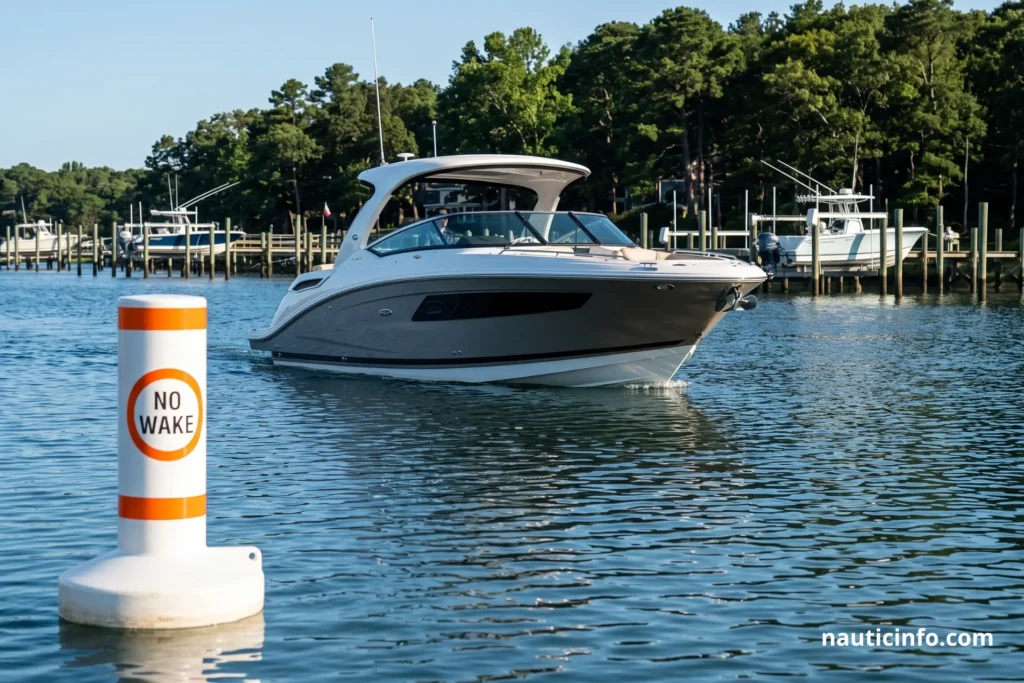
To alert boaters to these zones, US waterways utilize the Uniform State Waterway Marking System (USWMS). These are standardized buoys and signs, predominantly white with bright orange horizontal bands at the top and bottom, featuring specific orange geometric shapes in the center. Mariners must be able to instantly recognize these symbols:
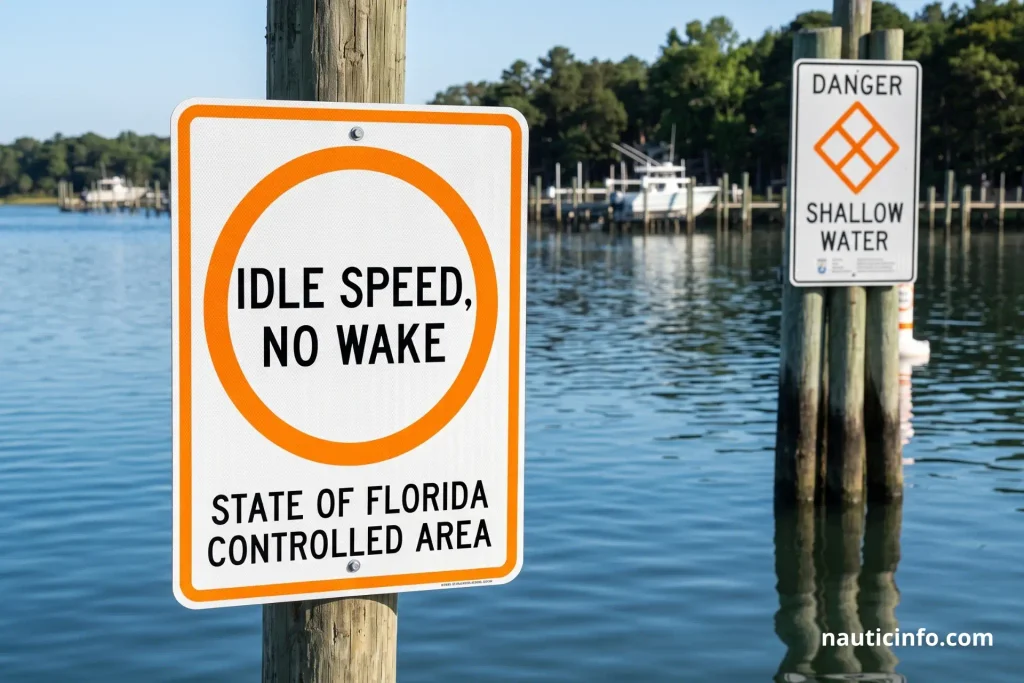
The Circle (Controlled Area): An orange circle indicates a restricted or controlled area. The specific restriction (e.g., “Idle Speed, No Wake,” “Slow Speed, Minimum Wake,” or “Max 25 MPH”) is printed in black lettering inside or next to the circle
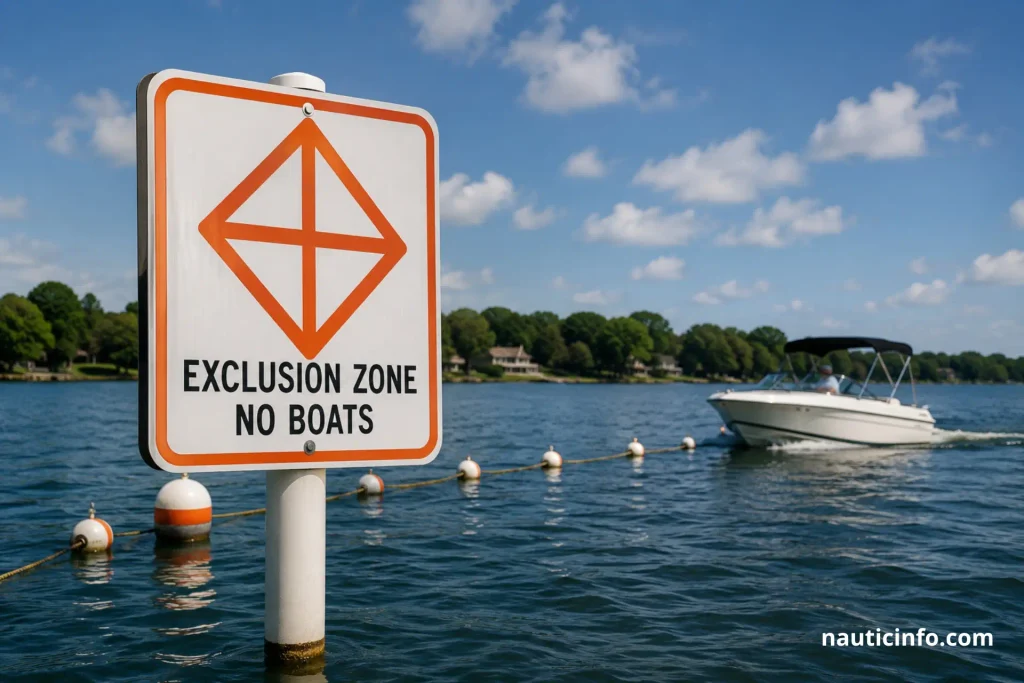
The Crossed Diamond (Exclusion Zone): An orange diamond with a cross intersecting the center indicates a zone where vessels are entirely prohibited. These are typically used to mark designated swim areas, dams, or sensitive wildlife conservation zones.
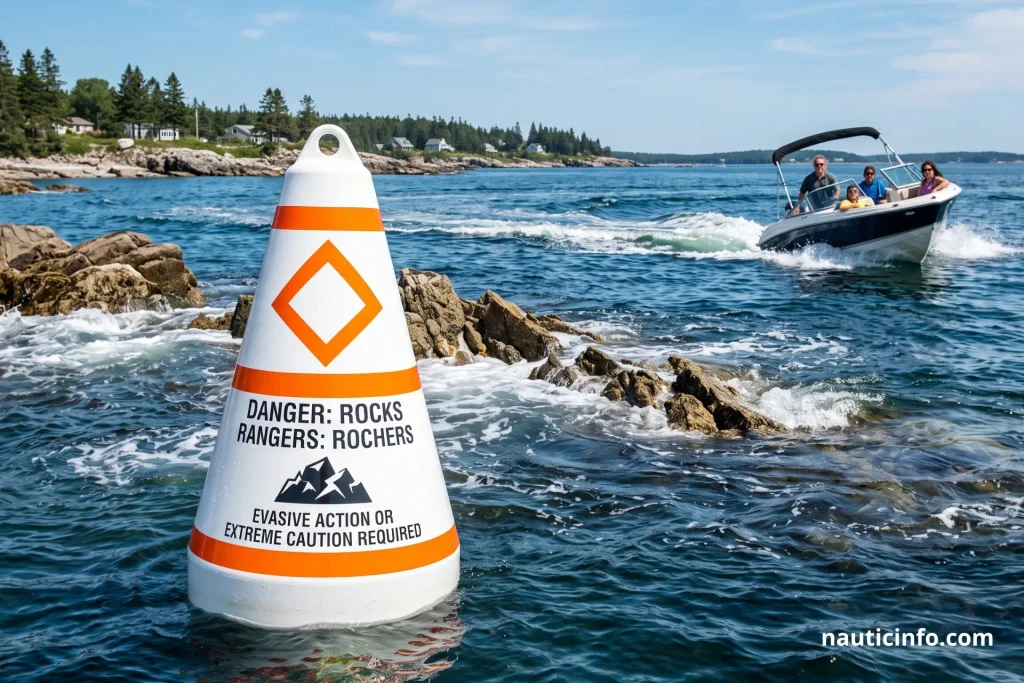
The Diamond (Danger/Hazard): An open orange diamond warns boaters of a navigational hazard, such as rocks, shoals, tree stumps, or shallow areas. These markers require immediate evasive action or extreme caution.
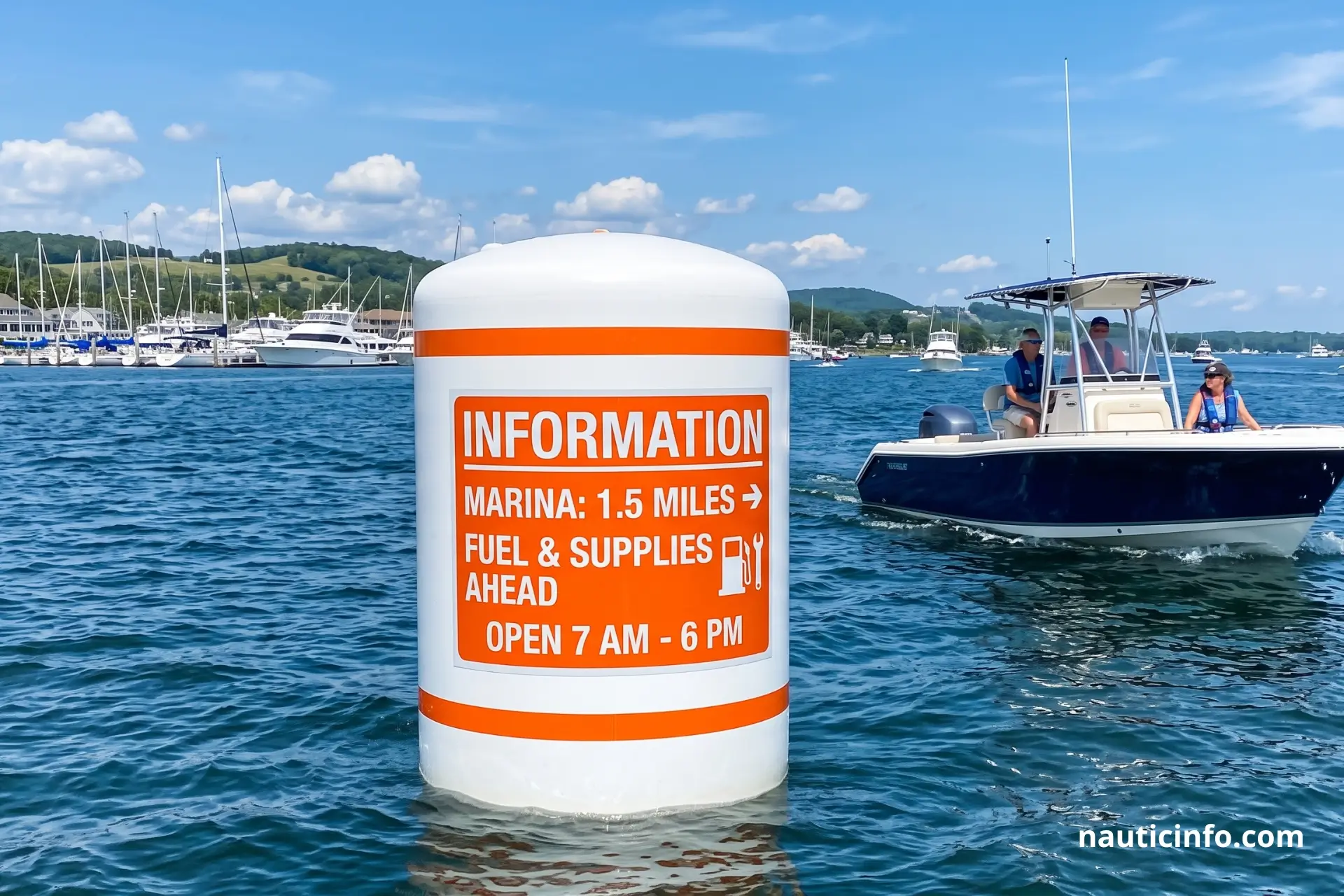
The Square or Rectangle (Information): An orange square or rectangle provides non-regulatory information, such as directions, distances to marinas, or the availability of supplies.
Altering, moving, or mooring a vessel to any of these regulatory markers is strictly prohibited by law.
US coastal boating speed limits : State and Local Variations in Nearshore Navigation
Since there is no federal nearshore speed limit. Boaters must meticulously research the state and local laws applicable to their specific location. As a general rule of thumb, most states enforce a strict “Slow, No Wake” or 5 mph limit within 100 to 300 feet of the shore, docks, and swimming areas. However, the nuances of these laws vary substantially.
A review of regulations in major boating states illustrates the complexity of nearshore compliance.
Florida: Targeted Restrictions and 2026 Rule Shifts
Florida, a state synonymous with recreational boating. Employs a highly detailed regulatory framework designed to protect both boater safety and vulnerable wildlife, such as the West Indian manatee. Regulations explicitly separate “Idle Speed, No Wake” from “Slow Speed, Minimum Wake”.
In Florida, a vessel operating on a plane, or operating at a speed that creates a wake unreasonably endangering other vessels. Explicitly violates the slow speed minimum wake statute (FL Admin Code 68D-24.002). The state enforces maximum speed zones (e.g., 25, 30, or 35 MPH) in specific channels, and temporary slow speed zones are automatically established within 300 feet of any emergency vessel (USCG, FWC, or local marine unit) operating with activated lights, in accordance with the “Move Over Law”. Similar zones apply within 300 feet of construction vessels displaying an orange flag.
Furthermore, heading into 2026, Florida is seeing a shift in local ordinances granting authorities the power to create targeted “Idle Speed, No Wake” restricted areas within 300 feet of a confluence. A blind corner, or a narrow channel bend where obstructed visibility creates inherent risk. These 300-foot zones are designed to force boaters to throttle down to near-idle behavior early when approaching pinch points. Ensuring vessels possess only enough forward motion to maintain steerage.
New York: The 100-Foot Rule and Brianna’s Law
In New York State, vessel speed is strictly limited to 5 mph when operating within 100 feet of the shore, a dock, pier, raft, float, or anchored boat. However, operators must be aware that on certain bodies of water, this 5 mph limit extends to 200 feet. Additionally, some New York lakes enforce separate overarching speed limits for the day (45 mph) and night (25 mph).
New York enforces even stricter limits on personal watercraft (PWCs). PWC operators are completely prohibited from operating within 500 feet of designated swim areas. If there is a designated access site within this 500-foot exclusion zone, the PWC must not exceed 10 mph during transit. Towing activities (waterskiing, tubing) demand maintaining a minimum distance of 200 feet from shorelines, docks, or anchored vessels.
Moreover, under Brianna’s Law, New York has instituted sweeping mandatory education requirements. By January 1, 2025, all motorized vessel operators, regardless of age, will be required to hold a valid Boater Safety Certificate to legally navigate New York waters.
Wisconsin: Differing Standards for Vessels and the Wake-Surfing Debate
Wisconsin’s approach highlights how regulations evolve based on the type of vessel being operated. Under Wisconsin statutes, standard motorboats are prohibited from operating at speeds in excess of “slow-no-wake” within 100 feet of the shoreline of any lake. As well as within 100 feet of any dock, raft, pier, or marked restricted area. However, PWCs are held to a stricter standard: they cannot operate at speeds exceeding slow-no-wake within 200 feet of the shoreline.
Local jurisdictions in Wisconsin frequently adopt even more restrictive ordinances. For example, on Powers Lake, the entire body of water is designated as Slow-No-Wake from sunset until 10:00 AM. Furthermore, Wisconsin law makes it illegal to repeatedly operate a vessel in a circuitous course within 200 feet of another vessel or a person in the water.
The introduction of modern wake-surfing boats has sparked calls for massive regulatory reforms in Wisconsin. Wake-surfing vessels are designed to intentionally produce massive, tsunami-like wakes. Environmental groups and lake associations point out that the standard 100-foot buffer was crafted decades before enhanced wake technology existed. Research indicates that these extreme wakes require a minimum of 500 feet to dissipate. Moreover, newer models can generate even more powerful wakes. For example, the 2026 Malibu model offers 65% more power than the 2019 test boats. Consequently, organizations like Wisconsin Lakes are actively lobbying for legislation that would mandate a 700-foot shoreline buffer for wake-surfing activities. Providing 500 feet for wake dissipation and an additional 200-foot corridor for standard navigation.
California and Michigan: Protecting Swimmers and Property
Other states follow similar frameworks with unique numerical thresholds:
- California: State law mandates a strict 5 mph limit anytime a boat is within 100 feet of a bather (swimmer). Additionally, the 5 mph limit applies when operating within 200 feet of a bathing beach, swimming float, diving platform, life line, passenger landing, or any dock where boats are tied up. Certain areas, like the San Diego oceanfront coastline, extend the 5 mph limit out to 1,000 feet.
- Michigan: Vessel operators are required to maintain a “slow, no wake” speed when operating within 100 feet of a shoreline (if the water is less than three feet deep). As well as within 100 feet of any moored or anchored vessel, dock, raft, or marked swimming area.
Summary of Nearshore Speed Standards by State
| State | Nearshore Limit (Motorboats) | Nearshore Limit (PWCs) | Distance Limit for Bathers/Swimmers | Additional Notes |
| Florida | Highly variable based on local markers. | Same as motorboats. | Excluded from swim areas. | 300-foot zones near blind confluences and emergencies. |
| New York | 5 mph within 100 ft (often 200 ft). | 5 mph within 200 ft; banned within 500 ft of swim areas. | 5 mph within 100 ft of rafts/floats. | Mandatory safety certificate for all ages by 2025. |
| Wisconsin | Slow-No-Wake within 100 ft. | Slow-No-Wake within 200 ft. | Slow-No-Wake within 100 ft of a swimmer. | Proposed 700-foot buffer for wake-surfing under review. |
| California | 5 mph within 200 ft of beaches/docks. | Same as motorboats. | 5 mph within 100 ft of bathers. | 5 mph within 1,000 ft of San Diego coastline. |
| Michigan | Slow-No-Wake within 100 ft. | Slow-No-Wake within 100 ft. | Slow-No-Wake within 100 ft of marked areas. | Applies if water depth is less than three feet. |
US coastal boating speed limits : The USCG “Safe Speed” Mandate: Rule 6
While states regulate specific distances, the overarching law governing vessel speed on all navigable US waters is dictated by the International Regulations for Preventing Collisions at Sea (COLREGs) and the corresponding US Inland Navigation Rules. Specifically, Rule 6 mandates the concept of “Safe Speed.”
Rule 6 explicitly states: “Every vessel shall at all times proceed at a safe speed so that she can take proper and effective action to avoid collision and be stopped within a distance appropriate to the prevailing circumstances and conditions”.
The defining characteristic of Rule 6 is that it is subjective and relative. It does not provide a numerical maximum. Instead, it requires the vessel operator to continually evaluate their surroundings and adjust their speed so that. Should an emergency arise, the vessel can be brought to a halt without causing injury or damage. A speed that is perfectly safe on wide-open water on a brightly lit. Clear day may become dangerously negligent in a narrow channel during dense fog.
Factors Determining Safe Speed for All Vessels
Under Rule 6(a), mariners are legally required to account for the following six factors when determining a safe speed:
The State of Visibility
Fog, rain, mist, and darkness drastically reduce the time a lookout has to spot a hazard. When visibility decreases, speed must be proportionately reduced, and the vessel’s engines should be placed on standby for immediate maneuvering. Atmospheric particles can act as a filter before an observer’s vision, obscuring distant threats.
Traffic Density
The presence of numerous vessels, especially concentrations of commercial fishing vessels, sailboats, or anchored craft. Severely restricts a vessel’s ability to alter course. Heavy traffic demands a speed that allows for close-quarters maneuvering without relying on broad course alterations, and requires keeping engines ready for emergency action.
The Maneuverability of the Vessel
Operators must intimately understand their vessel’s stopping distance and turning radius under the current conditions. A lightweight fiberglass sailboat can reduce speed and stop in a fraction of the time required by a heavy, deep-draft oil tanker. Meaning speed must reflect the physical limits of the hull and propulsion system.
The Presence of Background Light at Night
Navigating at night presents unique challenges. Shore lights or the back-scatter from a vessel’s own deck lights can create background glare, masking the navigation lights of smaller, distant vessels. If shore light pollution is intense. Speed must be reduced as hazards might not be detected until they are dangerously close.
The State of Wind, Sea, and Current, and Proximity of Hazards
Heavy seas, opposing currents, or crosswinds can dramatically alter a vessel’s handling dynamics, sometimes causing it to drift off course. If operating near breakwaters, shoals, or narrow passes, environmental forces dictate a speed that ensures steering control without recklessly propelling the boat toward hazards.
The Draft in Relation to Available Depth of Water
Deep-draft vessels have significantly less sea room available to take evasive action. When navigating in shallow coastal waters, the hull’s proximity to the bottom restricts maneuverability, demanding a highly controllable speed in order to stop short of a hazard.
Additional Factors for Radar-Equipped Vessels
Rule 6(b) places additional legal requirements on vessels equipped with operational radar systems. Mariners cannot blindly rely on electronics to justify high speeds; rather, they must factor in the limitations of the technology itself. When determining safe speed, radar operators must evaluate:
- Characteristics, Efficiency, and Limitations of the Radar:
Radar systems degrade over time; a worn-out magnetron or a burnt-out screen center can compromise target acquisition. Additionally, the vessel’s mast and stacks cast “radar shadows,” creating blind spots that watchkeepers must integrate into their speed calculations. - Constraints of the Radar Range Scale:
The scale currently in use affects situational awareness. A scale set too short might miss fast-approaching vessels, while a scale set too wide might mask close-range hazards. - Effect of Sea State and Interference:
Heavy rain creates “rain clutter” that can obscure entire regions of the horizon on the radar screen. While operators can adjust anti-clutter controls, doing so often simultaneously eliminates weak targets from the display. - Possibility of Not Detecting Small Objects:
Radar may completely fail to detect small, non-metallic vessels (like fiberglass kayaks or wooden canoes), ice floes, or floating debris at an adequate range, requiring visual confirmation and appropriate speeds. - Number, Location, and Movement of Detected Vessels:
A high volume of tracked targets on the radar necessitates reduced speeds to allow the operator time to calculate the relative motion and closest point of approach for each hazard. - Exact Assessment of Visibility:
Radar can be used to assess the precise range of objects, giving the operator a mathematical assessment of actual visibility ranges. This exact data must be used to adjust speed accordingly.
US coastal boating speed limits; Legal Consequences: Reckless Operation and Civil Liability
Failing to adhere to state-mandated nearshore distances or the overarching federal mandate of “Safe Speed” carries severe legal and financial consequences. Under US maritime law, operating a vessel at an unsafe speed or blowing through a no-wake zone is not treated as a minor traffic infraction. It is frequently prosecuted as negligent or reckless operation.
Penalties Under 46 U.S. Code § 2302
Federal penalties for the improper operation of a vessel are codified in 46 U.S.C. § 2302, which strictly prohibits the negligent operation of a watercraft. The statute provides a tiered penalty system based on the severity of the operator’s actions:
- Negligent Operation:
A person operating a vessel in a negligent manner—or interfering with the safe operation of a vessel—in a way that endangers the life, limb, or property of any person is liable to the US Government for a civil penalty. For recreational vessels, this fine can reach up to $5,000. For commercial or other vessels, the fine can climb to $25,000. - Grossly Negligent Operation (Misdemeanor):
If the behavior rises to a “grossly negligent manner” that endangers life, limb, or property, the operator commits a Class A misdemeanor, subjecting them to criminal prosecution, potential imprisonment, and heavy fines. - Grossly Negligent Operation Resulting in Injury (Felony):
If the grossly negligent operation results in serious bodily injury, the offense is elevated to a Class E felony. In addition to potential prison time, the operator may be assessed a civil penalty of up to $35,000.
Furthermore, 46 U.S.C. § 2302 addresses Boating Under the Influence (BUI). Operating a vessel while under the influence of alcohol or dangerous drugs carries identical penalties to negligent operation: a civil penalty of up to $5,000 or a Class A misdemeanor.
In Rem Vessel Liability and Civil Damages
A unique and punitive aspect of maritime law is the concept of in rem liability. Under 46 U.S.C. § 2302(d) and 33 CFR § 177.08. If a penalty is imposed for negligent operation or federal safety code violations, the vessel itself is liable in rem for the penalty. This means the federal government can place a lien on the vessel, or seize it outright, to satisfy the fine. Regardless of whether the owner was the person driving the boat at the time of the infraction. State-owned vessels operated for governmental purposes are exempt from this provision, provided they are clearly identified.
Beyond federal fines, operators face massive civil liability. As established earlier, an operator is financially responsible for any damage caused by their vessel’s wake. If a boat speeds through a no-wake zone and its waves smash a moored yacht against a dock, or swamp a small fishing skiff leading to a drowning. The speeding vessel’s operator is entirely liable for the resulting property damage, personal injury lawsuits, and environmental restoration costs. State laws explicitly define this as “careless operation,” with state-level fines and potential license revocations compounding the federal penalties.
US coastal boating speed limits : Conclusion
Navigating near the coast requires a heightened state of situational awareness. An understanding of complex fluid dynamics (such as wake and drag), and an exhaustive knowledge of maritime law. Unlike international waters or rigidly structured European maritime systems, the American framework relies heavily on the individual operator’s judgment and adherence to a complex patchwork of state and local regulations.
While the federal government provides the overarching mandate to maintain a “Safe Speed” through COLREGs Rule 6, the specific boundaries of “Idle Speed” and no-wake zones are enforced locally. Whether navigating New York’s 100-foot buffers, respecting Florida’s manatee conservation zones, or adapting to Wisconsin’s emerging 700-foot guidelines for wake-surfing, complying with these laws is not simply a legal obligation. It is a fundamental principle of seamanship.
Boaters must proactively research the specific waterway ordinances of their destination, remain vigilant for USWMS regulatory markers, and constantly evaluate their speed against visibility, traffic, and mechanical capabilities. By honoring these regulations, mariners protect fragile coastal ecosystems, preserve the lives of fellow boaters, and ensure the nation’s waterways remain open, sustainable, and safe for all recreational and commercial use.