
Outboard Hydraulic Steering Kit: A Modern Solution for Optimal Navigation
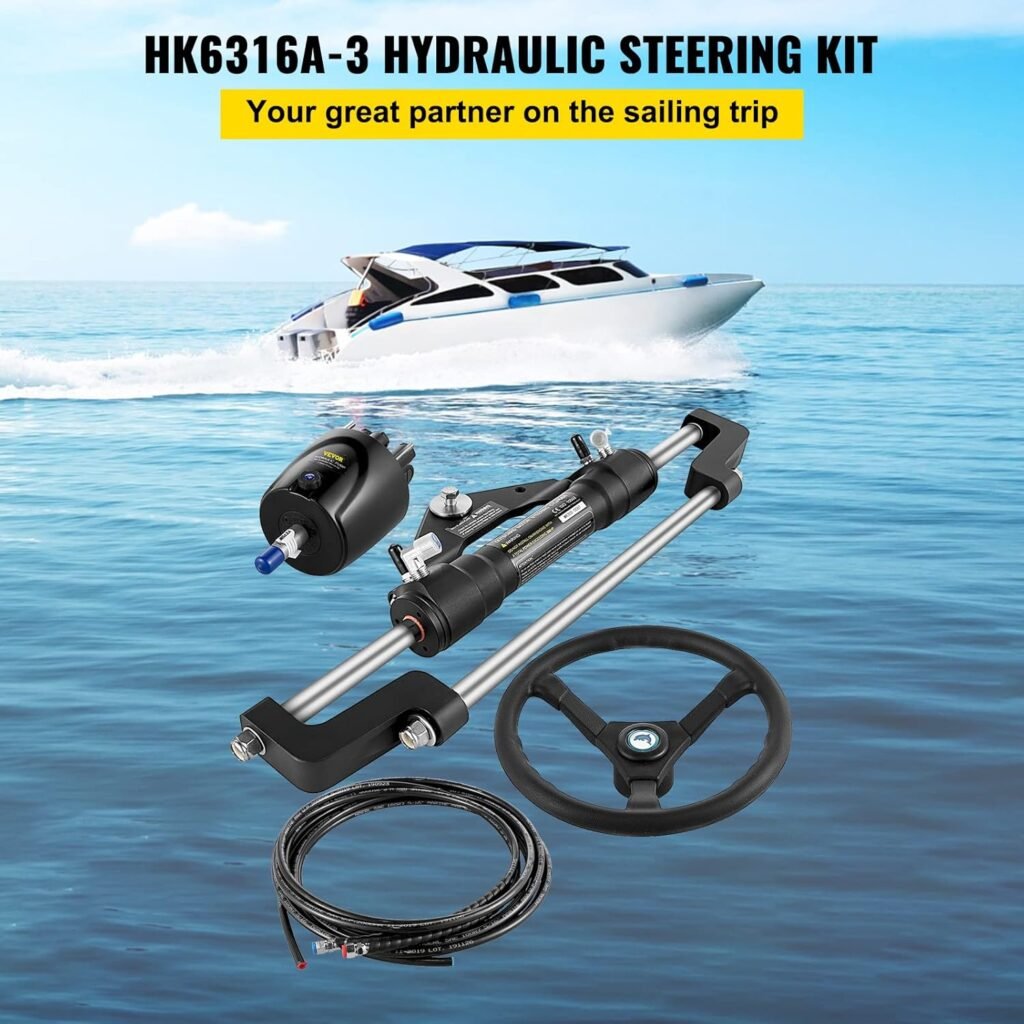
VEVOR Hydraulic Steering Kit
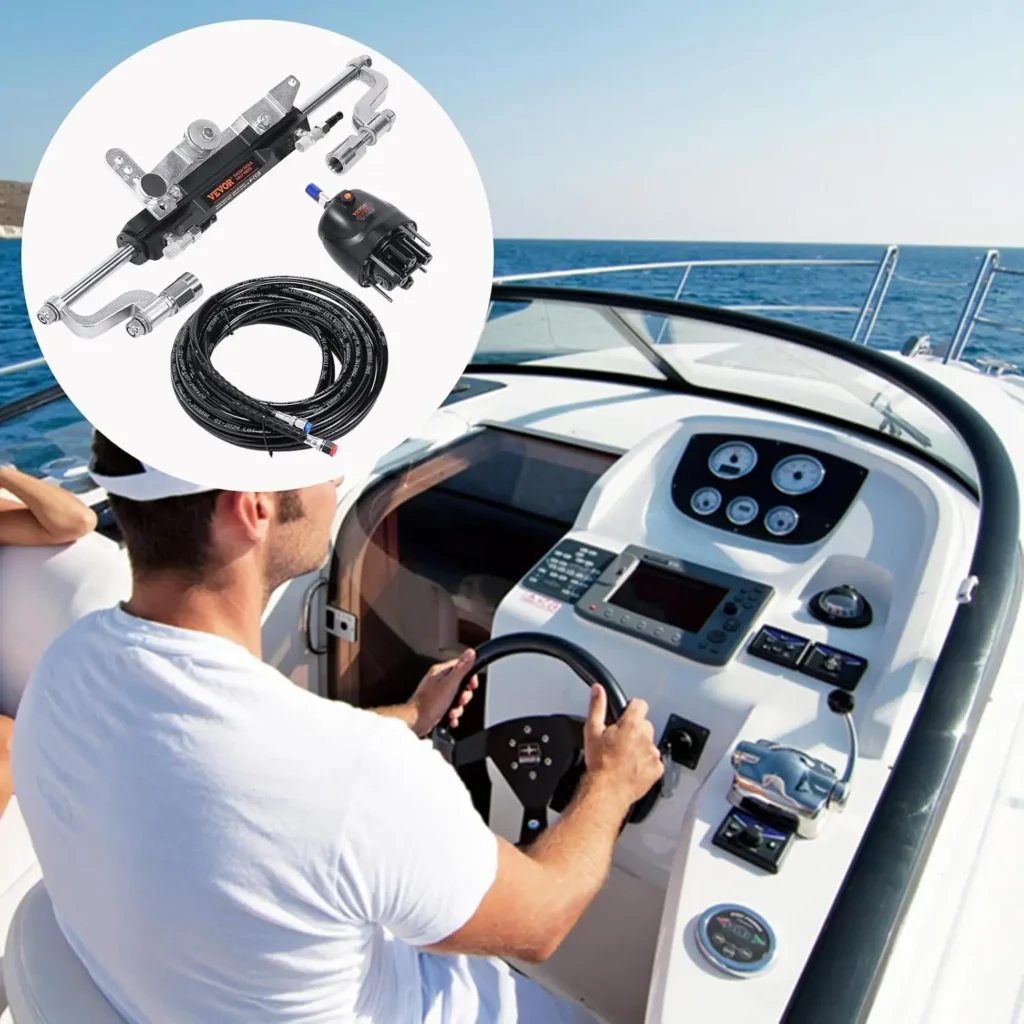
VEVOR Outboard Hydraulic Steering Kit 300HP, Hydraulic Boat Steering Kit Helm Pump. Made of aluminum alloy and high-quality plastic
A boat’s steering system is a critical component for ensuring an enjoyable, safe, and precise navigation experience. Among the systems available on the market, the outboard hydraulic steering kit stands out as an essential solution for boating enthusiasts and owners of outboard motorboats. This article delves into the benefits, operation, installation, and selection criteria for such a system.
Why Choose an Outboard Hydraulic Steering Kit?
The outboard hydraulic steering is designed to deliver superior maneuverability and unmatched comfort while navigating. Unlike traditional mechanical systems, it uses an incompressible fluid (typically hydraulic oil) to transfer force between the steering wheel and the motor. Here are some of the key advantages:
- Enhanced Precision: Hydraulic steering allows for smooth, fine adjustments, ideal for navigating tight spaces or rough waters.
- Reduced Fatigue: The system minimizes the effort required to turn the wheel, which is especially useful during long trips or challenging conditions.
- Durability and Reliability: Hydraulic components are robust and require less maintenance compared to mechanical systems.
- Adaptability: These kits are compatible with various types of outboard boats, whether equipped with single or dual motors.
Thanks to these features, the outboard hydraulic steering kit has become a preferred choice for both recreational boaters and professionals.
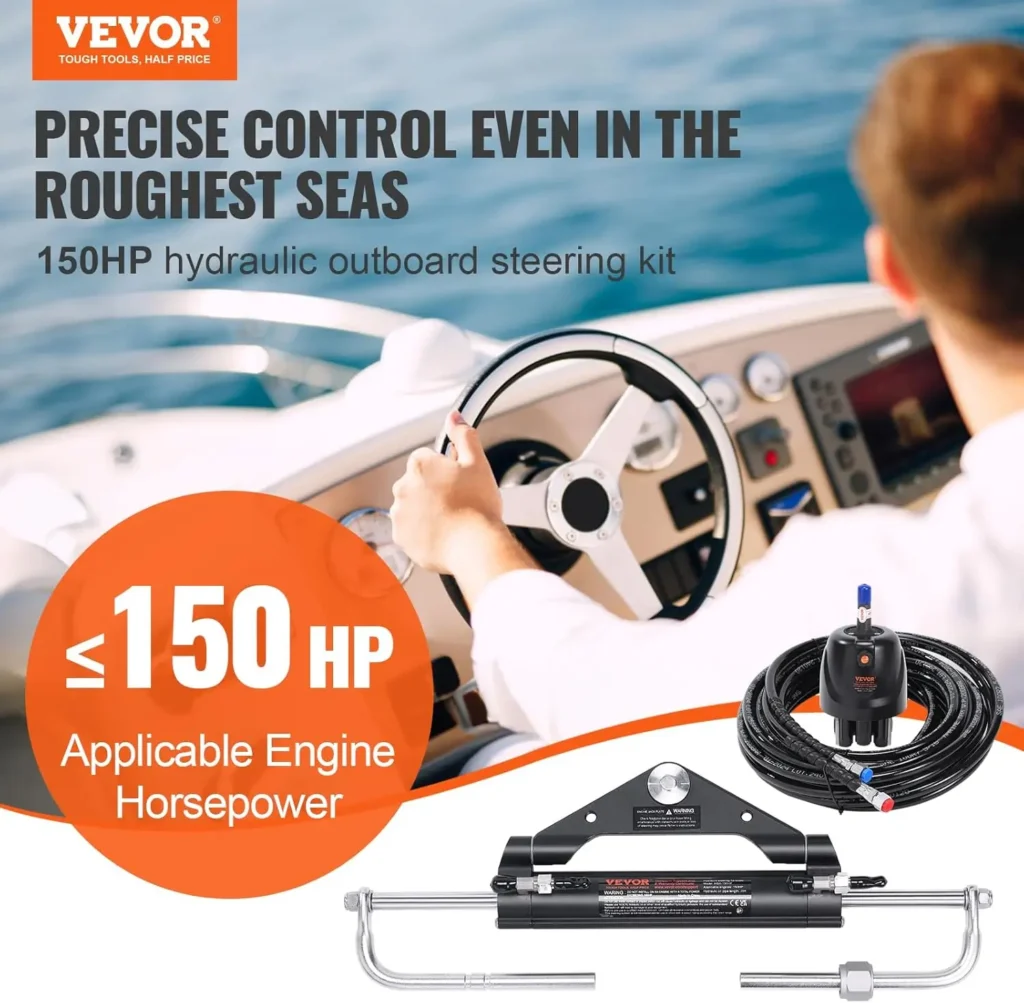
VEVOR 150HP Hydraulic Outboard Steering Kit
Marine System, Built-in Two-Way Lock Cylinder, 150HP Pump and High-Strength Nylon Hose for Single Station, Single-Engine use
Components and Operation of the Kit
A typical outboard hydraulic steering kit includes several essential components:
- Hydraulic Pump (Helm): Installed behind the steering wheel, it converts rotational motion into hydraulic pressure.
- Hydraulic Cylinder: Mounted on the outboard motor, it receives pressure from the pump to steer the motor.
- High-Pressure Hoses: These connect the pump to the cylinder and transport hydraulic fluid.
- Oil Reservoir: Holds the fluid required for system operation.
The principle is simple: when you turn the wheel, the pump pushes oil to the cylinder, causing the motor to move laterally in the desired direction. This mechanism ensures quick and precise responsiveness to every steering input.
Installing an Outboard Hydraulic Steering Kit
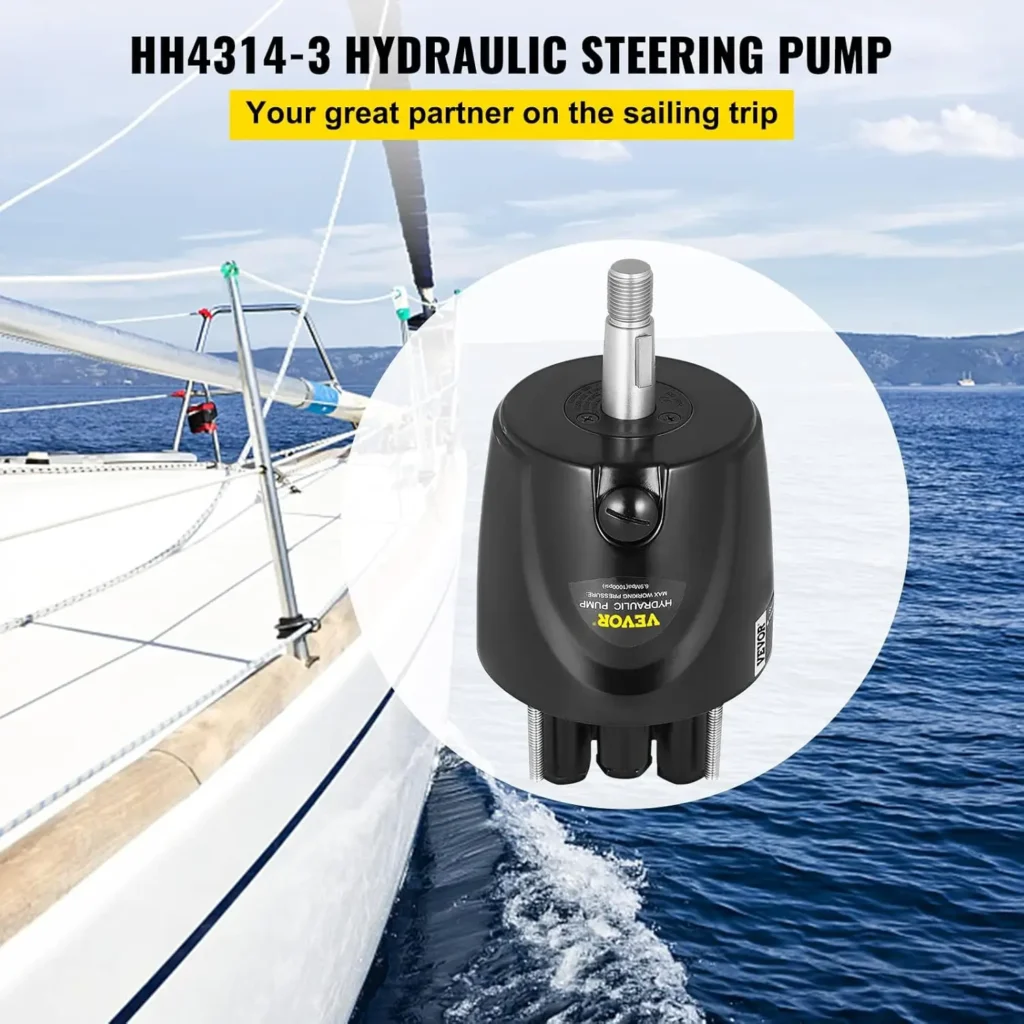
Vevor Hydraulic Outboard Steering Pump 150HP
Aluminum Alloy Structure, Hydraulic Outboard Steering Pump with Replaceable Shaft Seal, HH4314-3
Installing a hydraulic steering kit may seem complex, but it’s manageable with proper preparation. Here are the main steps:
- Remove the Old Mechanical System: Fully disassemble existing cables and components.
- Mount the Hydraulic Cylinder: Attach it to the motor arm using the provided brackets.
- Install the Helm Pump: Position it behind the steering wheel and connect it to the hoses.
- Route the Hydraulic Hoses: Use guides or existing tubing to run hoses from the helm to the cylinder.
- Fill with Hydraulic Fluid: Add oil to the reservoir and bleed air from the system by turning the wheel until no bubbles remain.
These steps ensure a correct and functional installation. However, always follow the specific instructions included with your kit or consult a professional if needed.
Selection Criteria for an Outboard Hydraulic Steering Kit
Before investing in a kit, consider the following factors:
- Motor Power: Kits are often rated for maximum horsepower (e.g., up to 175 HP or 350 HP).
- Single or Dual Motor Setup: Ensure compatibility with your configuration.
- Additional Features: Some models include anti-feedback valves or integrated autopilots for stability.
- Material Durability: Choose kits made with corrosion-resistant materials for marine environments.
- Ease of Installation: Kits with quick-connect fittings simplify setup.
By evaluating these criteria, you can select a system tailored to your needs.
Mechanical vs. Hydraulic Steering: A Comparison
To better understand the benefits of an outboard hydraulic steering kit, here’s a comparison between the two systems:
| Feature | Mechanical Steering | Hydraulic Steering |
|---|---|---|
| Effort Required | High | Low |
| Precision | Medium | Excellent |
| Maintenance | Frequent | Rare |
| Compatibility with Large Motors | Limited | Ideal |
| Initial Cost | Lower | Higher |
This comparison highlights why hydraulic steering is often preferred for performance and comfort.
Maintenance and Longevity
While hydraulic kits require minimal upkeep, a few precautions will extend their lifespan:
- Regularly check the oil level in the reservoir.
- Inspect hoses for leaks or cracks.
- Bleed the system if steering precision declines.
These simple steps will ensure optimal performance for years.
Conclusion
The outboard hydraulic steering kit represents a major technological advancement in marine navigation. With its undeniable advantages in precision, comfort, and durability, it transforms the boating experience by delivering effortless control, even in demanding conditions. Whether you own a small boat or a powerful vessel with dual motors, investing in this system is a wise decision.
By choosing a kit suited to your needs and carefully following installation steps, you can fully enjoy the pleasures of boating while minimizing steering challenges. Equip your boat with an outboard hydraulic steering kit today and set sail for an unparalleled experience on the water!