
Close Menu
Nautic Info
  • HOME
  • POWERBOATING
    • Motors & Parts
    • Maintenance
    • Buying Guides
  • SAILING
    • Sailboats
    • Sailing Techniques
    • Regattas & Events
  • GEAR & TECH
    • Safety
    • Electronics
    • Accessories
  • APPAREL
    • Technical Wear
    • Footwear
  • DESTINATIONS
    • Pacific
    • Caribbean
    • Mediterranean
    • Atlantic
  • LIFESTYLE
    • Practical Tips
    • Adventure Stories
    • Laws & Licenses

Subscribe to our newsletter

The ultimate guide for boating enthusiasts

What's Hot

Sailing Brittany North vs South

Liveaboard Family World Tour

Must-Watch Regattas 2026

Facebook X (Twitter) Instagram YouTube
  • About Us
  • Contact Us
  • Nautic Info FR 🇫🇷
Facebook X (Twitter) Instagram YouTube
Nautic Info
Demo
  • HOME
  • POWERBOATING
    1. Motors & Parts
    2. Maintenance
    3. Buying Guides
    4. View All

    Electrical Issues Outboard Engines

    Spare Parts for Inboard Engines

    Choose a Boat Propeller

    Gasoline Outboard Motors

    Inboard vs. Outboard Maintenance

    Change a water pump impeller

    4-Stroke Outboard Oil Change

    Cleaning Outboard Motor Cooling System

    Motorboat vs Sailboat: A Detailed Comparison

    Mercury vs Yamaha Outboard : Comprehensive Comparison Guide 2025

    How to Choose Your First Motorboat: Budget, Use, Maintenance

    Inboard vs. Outboard Maintenance

    Change a water pump impeller

    4-Stroke Outboard Oil Change

    Electrical Issues Outboard Engines

  • SAILING
    1. Sailboats
    2. Sailing Techniques
    3. Regattas & Events
    4. View All

    Offshore Sailing Yachts

    Top 5 Affordable American Sailboats

    Short-Handed Sailing

    Sailboat Reefing

    How to Anchor a Boat

    How a Sailboat Works

    Must-Watch Regattas 2026

    Must-Watch Regattas 2026

    Short-Handed Sailing

    Sailboat Reefing

    How to Anchor a Boat

  • GEAR & TECH
    1. Safety
    2. Electronics
    3. Accessories
    4. View All

    Boat Cameras

    Marine Carbon Monoxide Detector

    Automatic vs Manual Life Jackets

    Safety Checklist for Going Out to Sea

    Managing Onboard Energy

    AIS for boat safety

    Fixed vs. Portable VHF

    Marine Autopilot

    Bimini Tops and Boat Sun Shades

    Boat Accessories : 10 Must-Have

    Bimini Tops and Boat Sun Shades

    Boat Cameras

    Marine Carbon Monoxide Detector

    Managing Onboard Energy

  • APPAREL
    1. Technical Wear
    2. Footwear
    3. View All

    Smart Connected Textiles for Sailing

    Technical clothing maintenance

    How to Choose a Sailing Jacket

    Rubber vs Breathable Sailing Boots

    Rubber vs Breathable Sailing Boots

    Smart Connected Textiles for Sailing

    Technical clothing maintenance

    How to Choose a Sailing Jacket

  • DESTINATIONS
    1. Pacific
    2. Caribbean
    3. Mediterranean
    4. Atlantic
    5. View All

    Sailing Tuamotu Atolls

    Sailing Cuba

    British Virgin Islands Sailing Vacation

    10-Day Grenadines Sailing Itinerary

    Discover the Cyclades in 15 Days

    Bonifacio Maddalena Sailing

    10-Day Croatia Yacht Charter Split to Dubrovnik

    Corsica Sailing Itinerary: 1 Week

    Sailing Brittany North vs South

    Sailing Brittany North vs South

    Sailing Tuamotu Atolls

    Sailing Cuba

    British Virgin Islands Sailing Vacation

  • LIFESTYLE
    1. Practical Tips
    2. Adventure Stories
    3. Laws & Licenses
    Featured

    Liveaboard Family World Tour

    Recent

    Liveaboard Family World Tour

    USCG Required Safety Equipment

    Do I need a boating license

  • About Us
  • Contact Us
  • Nautic Info FR 🇫🇷
Facebook X (Twitter) Instagram
Nautic Info
Home » Liveaboard Family World Tour
Adventure Stories LIFESTYLE

Liveaboard Family World Tour

Share
Facebook Twitter WhatsApp LinkedIn Pinterest Email

Escaping the Rat Race: The Ultimate Guide to a Liveaboard Family World Tour
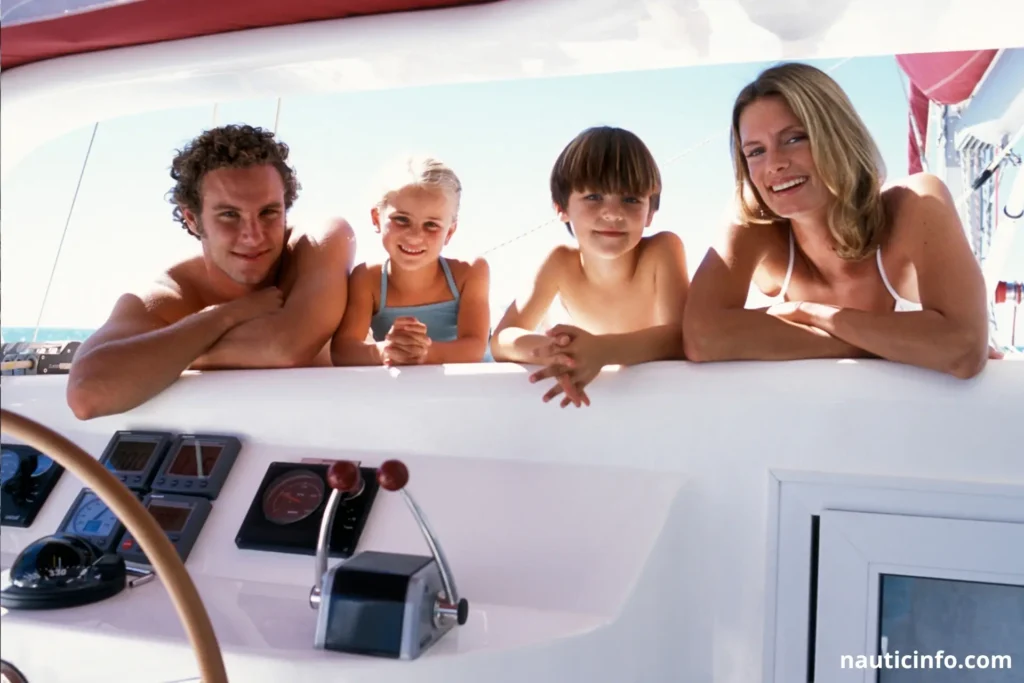
The Ultimate Guide to a Liveaboard Family World Tour

Imagine trading your morning commute on the I-95 for a sunrise over the Pacific Ocean. Instead of quarterly reviews, your primary concern is the wind direction and the freshness of the Mahi-Mahi you just caught. This isn’t just a fantasy; it is the reality for the “Miller” family (names changed for privacy), a standard American family from Ohio who sold everything to embark on a liveaboard family world tour.

In this exclusive deep-dive feature, we break down exactly how they did it, the technical challenges of the boat, the financial realities, and the emotional highs and lows. If you are considering pulling the anchor and setting sail, this guide is your blueprint.

Why Choose a Liveaboard Family World Tour?

The decision to leave a comfortable suburban life is never easy. However, for many, the pull of adventure outweighs the safety of routine. Furthermore, the modern digital landscape allows for remote work, making the dream more accessible than ever.

The Millers didn’t just wake up one day and buy a boat. Conversely, it was a three-year plan. They realized that their children were growing up too fast, and the “American Dream” felt more like a treadmill. Therefore, they decided to prioritize experiences over possessions.

The Mental Shift

Transitioning to life at sea requires a massive psychological shift. You are no longer defined by your job title or your lawn’s manicuring. Instead, you become a mechanic, a teacher, a navigator, and a chef. Consequently, families report a tighter bond, forged through shared challenges and triumphs.

Preparing for Your Liveaboard Family World Tour

Preparation is the bedrock of safety. You cannot simply buy a boat and head into the Atlantic. In fact, the preparation phase is often the most stressful part of the journey.

1. The Great Purge

Before you can fill a boat, you must empty a house. The Millers held four estate sales.

  • Keep: Sentimental items (store in a climate-controlled unit), essential electronics, durable clothing.
  • Sell/Donate: Furniture, cars, excess clothes, kitchen gadgets.
  • Digitize: All paperwork, photos, and medical records.

2. Selecting the Vessel

This is the most critical technical decision. For a family of four, space and stability are paramount.

Monohull vs. Catamaran for a Liveaboard Family World Tour

Choosing between a monohull and a catamaran is the oldest debate in the marina. Here is a breakdown to help you decide.

FeatureMonohull (e.g., Hylas 46)Catamaran (e.g., Lagoon 42)
StabilityHeels (tilts) under sail. Can be tiring.Sails flat. safer for walking around.
Living SpaceCozy, “basement” feel. Limited natural light.Massive salon, 360-degree views, separate hulls.
DraftDeep (6 ft+). Limits access to shallow bays.Shallow (4 ft). Can anchor close to the beach.
CostGenerally cheaper per foot. Lower dockage fees.More expensive to buy and double dockage fees.
MotionRolls at anchor.Can have a “snappy” motion, but generally stable.
SafetySelf-righting if capsized.Does not self-right, but essentially unsinkable.

Verdict: For the Millers, the Catamaran was the clear winner for the living space and lack of heeling, which is easier on young children.

Technical Specifications: The Family Cruiser

To successfully execute a liveaboard family world tour, the boat must be a self-sufficient grid. Here are the specs of a typical family-ready cruiser (based on a 45ft Catamaran setup).

Specs Sheet: The “Freedom” Rig

  • LOA (Length Overall): 45 Feet
  • Beam: 25 Feet
  • Draft: 4 Feet 2 Inches
  • Displacement: 33,000 lbs
  • Engine Power: 2 x 57 HP Yanmar Diesels
  • Fuel Capacity: 274 Gallons
  • Water Capacity: 180 Gallons
  • Sail Area: 1,200 sq. ft. (Main + Genoa)

Key Upgrades for Independence

  1. Solar Array: 1,200 Watts of solar panels on a custom arch. This is essential for running freezers and laptops without the generator.
  2. Lithium Battery Bank: 800 Amp-Hours at 12V. Lithium allows you to use more capacity than standard lead-acid batteries.
  3. Watermaker: A 12V unit producing 15 Gallons Per Hour (GPH). You never want to rely on shore water in remote locations.
  4. Connectivity: Starlink Maritime. This has changed the game for working parents and homeschooling.

The Financial Reality of a Liveaboard Family World Tour

How much does it actually cost? This is the most common question. The answer varies, but let’s look at a realistic monthly budget for a family of four cruising the Caribbean and crossing to the Pacific.

Note: This excludes the initial purchase price of the boat.

CategoryMonthly Cost (USD)Notes
Food & Provisions$1,200Buying local helps, but US brands are pricey abroad.
Boat Maintenance$1,000The “1% of boat value per year” rule is a minimum.
Fuel (Diesel/Dinghy)$300Varies if you motor often or sail purely.
Insurance$400Offshore policies are rising in cost.
Marinas/Moorings$500Anchoring is free; marinas are for repairs/respite.
Starlink/Comms$150Essential for school and weather data.
Entertainment/Tours$400Diving, land excursions, park fees.
Health/Medical$300Travel insurance and out-of-pocket basics.
TOTAL$4,250Does not include haul-outs or major refits.

As you can see, it is comparable to living in a mid-sized US city, but with a much better view. However, you must have a “Disaster Fund” of at least $10,000 accessible instantly for engine failures or emergency flights.

Education on Board During a Liveaboard Family World Tour

“What about school?” This is the primary concern for parents.

Surprisingly, children often thrive in this environment. The world becomes their classroom. Biology is learned by dissecting a freshly caught Tuna. Geography is learned by navigating charts. History is learned by visiting the forts of Nassau.

Curriculum Options:

  • Unschooling: Child-led learning based on interests.
  • Standard Homeschooling: Using accredited US programs (like Calvert or K12) via Starlink.
  • Boat Schooling: A mix of both, focusing on marine skills.

Practical Advice: Surviving the First 90 Days

The first three months are the hardest. Things break, the crew gets seasick, and the space feels small.

The “Cruiser’s Daily Routine” Schema

To maintain sanity, a routine is vital. Here is what a typical day looks like:

  1. 07:00 AM: Wake up, check the anchor, check weather forecast (PredictWind).
  2. 08:00 AM: Breakfast and Boat School (3 hours focused work).
  3. 11:00 AM: Boat chores (Watermaker run, deck scrub, minor repairs).
  4. 12:30 PM: Lunch.
  5. 01:30 PM: Adventure time (Snorkeling, hiking, beach combing).
  6. 05:00 PM: Sundowners with other cruiser families (Social hour).
  7. 07:00 PM: Dinner and family movie or reading.
  8. 09:00 PM: Passage planning or parents’ work time.

Pros & Cons of the Lifestyle

Pros:

  • Freedom: You choose your backyard every day.
  • Quality Time: Uninterrupted connection with your kids.
  • Skill Building: You become incredibly self-reliant.
  • Nature: Living in sync with the sun, wind, and tides.

Cons:

  • Maintenance: Fixing toilets in paradise is still fixing toilets.
  • Proximity: No escape from family members during arguments.
  • Weather Stress: Watching hurricane tracks can be terrifying.
  • Goodbyes: You meet amazing people, but you are always parting ways.

Conclusion: Is the Dream Worth the Risk?

Embarking on a liveaboard family world tour is not a permanent vacation. It is a challenging, grueling, and expensive lifestyle. However, looking back, the Millers say they have zero regrets. They have traded security for vitality.

If you are sitting in your cubicle reading this, know that the ocean is waiting. It requires planning, grit, and a good sense of humor, but the rewards are measured in memories that no 401(k) can buy.

Share. Facebook Twitter WhatsApp Pinterest LinkedIn Email

Articles connexes

USCG Required Safety Equipment

Do I need a boating license

De-winterizing Boat Engine

Ultimate Boat Winterization Checklist

Demo
Top Posts

Mercury vs Yamaha Outboard : Comprehensive Comparison Guide 2025

How to Choose Your First Motorboat: Budget, Use, Maintenance

Inboard vs. Outboard Maintenance

Don't Miss

Sailing Brittany North vs South

Sailing Brittany: North vs. South – The Ultimate Summer Cruising Guide France’s Brittany coast (Bretagne)…

Liveaboard Family World Tour

Must-Watch Regattas 2026

Rubber vs Breathable Sailing Boots

Stay In Touch
  • Facebook
  • YouTube
  • Twitter
  • Instagram
Motors Parts
Demo
Most Popular

Mercury vs Yamaha Outboard : Comprehensive Comparison Guide 2025

How to Choose Your First Motorboat: Budget, Use, Maintenance

Inboard vs. Outboard Maintenance

Our Picks

Sailing Brittany North vs South

Liveaboard Family World Tour

Must-Watch Regattas 2026

Subscribe to our newsletter

The ultimate guide for boating enthusiasts

© 2026 Nautic Info. Privacy Policy | Terms of Use & Disclosure
  • HOME
  • POWERBOATING
    1. Motors & Parts
    2. Maintenance
    3. Buying Guides
    4. View All

    Electrical Issues Outboard Engines

    Spare Parts for Inboard Engines

    Choose a Boat Propeller

    Gasoline Outboard Motors

    Inboard vs. Outboard Maintenance

    Change a water pump impeller

    4-Stroke Outboard Oil Change

    Cleaning Outboard Motor Cooling System

    Motorboat vs Sailboat: A Detailed Comparison

    Mercury vs Yamaha Outboard : Comprehensive Comparison Guide 2025

    How to Choose Your First Motorboat: Budget, Use, Maintenance

    Inboard vs. Outboard Maintenance

    Change a water pump impeller

    4-Stroke Outboard Oil Change

    Electrical Issues Outboard Engines

  • SAILING
    1. Sailboats
    2. Sailing Techniques
    3. Regattas & Events
    4. View All

    Offshore Sailing Yachts

    Top 5 Affordable American Sailboats

    Short-Handed Sailing

    Sailboat Reefing

    How to Anchor a Boat

    How a Sailboat Works

    Must-Watch Regattas 2026

    Must-Watch Regattas 2026

    Short-Handed Sailing

    Sailboat Reefing

    How to Anchor a Boat

  • GEAR & TECH
    1. Safety
    2. Electronics
    3. Accessories
    4. View All

    Boat Cameras

    Marine Carbon Monoxide Detector

    Automatic vs Manual Life Jackets

    Safety Checklist for Going Out to Sea

    Managing Onboard Energy

    AIS for boat safety

    Fixed vs. Portable VHF

    Marine Autopilot

    Bimini Tops and Boat Sun Shades

    Boat Accessories : 10 Must-Have

    Bimini Tops and Boat Sun Shades

    Boat Cameras

    Marine Carbon Monoxide Detector

    Managing Onboard Energy

  • APPAREL
    1. Technical Wear
    2. Footwear
    3. View All

    Smart Connected Textiles for Sailing

    Technical clothing maintenance

    How to Choose a Sailing Jacket

    Rubber vs Breathable Sailing Boots

    Rubber vs Breathable Sailing Boots

    Smart Connected Textiles for Sailing

    Technical clothing maintenance

    How to Choose a Sailing Jacket

  • DESTINATIONS
    1. Pacific
    2. Caribbean
    3. Mediterranean
    4. Atlantic
    5. View All

    Sailing Tuamotu Atolls

    Sailing Cuba

    British Virgin Islands Sailing Vacation

    10-Day Grenadines Sailing Itinerary

    Discover the Cyclades in 15 Days

    Bonifacio Maddalena Sailing

    10-Day Croatia Yacht Charter Split to Dubrovnik

    Corsica Sailing Itinerary: 1 Week

    Sailing Brittany North vs South

    Sailing Brittany North vs South

    Sailing Tuamotu Atolls

    Sailing Cuba

    British Virgin Islands Sailing Vacation

  • LIFESTYLE
    1. Practical Tips
    2. Adventure Stories
    3. Laws & Licenses
    Featured

    Liveaboard Family World Tour

    Recent

    Liveaboard Family World Tour

    USCG Required Safety Equipment

    Do I need a boating license

Type above and press Enter to search. Press Esc to cancel.