
The Ultimate Guide to the US Boater Education Card: Laws, Exams, and Safety Protocols
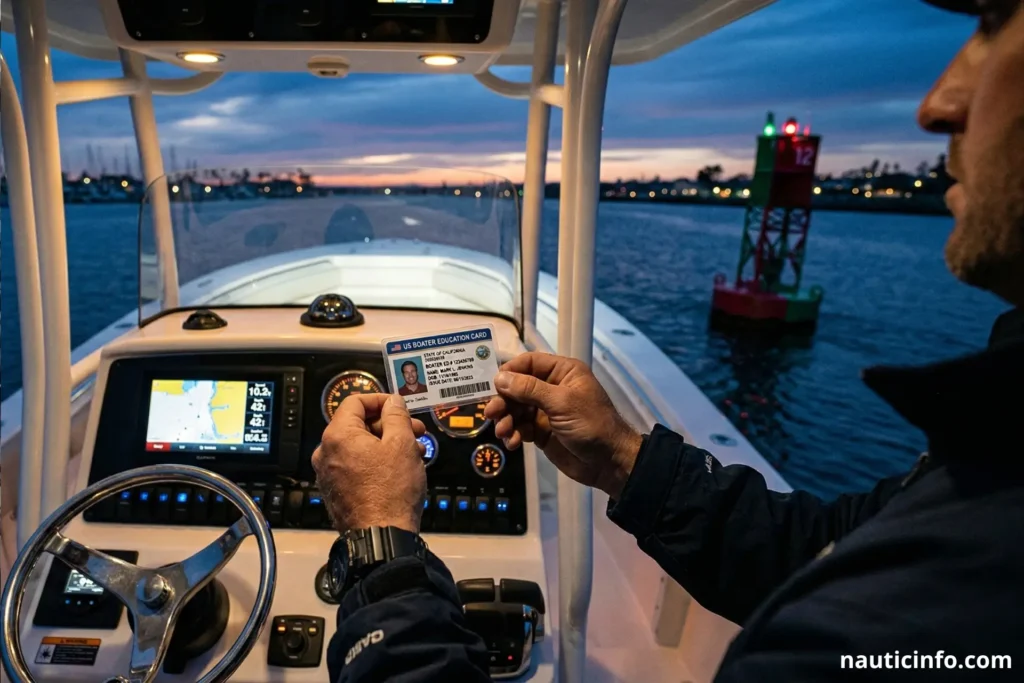
Navigating the complex maritime regulations across the United States requires more than just practical experience; it demands formal certification to ensure absolute safety on the waterways. Specifically, securing a Boater Education Card has evolved from a voluntary safety recommendation into a strict, legally mandated requirement in nearly every major boating jurisdiction. Consequently, this exhaustive report provides a definitive, expert-level analysis of certification mandates, examination topics, and actionable safety protocols to guarantee complete compliance for US boaters.
The Evolution and Purpose of the Boater Education Card
Historically, operating a recreational vessel in the United States required little more than the financial means to purchase a boat and the mechanical knowledge to start the engine. However, as inland lakes and coastal waterways became increasingly congested, the incidence of preventable maritime accidents necessitated a massive legislative shift across the country. Consequently, state governments and federal oversight bodies recognized that informal knowledge transfer was no longer sufficient to maintain public safety. Therefore, the concept of mandatory operator certification was formally introduced. Specifically, states began implementing phased educational requirements designed to ensure that every individual taking the helm possessed a standardized, baseline understanding of maritime safety, complex navigation rules, and critical emergency protocols.
Furthermore, a persistent misconception within the recreational maritime community is the interchangeable use of the terms “boating license” and “Boater Education Card.” However, a distinct legal and practical difference exists between these two concepts, which carries significant implications for vessel operators. Specifically, a traditional driver’s license for a motor vehicle is a revocable privilege that requires periodic renewal, continuous fees, and physical re-evaluation. Conversely, a Boater Education Card serves as permanent, lifetime proof of the successful completion of a recognized and accredited safety course. Moreover, once boaters acquire this certification, it generally never expires. It serves as a perpetual credential that does not require subsequent administrative upkeep. As a result, this lifelong validity strongly encourages operators to complete the training early in their boating careers.
The National Framework: NASBLA and the Boater Education Card
Individual state legislatures do not arbitrarily design or randomly enforce the curriculum required to obtain these permanent certifications. Instead, the National Association of State Boating Law Administrators (NASBLA) provides a highly regulated, standardized framework that ensures all approved courses across the nation meet rigorous, empirical safety criteria. Specifically, NASBLA acts as the centralized authority that evaluates educational programs, ensuring they thoroughly address core competencies—such as navigation rules, state-specific laws, and environmental stewardship. Consequently, whether an operator takes a course in the Pacific Northwest or the Gulf Coast, the foundational knowledge remains strictly consistent.
Furthermore, this national standardization is absolutely critical because it facilitates seamless interstate recognition. Therefore, a boater who successfully completes a NASBLA-approved curriculum in their home state possesses a credential that carries legal weight across jurisdictional boundaries. Moreover, the United States Coast Guard (USCG) heavily supports this initiative, actively recognizing courses that bear the NASBLA seal of approval. Thus, the Boater Education Card represents a unified national effort to elevate the baseline competency of the American recreational boater, directly reducing fatalities and property damage on the water.
Interstate Reciprocity for Your Boater Education Card
For mariners who routinely transport their vessels across state lines via trailer, or those who frequently charter boats while on cross-country vacations, understanding the nuances of jurisdictional reciprocity is absolutely critical. Fortunately, the maritime regulatory landscape in the United States is highly cooperative, heavily leaning on the standards established by NASBLA. Specifically, reciprocity dictates that a host state will legally recognize and accept a Boater Education Card issued by an operator’s home state. However, this cross-border recognition is almost entirely contingent upon the original course carrying the official NASBLA approval.
Consequently, if a boater completes a NASBLA-approved curriculum in Tennessee, marine law enforcement agencies operating in Maryland, Texas, or Florida will honor that specific certification without question. Nevertheless, visiting boaters are not immune to the localized operational laws of their destination. For instance, an out-of-state boater visiting the coastal waters of California must still strictly adhere to California’s specific speed limits, Personal Watercraft (PWC) operational hours, and localized safety equipment requirements, even though their out-of-state card is perfectly valid for proving basic operational competency. Therefore, operators must conduct localized research prior to launching their vessel in foreign waters, ensuring that they do not run afoul of regional ordinances that differ from their home state.
Comprehensive State-by-State Boater Education Card Mandates
While NASBLA establishes the educational standards, individual state legislatures retain the absolute sovereign authority to dictate exactly who must carry a Boater Education Card. Specifically, these mandates are typically based on a combination of operator age, vessel length, and engine horsepower (HP). Consequently, a complex patchwork of regulations exists across the country, requiring boaters to remain hyper-vigilant regarding local laws. Furthermore, many states have utilized a phased-in approach, slowly lowering the age exemption over several years to eventually encompass the entire boating population.
California Boater Education Card: The 2025 Universal Mandate
California represents a prime example of a state that has recently finalized a comprehensive legislative overhaul regarding maritime safety and operator competency. Specifically, the state initiated an ambitious eight-phase rollout starting on January 1, 2018, progressively requiring older demographics to obtain certification each subsequent year. For example, the initial phase targeted operators 20 years of age or younger, with subsequent years expanding the mandate to those 25, 35, 45, and older. However, as of January 1, 2025, this extensive phase-in period concluded entirely.
Consequently, California law now strictly requires all individuals operating a motorized vessel on California waterways, regardless of their age or prior experience, to possess a California Boater Education Card. Furthermore, this strict rule applies to all vessels propelled by an engine of 15 HP or more, which inherently includes all Personal Watercraft (PWC). Notably, the law does provide specific age-related operational constraints; youths aged 12 to 15 may operate a vessel exceeding 15 HP only if an adult who is at least 18 years old and personally holds a valid certification directly supervises them onboard. Moreover, operating a vessel without this mandated card in California is classified as an infraction, carrying base fines of \$100 for a first offense, escalating to \$500 for a third offense, alongside court-ordered mandatory education. Thus, compliance in the Golden State is now universal and strictly enforced.
New York’s Brianna’s Law and the Boater Education Card
Similarly, New York State has enacted incredibly stringent regulations under the legislative framework officially known as Brianna’s Law. Named in memory of Brianna Lieneck, a young girl who tragically perished in a severe, high-impact boating collision, legislators meticulously designed this law to drastically improve operator competency and eliminate preventable maritime fatalities. Specifically, the law utilized a phased approach entirely based on the operator’s birth year, rather than their current age.
Accordingly, operators born on or after January 1, 1993, were required to be certified by 2020; those born after 1988 by 2022; those born after 1983 by 2023; and those born after 1978 by 2024. However, analogous to California’s rigid timeline, the final phase of Brianna’s Law took full effect on January 1, 2025. Therefore, all motorized boat operators navigating New York waters, regardless of their age or lifetime experience level, must now hold a valid Boater Education Card. Furthermore, it is critical to note that operators of PWCs are universally subject to this educational requirement, ensuring that these high-speed, highly maneuverable craft are piloted exclusively by trained individuals. As a result, the waters of New York are now navigated exclusively by a fully certified populace.
The Minnesota Boater Education Card: 2025 to 2028 Reforms
Minnesota, boasting one of the highest per-capita boat ownership rates in the nation, has recently modernized its educational framework to combat a persistent plateau in watercraft-related fatalities. Specifically, effective July 1, 2025, the state instituted a new permit requirement heavily targeting younger adult operators to ensure proactive safety training.
Initially, under this new legislation, adults born on or after June 30, 2004, are legally required to hold a valid watercraft operator’s permit to pilot any motorboat or PWC. Furthermore, this legislation features a progressive, multi-year rollout: by July 1, 2026, those born after June 30, 2000, will require certification; by 2027, the mandate covers those born after 1996; and eventually, it will encompass all operators born after June 30, 1987, by the year 2028. Additionally, the state has placed strict constraints on youth operators; individuals under 12 years of age are explicitly prohibited from operating PWCs or any motorboats exceeding 75 HP under any circumstances.
Moreover, youths aged 12 to 17 operating vessels under 75 HP must either hold a permit, or a fully certified “accompanying operator” who is at least 21 years old and within immediate reach of the controls must directly supervise them. Consequently, Minnesota is taking aggressive, structured steps to educate the next generation of mariners.
Texas and Florida Boater Education Card Requirements
In stark contrast to the universal age mandates recently finalized in California and New York, several prominent maritime states rely on a calculated combination of birth dates, engine horsepower, and vessel lengths to determine their compliance requirements.
Florida Requirements
The Sunshine State maintains a strict, date-based cutoff system. Specifically, Florida law mandates that anyone born on or after January 1, 1988, must successfully pass an approved safety course and carry a Boating Safety Education Identification Card to operate any vessel powered by an engine of 10 HP or greater. Consequently, operators born prior to 1988 are perpetually grandfathered in and explicitly exempt from the card requirement, although they remain strictly bound by all state navigational laws and liability standards. Furthermore, the Florida Fish and Wildlife Conservation Commission (FWC) actively enforces these rules, and operating without the card can result in severe fines, particularly if the operator simultaneously causes environmental damage, such as destroying highly protected seagrass beds.
Texas Requirements
The regulatory environment in Texas is slightly more complex, strategically factoring in both engine power and the physical dimensions of windblown vessels. Specifically, individuals born on or after September 1, 1993, must secure a Boater Education Card to legally operate any vessel powered by a motor exceeding 15 HP, or any windblown vessel (sailboat) that measures more than 14 feet in length. Furthermore, to operate a PWC or a motorboat exceeding 15 HP, the individual must be at least 13 years old and certified, or be directly supervised by a competent adult who is at least 18 years of age.
Moreover, Texas implements a punitive educational requirement; any person guilty of a moving violation, such as reckless operation or creating a hazardous wake, is legally mandated to complete the course. Consequently, failure to complete this remedial boater education within 90 days elevates the initial infraction to a Parks and Wildlife Class A misdemeanor.
| State | Birth Year Requirement | Minimum Engine HP Triggering Requirement | Specific Vessel Length Rules |
| California | All ages (As of Jan 1, 2025) | 15 HP or more | Exemptions for sailboats under 30 feet |
| New York | All ages (As of Jan 1, 2025) | All motorized vessels | N/A |
| Minnesota | Born after June 30, 2004 (expands to 1987 by 2028) | All motorized vessels | Youth under 12 restricted from >75 HP |
| Florida | Born on or after Jan 1, 1988 | 10 HP or more | N/A |
| Texas | Born on or after Sept 1, 1993 | More than 15 HP | Sailboats over 14 feet |
| Alabama | All operators 12 years and older | All motorized vessels | N/A |
Exemptions from the Boater Education Card Requirement
While the national push for universal education is undeniably strong, certain logistical, professional, and provisional exemptions are legally recognized across various states to accommodate unique circumstances. Specifically, individuals holding a valid Master of a Vessel license issued directly by the United States Coast Guard (USCG) are universally exempt from state-level recreational Boater Education Card requirements. Consequently, because their professional credentialing and rigorous testing far exceed the basic civilian safety curriculum, demanding redundant education is deemed unnecessary.
Furthermore, several states offer practical grace periods for new boat owners to facilitate commerce and ease of entry into the sport. For example, Florida explicitly permits an individual to operate a newly purchased vessel for up to 90 days without possessing a certification, provided they keep the official bill of sale onboard and available for immediate law enforcement inspection. Additionally, operation on purely private lakes or ponds is frequently exempt from state licensing mandates, as these enclosed bodies of water do not fall under traditional state navigational jurisdiction. Moreover, the commercial rental industry possesses unique caveats; in many jurisdictions, completing a brief, dockside safety orientation allows an individual to rent a vessel for a short duration without possessing a permanent Boater Education Card. However, this rental exemption is highly localized, and renters should verify state laws before assuming they are automatically exempt.
Boater Education Card Course Providers: A Comparative Analysis
Acquiring a Boater Education Card requires selecting a NASBLA-approved educational provider. Currently, the maritime education market offers several distinct pathways, ranging from highly traditional in-person classroom settings to heavily gamified virtual environments. Consequently, boaters must select a provider that perfectly aligns with their specific learning style, schedule, and financial budget. Furthermore, because all approved providers teach to the same core NASBLA standards, the primary differences lie solely in user experience and delivery mechanics.
Specifically, the digital revolution has fundamentally altered how maritime education is delivered to the masses. Online courses offer unparalleled convenience, allowing busy students to digest complex navigational rules at their own pace, pause the curriculum indefinitely, and resume across multiple devices, including smartphones and tablets. Conversely, traditional in-person instruction, often facilitated by the USCG Auxiliary or local U.S. Power Squadrons, provides a tangible, highly interactive hands-on environment. Furthermore, seasoned, veteran instructors can address highly specific, localized waterway queries that a standardized, mass-market online module simply cannot accommodate.
| Provider Name | Delivery Method | Average Cost (USD) | Distinctive Educational Features |
| Boat-Ed | Online (Traditional) | $19.50 – $39.50 | Utilizes a traditional, linear reading, video, and animation format. Allows users to seamlessly save progress. Students only pay upon successfully passing the final examination. |
| ilearntoboat | Online (Interactive) | $54.95 | Employs a highly gamified, interactive environment with real-life scenario simulations and specific in-game tasks. Ideal for visual and highly active learners who struggle with dense reading. |
| BoatUS Foundation | Online | Free (in many states) | Sponsored by the non-profit BoatUS Foundation, this course is completely free in states where authorized. It offers excellent, budget-friendly legal compliance. |
| USCG Auxiliary | In-Person / Classroom | Varies (often nominal) | Highly recommended for deep, lasting knowledge retention. Instructors are veteran mariners. Often uncovers crucial nuances that experienced boaters may have previously overlooked. |
Pro Tip: If you are strictly seeking rapid, legally compliant certification for an upcoming weekend vacation, an online platform like Boat-Ed or BoatUS is undeniably the most efficient route. However, if you are purchasing your first vessel and intend to navigate complex coastal waters featuring heavy commercial traffic, investing a weekend in a USCG Auxiliary classroom course will provide vastly superior situational awareness and practical retention.
Mastering the Boater Education Card Exam: Navigational Rules
Regardless of the selected educational provider, the International Regulations for Preventing Collisions at Sea (COLREGs) and the standard US Inland Rules heavily anchor the curriculum required to obtain a Boater Education Card. Consequently, passing the final examination requires a robust, instinctual understanding of right-of-way dynamics, acoustic signaling, and nighttime illumination protocols. Therefore, operators must study these concepts exhaustively.
Specifically, the absolute core component of any Boater Education Card exam revolves around situational encounters between two or more vessels. Thus, boaters must understand how to quickly identify the “stand-on” vessel—which is legally obligated to maintain its course and speed—and the “give-way” vessel—which must take early, substantial, and obvious action to avoid a collision.
Furthermore, the rules are highly specific regarding the angles of approach. When two power-driven vessels approach each other directly head-on, neither vessel holds the right-of-way; therefore, maritime law mandates both operators to alter their course to starboard (the right), allowing the vessels to safely pass port-to-port (left side to left side). Moreover, in a crossing situation, navigation rules designate the vessel that has the other on its starboard side as the give-way vessel, which must yield the right of way, usually by slowing down or altering course to pass behind the stand-on vessel. Additionally, the guidelines strictly classify any vessel overtaking another from the stern as the give-way vessel, requiring it to avoid impeding the vessel it overtakes, regardless of whether the vessels are power-driven or under sail.
Acoustic Signaling Protocols on the Boater Education Card Exam
Acoustic communication is a vital safety mechanism, particularly when operating in restricted visibility, navigating tight quarters, or signaling intent to commercial vessels that may not have visual confirmation of smaller craft. Consequently, the certification exam heavily tests a boater’s knowledge of standardized horn blasts. These acoustic signals are strictly categorized into “short blasts” (lasting approximately one second) and “prolonged blasts” (lasting four to six seconds).
Therefore, understanding the precise meaning of these blasts is non-negotiable for safe operation:
One Short Blast
Indicates the clear intention to alter course to starboard, leaving the other vessel on your port (left) side. Furthermore, in overtaking scenarios, it signals the specific intent to pass on the other vessel’s starboard side.
Two Short Blasts
Indicates the clear intention to alter course to port, leaving the other vessel on your starboard (right) side. When overtaking from the rear, it signals the intent to pass on the vessel’s port side.
Three Short Blasts
Communicates to surrounding traffic that the vessel is currently operating with astern propulsion (backing up). This is critical when backing out of a tight marina slip.
Five (or more) Short Rapid Blasts
This is the universal, critical Danger Signal. It is utilized to communicate extreme doubt, a lack of understanding of another vessel’s intentions, disagreement with a proposed maneuver, or impending physical peril. Failing to sound this signal when doubt exists is a major violation of navigational rules.
One Prolonged Blast
Used as a warning signal when approaching a blind bend or when exiting a marina slip into a thoroughfare. Furthermore, when operating in restricted visibility (such as heavy fog), a power-driven vessel underway must sound one prolonged blast at intervals not exceeding two minutes to alert unseen traffic.
Consequently, mastering these acoustic signals ensures that an operator can effectively communicate their intentions to massive commercial ships, barges, and other recreational boaters, drastically reducing the probability of a catastrophic collision.
Nighttime Illumination and the Boater Education Card
Operating a recreational vessel between sunset and sunrise introduces severe visual limitations and extraordinary hazards. As a result, the human eye requires up to 40 minutes to fully adapt to nocturnal conditions, making it incredibly difficult to judge distance, speed, and heading. Consequently, strict adherence to established lighting configurations is heavily emphasized in all Boater Education Card curriculums. Specifically, these required lights communicate vessel type, orientation, and operational status to surrounding traffic, allowing other operators to mathematically deduce the vessel’s path.
For a standard power-driven vessel operating at night, the required configuration includes highly specific arcs of visibility:
Sidelights (Combination Lights)
A red light positioned on the port side and a green light positioned on the starboard side. Each of these colored lights must clearly illuminate an unbroken arc of 112.5 degrees from directly ahead to just aft of the beam.
Sternlight
A stark white light positioned at the extreme rear of the vessel, illuminating an unbroken arc of 135 degrees facing directly backward.
Masthead Light
A brilliant white light facing forward, illuminating a 225-degree arc. Furthermore, this light must be positioned physically higher than the colored sidelights to provide visual depth and scale to oncoming operators.
Therefore, when observing these angles, the math perfectly aligns: 112.5 degrees (Red) + 112.5 degrees (Green) + 135 degrees (White Sternlight) equals a complete 360-degree sphere of illumination, allowing the vessel to be seen from any possible angle of approach. However, practical exceptions exist for smaller craft to simplify their electrical systems. Specifically, a power-driven vessel measuring less than 39.4 feet in length may legally combine the separate forward-facing masthead light and the rear-facing sternlight into a single, all-around white light mounted on a pole that provides unbroken 360-degree visibility.
Furthermore, the legal distinction between sail and power is absolutely critical at night. A sailboat operating under pure wind power displays only the red and green sidelights and a white sternlight. This specific lack of a white masthead light signals to other mariners that the vessel is constrained by the wind, and thus it generally holds the legal right-of-way over highly maneuverable power-driven vessels. However, the precise moment a sailboat engages its auxiliary combustion engine—even if the sails remain fully hoisted—it is legally reclassified as a power-driven vessel and must immediately illuminate its forward-facing white masthead light to signal this change in status.
Pro Tip: When upgrading, repairing, or replacing navigation bulbs, operators must be highly cautious of inserting modern LED retrofits into older, incandescent-designed fixtures. While LEDs draw significantly less battery amperage and can last up to 50,000 hours, placing a brilliant, cool-white LED bulb behind an aged, UV-faded green lens can cause the emitted light to appear washed-out and white rather than pure green. Consequently, this can dangerously confuse oncoming traffic from a distance of 2 nautical miles, leading them to believe they are looking at a sternlight rather than a starboard sidelight. Always replace the entire sealed fixture when upgrading to LED technology.
Financial Implications: Boater Education Card Fines and Insurance
Compliance with boater education mandates is not merely a matter of physical safety; it directly impacts a mariner’s financial liabilities. Marine law enforcement agencies—ranging from local sheriffs to state game wardens and the US Coast Guard—rigorously patrol inland lakes and coastal waterways. Therefore, failure to present a valid Boater Education Card upon request triggers immediate, and often severe, financial penalties.
Penalties for Operating Without a Boater Education Card
The severity of punitive fines varies drastically depending on the specific state jurisdiction and the operator’s prior enforcement history.
- California Enforcement: Operating a motorized vessel without the required California Boater Card is legally classified as an infraction. Consequently, base fines begin at \$100 for a first offense. However, subsequent violations escalate rapidly to deter repeat offenders, resulting in a \$250 fine for a second offense, and a maximum penalty of \$500 for a third offense. Furthermore, the presiding judge may legally mandate the violator to complete the educational course as a compulsory part of their sentencing.
- Florida Enforcement: The Florida Fish and Wildlife Conservation Commission (FWC) heavily enforces the state’s education mandates across its massive coastal and inland networks. Therefore, failure to comply with the Boating Safety Education ID Card requirement can result in severe fines climbing as high as \$1,000. This is particularly true if a boater compounds the infraction with reckless operation, boating under the influence, or environmental damage (such as carelessly destroying protected seagrass beds with a propeller).
- Texas Enforcement: Texas law heavily penalizes operating a vessel without the required certification. Furthermore, if law enforcement catches a boater committing a moving violation—such as excessive speed, creating a hazardous wake near a marina, or reckless operation—authorities immediately mandate them to complete the safety course and pay a fine. Consequently, failure to finalize this required education within a strict 90-day window elevates the infraction to a Parks and Wildlife Class A misdemeanor, an offense carrying significant, lasting legal and financial weight.
Insurance Savings Attached to the Boater Education Card
Conversely, possessing a Boater Education Card generates highly tangible financial benefits by dramatically lowering annual marine insurance premiums. Actuarial data from massive underwriting firms clearly demonstrates that educated, certified boaters file fewer hull-damage claims, experience fewer liability-inducing collisions, and exhibit vastly superior situational awareness in rough conditions. Consequently, top-tier insurance carriers actively incentivize this certification to protect their bottom lines.
Specifically, major national underwriters such as Progressive, Nationwide, GEICO, and Travelers explicitly offer formalized “Safe Boating Education Discounts”. When a policyholder submits official proof of completing a NASBLA, USCG Auxiliary, or U.S. Power Squadron approved safety course, the carrier will automatically apply a substantial credit to the annual premium. Furthermore, boaters can aggressively stack this specific educational discount with other programmatic savings, such as multi-boat policies, diesel fuel credits, remote monitoring device installations, and pay-in-full reductions. Thus, obtaining a Boater Education Card ultimately lowers the overall cost of vessel ownership by a substantial, recurring margin year over year.
NauticInfo Verdict
The era of operating a recreational vessel without formal, standardized education has fundamentally closed across the United States. As local waterways become exponentially denser and recreational vessels become vastly faster and more powerful, the rigorous implementation of the Boater Education Card acts as the primary, most effective bulwark against maritime tragedy. Furthermore, with massive boating states like California and New York recently triggering their final, universal age mandates in 2025, and states like Minnesota rolling out comprehensive new laws, the minimum standard for legal operation is higher than it has ever been in maritime history.
Specifically, obtaining a NASBLA-approved Boater Education Card is no longer an optional, suggested endeavor—it is an absolute, non-negotiable legal necessity. This certification protects the operator from steep law enforcement fines, secures highly valuable insurance premium discounts, and, most importantly, instills the critical knowledge of right-of-way navigation rules, nocturnal light configurations, and acoustic signals required to bring a vessel and its crew home safely. Therefore, modern mariners should view this lifetime certification not as a frustrating bureaucratic hurdle, but as a vital, highly empowering investment in their absolute nautical proficiency.