
The Ultimate Guide to Eco-Friendly Antifouling: Navigating New Regulations and Choosing the Best Hull Paint
For American boaters, the annual boat preparation ritual is changing rapidly. Advancing chemistry and new environmental rules drive this massive transformation. Specifically, the marine industry is rapidly moving away from toxic, heavy-metal coatings toward sustainable alternatives. Consequently, understanding the latest legal rules and choosing the right eco-friendly antifouling paint is essential. This choice protects your vessel’s speed and preserves fragile marine ecosystems we universally cherish.
The Biological Imperative: Why Eco-Friendly Antifouling is the Future
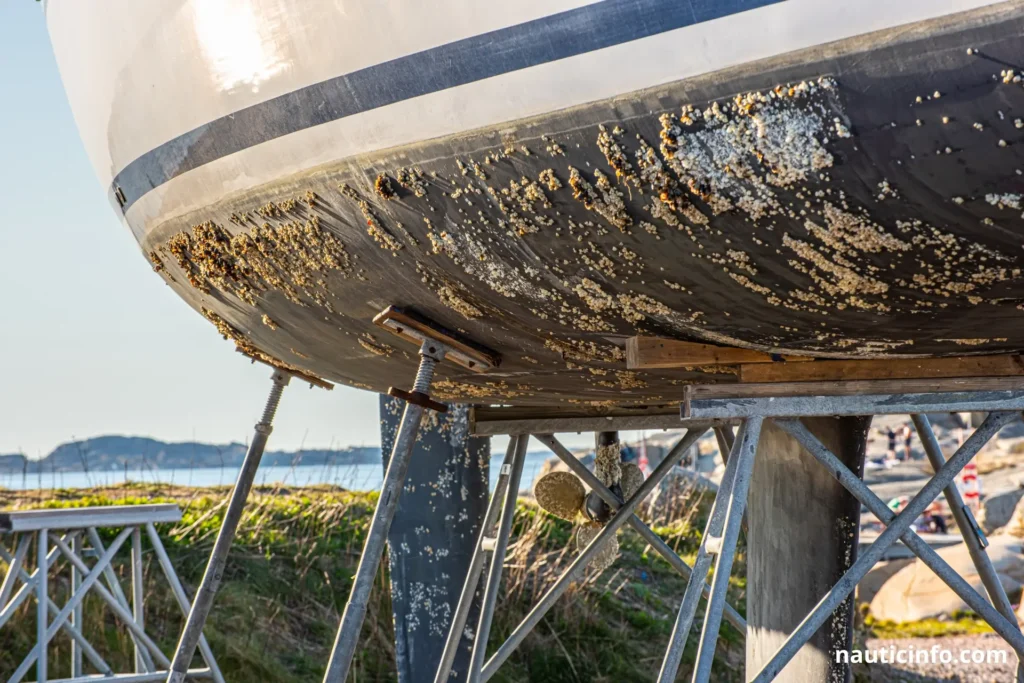
Historically, the recreational boating industry relied heavily on dense cuprous oxide and tributyltin (TBT). These toxic formulations kept fiberglass and steel hulls free of barnacles, slime, and algae. However, these traditional heavy metals leach continuously into the water. This leaching causes severe developmental, neurological, and reproductive harm to non-target aquatic life. Furthermore, research indicates that emissions from copper-based paints are a profound environmental hazard. They contribute up to 40 percent of total copper inputs in enclosed bodies of water. Consequently, environmental agencies across the United States have drastically intensified their scrutiny.
The True Cost of Marine Biofouling
Moreover, the unchecked accumulation of marine biofouling is not merely an aesthetic issue. It is a severe operational liability for your vessel. Specifically, microscopic slime and macroscopic hard growth create immense hydrodynamic drag. Consequently, this drag significantly reduces maximum vessel speed and destroys fuel efficiency. Therefore, a new wave of eco-friendly antifouling technologies has emerged to combat these issues sustainably. Indeed, these modern solutions leverage cutting-edge biochemistry and physical surface modifications. Thus, they deter marine growth without poisoning the local marina.
Making the switch to sustainable hull protection is no longer just a moral choice. It is increasingly becoming a strict regulatory mandate across the country. Specifically, local marinas, state legislatures, and federal agencies are collaboratively establishing stringent standards. These standards distinctly favor sustainable alternatives over legacy poisons. Accordingly, vessel owners must rapidly educate themselves on these highly technical products. Furthermore, the global marine antifouling coatings market reflects this massive shift. It possesses a valuation of approximately \$1.73 billion in 2024 and is projected to soar to nearly \$2.87 billion by 2034. Thus, the momentum behind sustainable development is both scientifically necessary and economically inevitable.
Comprehensive Regulatory Landscape in the United States
Navigating the patchwork of United States maritime regulations requires acute awareness. Specifically, various states take widely divergent approaches to mitigating water pollution. Consequently, what is entirely legal in a Florida marina may face severe restrictions in California. Therefore, boaters traversing multiple jurisdictions must remain hyper-vigilant regarding their paint selections.
Washington State and the Evolution of Legislation
Washington State has undeniably been at the epicenter of the copper-ban debate. Initially, a proactive 2011 legislative push culminated in a 2020 law. This law aimed to completely ban copper-based antifouling paints for recreational boats by 2026. Furthermore, the law directed an exhaustive scientific review of antifouling paints and ingredients. However, this comprehensive review revealed complex and somewhat contradictory realities.
Specifically, the Department of Ecology determined that copper is undeniably toxic to salmon. Yet, the currently available non-copper biocidal ingredients might potentially pose unique environmental hazards. Consequently, researchers could not definitively conclude that safer alternatives were universally “feasible, reasonable, and readily available.” Therefore, the blanket restriction on copper paints slated for 2026 has been officially postponed. Subsequently, the state will conduct rigorous follow-up evaluations and real-world performance tests. A new comprehensive report is due to the state legislature by June 2029. Additionally, Washington explicitly prohibited the use of the biocide Irgarol starting in 2023.
California’s Leach Rate Caps and Market Adoption
Similarly, California has aggressively pursued targeted reductions in dissolved copper concentrations. Specifically, the California Department of Pesticide Regulation (DPR) placed numerous copper-based products into reevaluation. They found that dissolved copper in marinas exceeded the chronic water quality standard meant to protect aquatic life. Consequently, rather than an outright ban, California established specific “maximum allowable leach rates.” These rates mathematically cap how much copper a recreational vessel can shed into the water.
Furthermore, the DPR categorized marine paints based on their daily release rates. They established a strict threshold of 9.5 micrograms per square centimeter per day for the lowest-leaching category. Thus, boaters in Southern California are highly restricted in their paint choices. They are increasingly turning toward eco-friendly antifouling paints to easily bypass these complex compliance issues. Moreover, specific environmental regions, such as Marina del Rey Harbor, are operating under revised regulatory frameworks. These frameworks have extended local compliance deadlines for copper discharges out to March 2026. Consequently, advocacy groups continue to support legislation to suspend strict enforcement until affordable alternatives are validated.
Florida and Maryland: Regional Mandates
On the East Coast, regional regulations target legacy chemicals with extreme prejudice. Specifically, the 2025 Florida Statutes strictly regulate the application of highly toxic organotin compounds, such as TBT. Consequently, these powerful legacy paints are classified as restricted-use pesticides. Furthermore, Florida law mandates that such paints may only be applied by specially licensed commercial applicators. They are strictly limited to massive commercial vessels exceeding 82 feet in length or bare aluminum hulls. Therefore, standard recreational fiberglass boaters in Florida must rely exclusively on modern copper or completely sustainable formulations.
Similarly, Maryland has taken decisive legislative steps to clean its waterways. Specifically, recent legislative bills have targeted the total repeal of provisions allowing the sale of tributyltin compounds. Consequently, the Chesapeake Bay ecosystem is progressively being shielded from these persistent, bioaccumulative toxins. Moreover, the Oregon Department of Environmental Quality has also recently updated its aquatic life water quality criteria. They are aggressively targeting cadmium and tributyltin based on the latest federal recommendations.
The EPA Safer Choice Program and Certifications
At the federal level, the U.S. Environmental Protection Agency (EPA) actively champions sustainable chemistry. They utilize the Safer Chemical Ingredients List (SCIL) to achieve this goal. Specifically, the SCIL is a living directory of chemicals that the EPA has rigorously evaluated. They determined these specific chemicals meet strict safety criteria for human health and environmental preservation. Consequently, chemical manufacturers are highly incentivized to develop biocide-free solutions that align with these guidelines. Furthermore, boaters can proactively search the EPA’s “Safer Choice” database. They can identify marine cleaners that do not compromise their newly applied hull protection systems.
Deciphering the Science of Eco-Friendly Antifouling Technologies
To make an informed purchasing decision, it is paramount to deeply understand specific biological mechanisms. Specifically, the “best” product does not universally exist for every single boater. Rather, optimal performance depends entirely on the vessel’s hull material, local water salinity, and usage patterns. Consequently, the modern market is broadly divided into several highly distinct, environmentally conscious categories.
Biocide-Free Foul Release: The Pinnacle of Protection
For boaters seeking the absolute lowest environmental impact possible, biocide-free foul-release coatings represent the pinnacle of innovation. Specifically, instead of poisoning marine organisms with heavy metals, these high-tech coatings create an ultra-slick surface. This slick barrier prevents algae, tube worms, and barnacles from establishing a firm grip. Consequently, any growth that manages to attach is effortlessly washed away by sheer hydrodynamic friction.
Furthermore, these revolutionary products typically utilize incredibly advanced silicone polymers intertwined with hydrogel technologies. Thus, the coating brilliantly exhibits both hydrophobic and hydrophilic properties simultaneously. Consequently, this unique molecular combination creates a fluid boundary layer. This fluid layer deeply confuses attaching organisms and makes it exceedingly difficult for their biological adhesives to cure. Moreover, these systems offer a truly remarkable lifespan. Although the initial application costs are higher, the long-term maintenance expenses drop significantly. Specifically, the coating generally only requires gentle sponge-cleaning and an occasional clear topcoat application.
However, foul-release systems are generally best suited for fast-moving powerboats and sailboats. They must operate frequently and at sufficient velocities to trigger the self-cleaning mechanism. Consequently, vessels that remain stationary at the dock for extended periods may still accumulate significant soft growth.
Copper-Free Biocidal Paints: A Balanced Approach
Conversely, for vessels moored continuously in highly aggressive environments, copper-free biocidal paints offer a practical compromise. Specifically, these modern formulations completely replace heavy metals with alternative organic biocides. These active ingredients are designed to break down rapidly in the surrounding environment. Therefore, they actively prevent hard shell growth while drastically reducing long-term ecological risks.
Furthermore, the single most prominent active ingredient in this modern category is Tralopyril, commercially known as Econea. Specifically, Econea functions by aggressively disrupting the cells of fouling organisms. This action provides exceptional protection against hard growth like barnacles. Moreover, unlike legacy chemicals, Econea possesses a remarkably brief environmental half-life. Indeed, environmental fate studies confirm that it degrades in as little as 5.1 to 8.9 hours when exposed to sunlight. Additionally, comprehensive testing shows that it undergoes complete hydrolysis within 48 hours. Consequently, it achieves the desired antifouling effect without lingering toxically in the marina basin.
Additionally, these copper-free options are inherently safe for use on aluminum hulls and pontoon boats. Specifically, they completely eliminate the catastrophic risk of galvanic corrosion.
Emerging Innovations: Hydrogels, Graphene, and Smart Coatings
The forefront of marine chemical engineering is currently exploring highly advanced materials. Specifically, researchers are testing the enhancement of silicone-based coatings through graphene oxide and silver nanoparticles. Consequently, laboratory tests have demonstrated significantly improved microfouling resistance.
Furthermore, an innovative degradable silicone-hydrogel coating is showing massive market potential. Specifically, this protection mechanism enables selective copolymerization of hydrophilic and antimicrobial monomers. Consequently, in controlled tests, this advanced material demonstrated an astonishing 98.8% bactericidal rate. It also boasted a theoretical functional lifespan of 5.5 years at a standard 7.8 mils thickness. Therefore, the future will likely blur the lines between physical repellency and targeted biochemical disruption.
Environmental Specifics: Tailoring Paint to Water Types
The specific aquatic environment immediately surrounding the vessel dictates the physical strength of the protection required. Specifically, a formulation meticulously optimized for a coastal saltwater marina will invariably differ from one designed for an inland lake. Consequently, failing to match the paint to the local water chemistry guarantees premature coating failure.
Freshwater Dynamics and Paint Selection
Freshwater environments typically generate a constant barrage of annoying soft fouling. This primarily presents as green algae, grasses, and slippery slime. However, hard growth like the dreaded marine barnacle is exceedingly rare in fully landlocked lakes. Consequently, freshwater boaters can safely opt for milder, highly economical water-based paints. These focus heavily on slime prevention rather than heavy-duty biocide release.
Furthermore, utilizing an excessively strong saltwater paint in a pristine lake is an unnecessary expenditure. Specifically, for submerged freshwater boats, a hard modified epoxy paint with low active ingredients is highly recommended. It repels weeds effectively without unnecessarily loading the water with chemicals. Moreover, if a trailer boat is taken out of the water after every use, bottom paint is generally not required at all. However, if the boat is moored seasonally, an ablative paint is optimal because it will not rapidly lose its chemical effectiveness in the open air.
Saltwater and Brackish Challenges
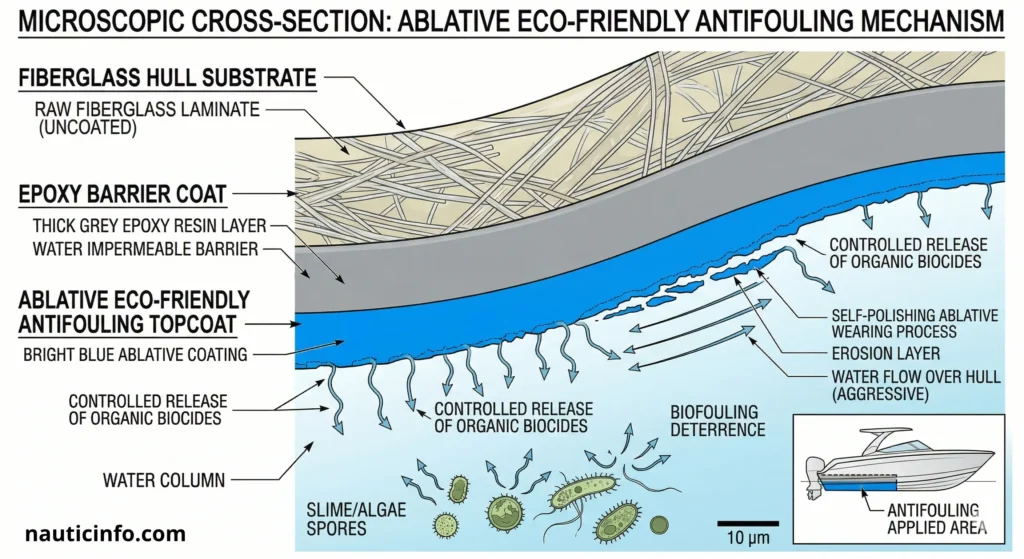
Conversely, true saltwater environments introduce highly aggressive, rapid-forming hard growth. Therefore, coastal boaters require a robust, self-polishing ablative paint. This specialized paint constantly wears away like a bar of soap, continuously exposing fresh layers of active protective biocide.
Moreover, brackish waters present highly volatile and uniquely frustrating salinity levels. Specifically, testing in estuaries revealed salinity swings ranging from 14% to 30% that of pure ocean seawater. Consequently, vessels moored in these dynamic areas face highly unpredictable fouling pressures. Therefore, brackish boaters necessitate premium, broad-spectrum solutions to safely combat these multifaceted biological assaults.
Detailed Product Analysis: The Best Eco-Friendly Antifouling Paints of 2026
The current commercial market offers a wonderfully diverse array of advanced coatings designed to meet strict environmental demands. Furthermore, marine paint engineers have successfully synthesized high-performance formulas boasting exceptionally low Volatile Organic Compounds (VOCs). Consequently, evaluating exact technical specifications is absolutely critical for achieving optimal hull performance and financial value.
Pettit Odyssey Triton and Odyssey HD
Pettit Paint commands a massive share of the premium antifouling market. Specifically, the Pettit Odyssey Triton delivers exceptional, multi-season performance. It brilliantly combines Copper Thiocyanate (15%), Econea (6%), and Zinc Pyrithione (6%). Its lower overall metal loading combined with the rapid breakdown of Econea makes it a highly preferred choice. It perfectly offers a theoretical coverage rate of 450 square feet per gallon. Conversely, the Pettit Odyssey HD is a more traditional high-copper ablative (45.7% cuprous oxide). It fully complies with strict 50-state VOC limits, though it lacks the copper-free designation required for aluminum hulls.
Sea Hawk Mission Bay CSF
For ultimate environmental compliance, Sea Hawk’s Mission Bay CSF represents a true chemical breakthrough. Specifically, this product is a 100% Copper-Free and Solvent-Free (CSF) ablative antifoulant. Consequently, it completely eliminates the leaching of harmful copper compounds into the environment. Furthermore, it proudly boasts over 80% lower VOCs (113 Grams/Liter) than traditional solvent-based paints. Moreover, it masterfully utilizes a sophisticated nano-based UV-reactive biocide release mechanism. It perfectly covers up to 320 square feet per gallon.
TotalBoat AlumiPaint AF
Targeting the massive pontoon and aluminum skiff market, TotalBoat AlumiPaint AF relies entirely on the copper-free biocide Econea. Consequently, it successfully allows owners of aluminum vessels to achieve true saltwater protection. It completely removes the terrifying risk of galvanic corrosion destroying their hulls. Furthermore, it proudly boasts an impressive coverage rate of 500 square feet per gallon. It also consistently provides a remarkably rapid launch time of merely 4 hours at 70°F.
Interlux Pacifica Plus
Interlux offers the Pacifica Plus, a highly capable high-solid ablative that expertly utilizes a dual-action system. Specifically, it seamlessly combines Econea to successfully control hard barnacle fouling with proprietary Biolux Slime Blocking Technology. Furthermore, it is completely copper-free and totally safe for aluminum. It reliably provides an efficient coverage rate of approximately 445 square feet per gallon when applied by brush.
Comprehensive Market Comparison Tables
To effectively distill this complex technical data, the following tables provide a direct, side-by-side comparison. They showcase the industry’s leading eco-friendly antifouling products based on 2025/2026 market data.
| Product Name | Technology Type | Primary Active Biocides | Coverage Rate (sq. ft. / Gallon) | Launch Time (at 70°F) | Aluminum Safe? | Estimated Price / Gallon (USD) |
| Pettit Odyssey Triton | Multi-Season Ablative | Copper Thiocyanate (15%), Econea (6%), Zinc Pyrithione (6%) | 450 | 8 Hours | No | \$419.00 – \$459.00 |
| Pettit Odyssey HD | Multi-Season Ablative | Cuprous Oxide (45.7%) | 475 | 6 Hours | No | \$279.99 (Approx) |
| Sea Hawk Mission Bay CSF | Water-Based Copper-Free Ablative | Nano-Based UV Reactive Copolymer | 320 | 12 Hours | Yes | \$257.77 – \$331.59 |
| TotalBoat AlumiPaint AF | Copper-Free Ablative | Econea (Tralopyril) | 500 | 4 Hours | Yes | \$227.49 – \$297.99 |
| Interlux Pacifica Plus | High-Solid Copper-Free Ablative | Econea & Biolux Slime Blocker | 445 (Brush/Roll) | Fast-Drying | Yes | \$299.99 – \$375.99 |
(Data compiled from manufacturer technical data sheets and major retail marine distributors for the 2025/2026 season ).
Furthermore, buyers must heavily weigh the practical application pros and cons of these chemical pathways. This evaluation is critical before committing to a multi-year hull strategy.
| Coating Category | Primary Advantages | Primary Disadvantages |
| Biocide-Free Foul Release (Silicone/Hydrogel) | Zero toxic leaching; incredibly slick surface increases speed and fuel efficiency; extremely long multi-year lifespan. | High initial cost; easily scratched by dock debris; requires the vessel to move fast/frequently to self-clean. |
| Copper-Free Ablative (Econea/Tralopyril) | Rapid environmental degradation (short half-life); excellent protection against hard growth; 100% safe for aluminum hulls. | Generally higher cost than basic copper; may require a secondary biocide to fight heavy slime effectively. |
| Water-Based Eco-Friendly Paints | Extremely low VOCs; simple soap and water cleanup; highly safe for the applicator and environment. | Can take longer to cure in high humidity; sometimes offers slightly lower coverage rates per gallon. |
Ultrasonic Technology: An Electronic Approach to Eco-Friendly Antifouling
Beyond the continuous advancement of chemical liquid coatings, the boating industry is witnessing a massive surge in electronic hull protection. Specifically, ultrasonic systems represent a purely mechanical, completely biocide-free methodology that is fundamentally disrupting the market. Consequently, these electronic devices appeal heavily to tech-forward vessel owners who are intent on minimizing their ecological footprint.
Furthermore, an ultrasonic system typically consists of a central digital control module connected directly to several physical transducers. Once activated, these transducers continuously emit highly specific, alternating bursts of high-frequency sound waves. Subsequently, these intense vibrations travel through the solid fiberglass. They create microscopic zones of positive and negative pressure in the water immediately surrounding the hull. Therefore, this continuous acoustic disruption literally vibrates and destroys the fragile cellular structures of single-celled algae. Because larger organisms rely entirely on this sticky biofilm, the macroscopic fouling cycle is interrupted before it can even begin.
However, independent field tests of ultrasonic systems yield highly nuanced, occasionally polarizing results. Specifically, they often severely struggle as a standalone solution in highly aggressive, nutrient-rich coastal estuaries. Consequently, marine experts widely recommend utilizing ultrasonic technology as a highly powerful companion to a solid biocide-free paint. Moreover, vessel owners must deeply consider the continuous electrical demands of the system. Specifically, an efficient modern system typically draws approximately 230mAh per transducer. Therefore, a yacht requires a reliable solar array or a permanent shore power connection to operate successfully.
Professional Application and Best Management Practices
Purchasing a premium marine coating is merely the first step of the maintenance journey. Specifically, the ultimate success of an eco-friendly antifouling job hinges almost entirely on meticulous surface preparation. Indeed, poorly prepped hulls and rushed yard schedules account for the vast majority of peeling and premature biocide depletion.
Proper Surface Preparation for Eco-Friendly Antifouling
Transitioning a vessel from a legacy heavy-metal coating to a modern alternative requires highly specific intermediate steps. Consequently, applying a cutting-edge foul-release silicone paint directly over an old copper ablative will absolutely result in immediate delamination.
Pro Tip: If the exact brand of the existing bottom paint is totally unknown, applying a specialized universal “tie-coat” primer is absolutely mandatory. Furthermore, completely removing the old, compromised paint down to the bare fiberglass via aggressive mechanical sanding is highly recommended. Subsequently, applying a comprehensive two-part epoxy barrier coat will permanently seal the porous hull. This essential step prevents devastating osmotic blistering while providing a pristine canvas for the new paint.
Moreover, atmospheric conditions drastically and irreversibly influence the chemical curing process. Specifically, leading paint manufacturers dictate that paint application must strictly occur between 50°F and 90°F. Therefore, painting a hull in direct midday sunlight must be entirely avoided by the applicator. Consequently, the extreme solar heat forces the paint’s vital solvents to flash off far too rapidly.
Environmental Containment and Yard Safety
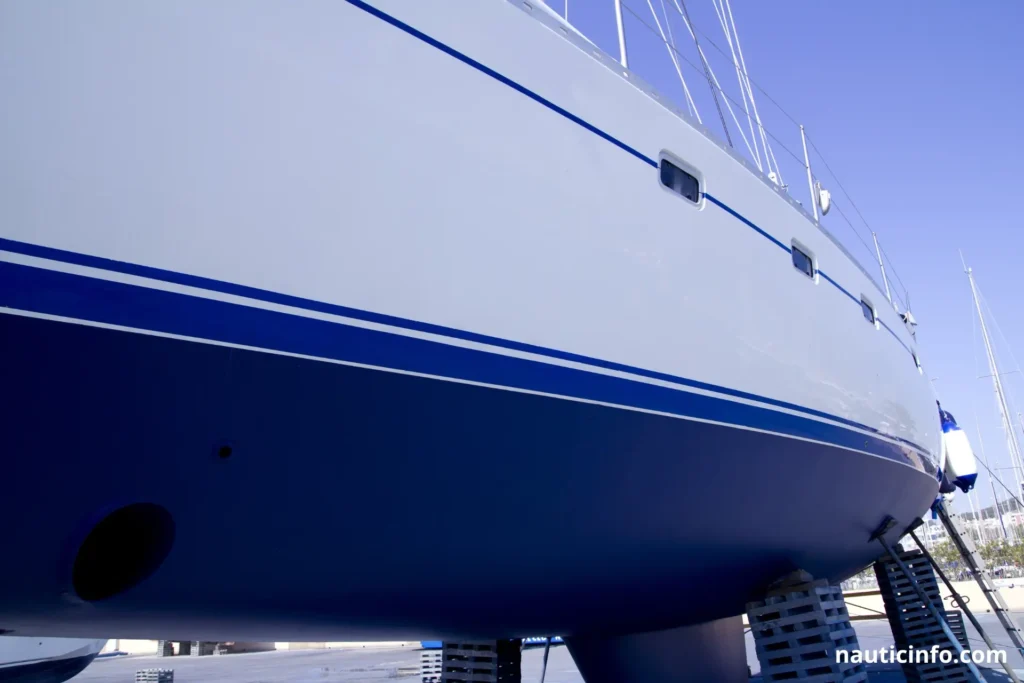
Because the mandatory scraping and sanding process invariably generates toxic dust, implementing strict Best Management Practices (BMPs) is an absolute necessity. Specifically, these vital protocols are designed to aggressively protect local watersheds, marina staff, and the boaters themselves. Consequently, reputable and certified clean boatyards fiercely enforce rigorous environmental containment strategies.
Specifically, unshielded orbital sanders allow highly hazardous particulate matter to rapidly become airborne and drift across the yard. Therefore, dustless vacuum sanders must be aggressively utilized during all maintenance operations. Consequently, these advanced tools physically extract and capture dangerous paint dust directly from the spinning sanding pad. Furthermore, entire work areas must be fully enveloped and sealed with heavy-duty ground tarps. Additionally, conducting minor wet-sanding operations over highly porous, natural surfaces like grass is vastly preferable to working over paved asphalt.
Moreover, the process of pressure washing a fouled hull is equally heavily regulated across the country. Whenever the hull is pressure-washed during haul-out, the resulting toxic effluent must be meticulously collected and mechanically filtered. Specifically, allowing raw, unfiltered pressure washwater to discharge freely into surface water is explicitly illegal under numerous state permitting laws. Ultimately, adopting these rigorous BMPs ensures that environmental benefits are not negated by sloppy installation practices at the boatyard.
NauticInfo Verdict
Ultimately, the sweeping transition toward eco-friendly antifouling solutions marks a highly positive evolution in modern seamanship. Specifically, the dark days of relying on indiscriminate heavy-metal toxins to maintain a clean hull are rapidly drawing to a close. Consequently, American boaters now possess an incredibly impressive arsenal of sustainable, scientifically advanced alternatives. These modern coatings rigorously deliver formidable hydrodynamic performance without fundamentally jeopardizing the fragile marine biosphere.
Furthermore, deciding on the ideal system requires a highly strategic evaluation of the vessel’s specific environment and operational usage. For the high-performance offshore powerboater, biocide-free foul-release silicones absolutely provide unparalleled hydrodynamic slickness and massive financial savings. Conversely, for the dedicated coastal cruiser navigating highly aggressive brackish waters, advanced copper-free ablatives offer the perfect synthesis of hard-growth protection. Moreover, tech-savvy owners can dramatically extend the operational life of any liquid coating by intelligently integrating an ultrasonic electronic system. Therefore, by carefully marrying the correct eco-friendly product with meticulous surface preparation, today’s enlightened boater can truly enjoy peak vessel efficiency. They perfectly achieve strict regulatory compliance and the profound peace of mind that comes from protecting our waters.